


A Prospective Cohort Multicenter Study of Molecular Epidemiology and Phylogenomics of Staphylococcus aureus Bacteremia in Nine Latin American Countries
- PMID: 28760895
- PMCID: PMC5610503
- DOI: 10.1128/AAC.00816-17
A Prospective Cohort Multicenter Study of Molecular Epidemiology and Phylogenomics of Staphylococcus aureus Bacteremia in Nine Latin American Countries
Erratum in
-
Erratum for Arias et al., "A Prospective Cohort Multicenter Study of Molecular Epidemiology and Phylogenomics of Staphylococcus aureus Bacteremia in Nine Latin American Countries".Antimicrob Agents Chemother. 2018 Feb 23;62(3):e00095-18. doi: 10.1128/AAC.00095-18. Print 2018 Mar. Antimicrob Agents Chemother. 2018. PMID: 29475888 Free PMC article. No abstract available.
Abstract
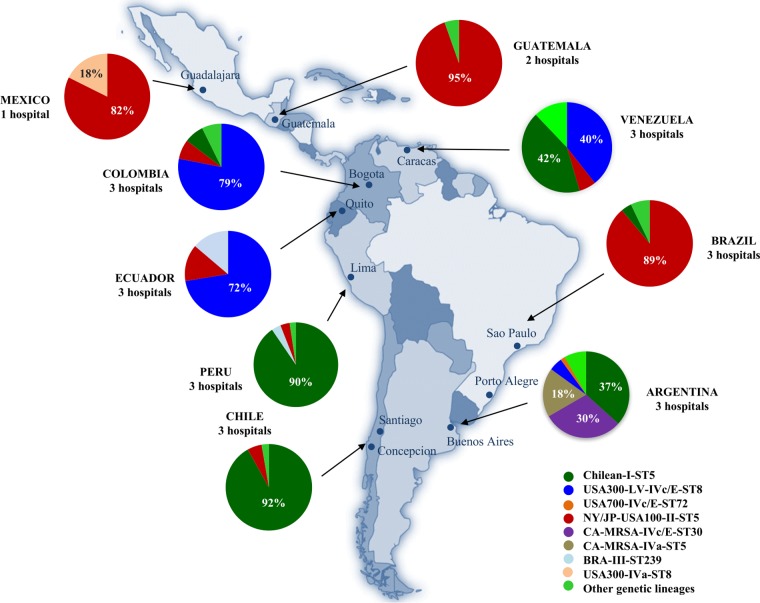
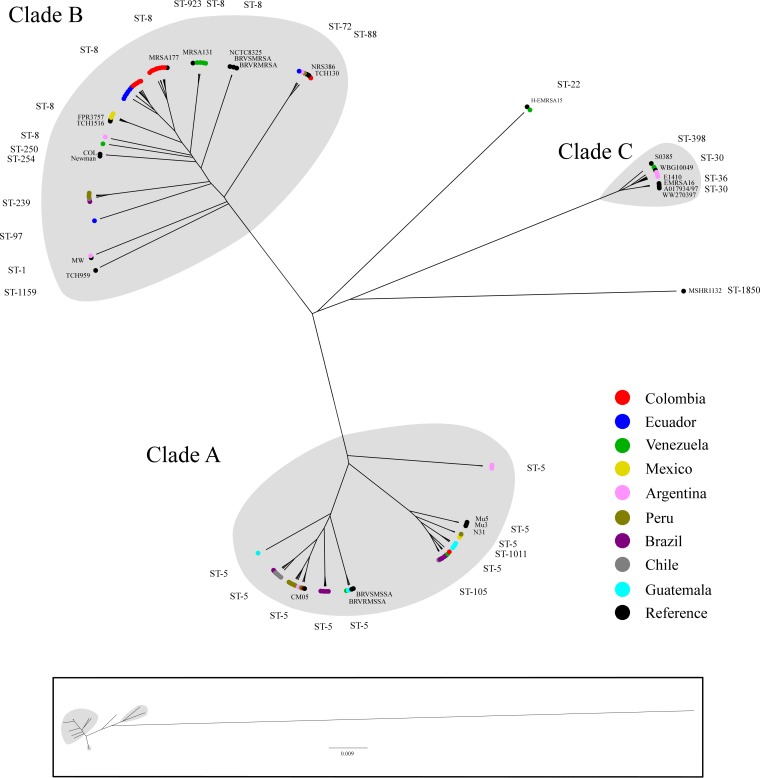
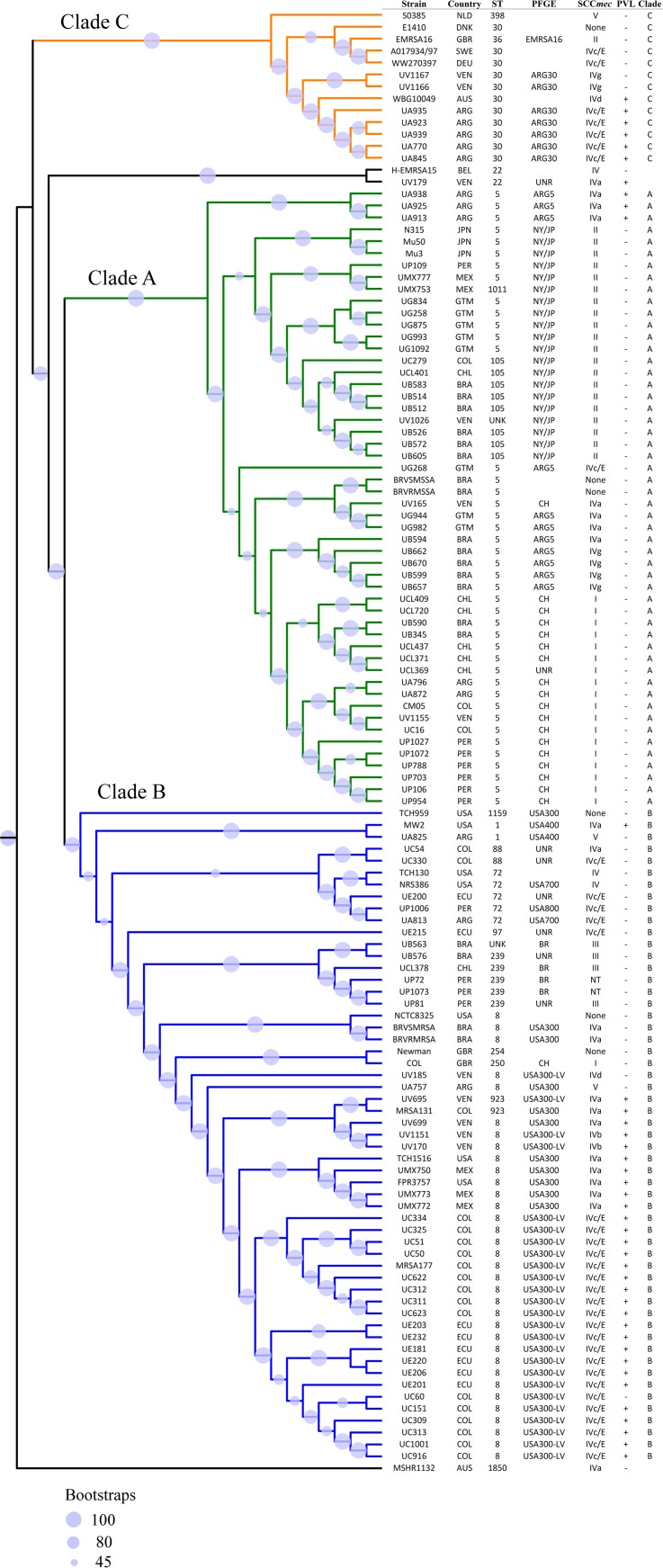
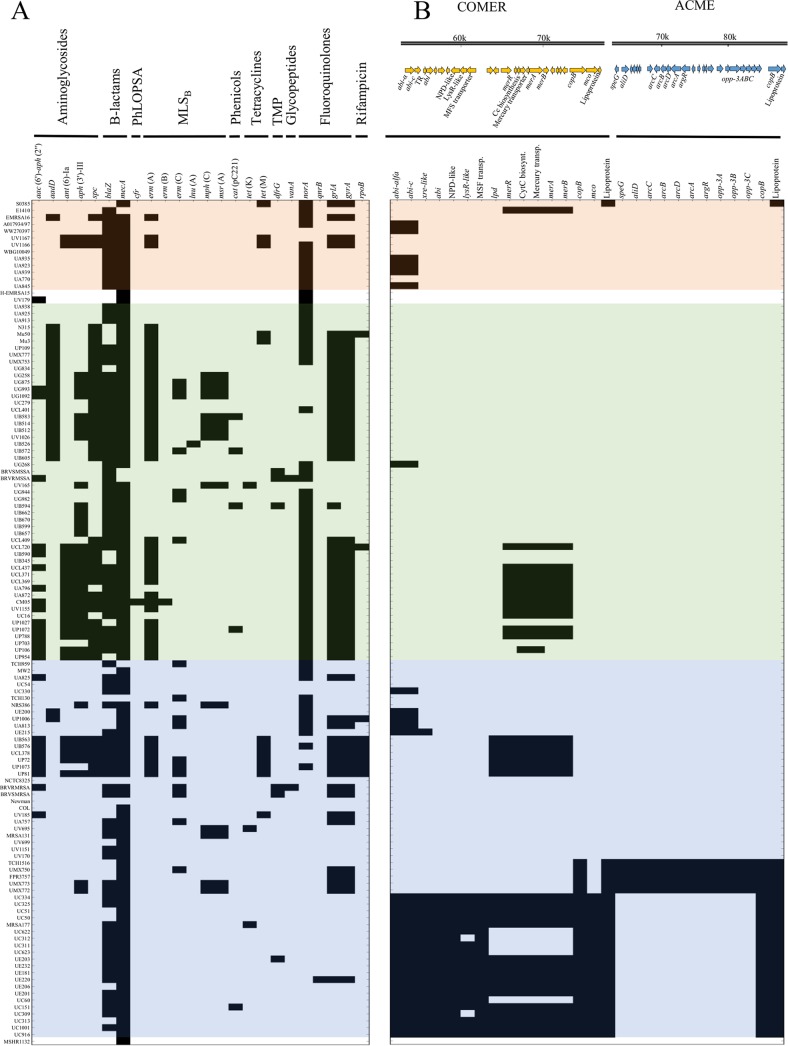
Staphylococcus aureus is an important pathogen causing a spectrum of diseases ranging from mild skin and soft tissue infections to life-threatening conditions. Bloodstream infections are particularly important, and the treatment approach is complicated by the presence of methicillin-resistant S. aureus (MRSA) isolates. The emergence of new genetic lineages of MRSA has occurred in Latin America (LA) with the rise and dissemination of the community-associated USA300 Latin American variant (USA300-LV). Here, we prospectively characterized bloodstream MRSA recovered from selected hospitals in 9 Latin American countries. All isolates were typed by pulsed-field gel electrophoresis (PFGE) and subjected to antibiotic susceptibility testing. Whole-genome sequencing was performed on 96 MRSA representatives. MRSA represented 45% of all (1,185 S. aureus) isolates. The majority of MRSA isolates belonged to clonal cluster (CC) 5. In Colombia and Ecuador, most isolates (≥72%) belonged to the USA300-LV lineage (CC8). Phylogenetic reconstructions indicated that MRSA isolates from participating hospitals belonged to three major clades. Clade A grouped isolates with sequence type 5 (ST5), ST105, and ST1011 (mostly staphylococcal chromosomal cassette mec [SCCmec] I and II). Clade B included ST8, ST88, ST97, and ST72 strains (SCCmec IV, subtypes a, b, and c/E), and clade C grouped mostly Argentinian MRSA belonging to ST30. In summary, CC5 MRSA was prevalent in bloodstream infections in LA with the exception of Colombia and Ecuador, where USA300-LV is now the dominant lineage. Clonal replacement appears to be a common phenomenon, and continuous surveillance is crucial to identify changes in the molecular epidemiology of MRSA.
Keywords: Latin America; Staphylococcus aureus; bacteremia.
Copyright © 2017 American Society for Microbiology.
Figures
References
-
- Talan DA, Krishnadasan A, Gorwitz RJ, Fosheim GE, Limbago B, Albrecht V, Moran GJ, EMERGEncy ID Net Study Group. 2011. Comparison of Staphylococcus aureus from skin and soft-tissue infections in US emergency department patients, 2004 and 2008. Clin Infect Dis 53:144–149. doi: 10.1093/cid/cir308. - DOI - PubMed
-
- Sievert DM, Ricks P, Edwards JR, Schneider A, Patel J, Srinivasan A, Kallen A, Limbago B, Fridkin S, National Healthcare Safety Network (NHSN) Team and Participating NHSN Facilities. 2013. Antimicrobial-resistant pathogens associated with healthcare-associated infections: summary of data reported to the National Healthcare Safety Network at the Centers for Disease Control and Prevention, 2009–2010. Infect Control Hosp Epidemiol 34:1–14. doi: 10.1086/668770. - DOI - PubMed
-
- Le Moing V, Alla F, Doco-Lecompte T, Delahaye F, Piroth L, Chirouze C, Tattevin P, Lavigne JP, Erpelding ML, Hoen B, Vandenesch F, Duval X, VIRSTA study group. 2015. Staphylococcus aureus bloodstream infection and endocarditis-a prospective cohort study. PLoS One 10:e0127385. doi: 10.1371/journal.pone.0127385. - DOI - PMC - PubMed
Publication types
MeSH terms
Substances
Grants and funding
LinkOut - more resources
Full Text Sources
Other Literature Sources
Medical
Molecular Biology Databases
