


Training time and quality of smartphone-based anterior segment screening in rural India
- PMID: 28761328
- PMCID: PMC5522819
- DOI: 10.2147/OPTH.S134656
Training time and quality of smartphone-based anterior segment screening in rural India
Abstract
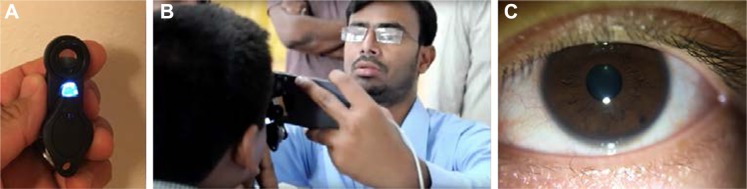
Objective: We aimed at evaluating the ability of individuals without ophthalmologic training to quickly capture high-quality images of the cornea by using a smartphone and low-cost anterior segment imaging adapter (the "EyeGo" prototype).
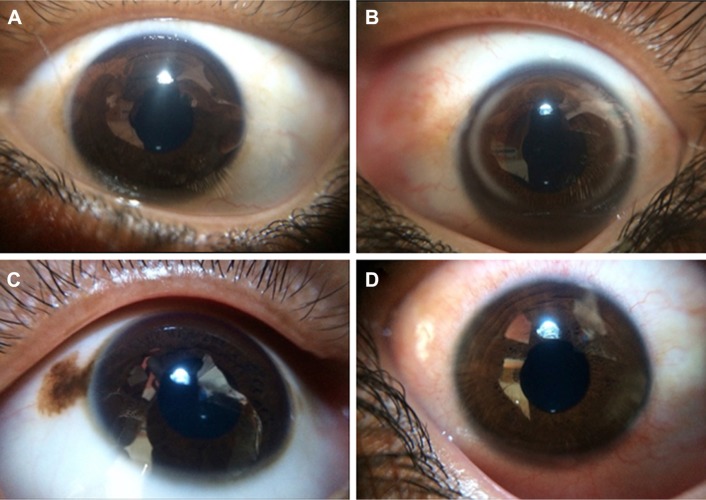
Methods: Seven volunteers photographed 1,502 anterior segments from 751 high school students in Varni, India, by using an iPhone 5S with an attached EyeGo adapter. Primary outcome measures were median photograph quality of the cornea and anterior segment of the eye (validated Fundus Photography vs Ophthalmoscopy Trial Outcomes in the Emergency Department [FOTO-ED] study; 1-5 scale; 5, best) and the time required to take each photograph. Volunteers were surveyed on their familiarity with using a smartphone (1-5 scale; 5, very comfortable) and comfort in assessing problems with the eye (1-5 scale; 5, very comfortable). Binomial logistic regression was performed using image quality (low quality: <4; high quality: ≥4) as the dependent variable and age, comfort using a smartphone, and comfort in assessing problems with the eye as independent variables.
Results: Six of the seven volunteers captured high-quality (median ≥4/5) images with a median time of ≤25 seconds per eye for all the eyes screened. Four of the seven volunteers demonstrated significant reductions in time to acquire photographs (P1=0.01, P5=0.01, P6=0.01, and P7=0.01), and three of the seven volunteers demonstrated significant improvements in the quality of photographs between the first 100 and last 100 eyes screened (P1<0.001, P2<0.001, and P6<0.01). Self-reported comfort using a smartphone (odds ratio [OR] =1.25; 95% CI =1.13 to 1.39) and self-reported comfort diagnosing eye conditions (OR =1.17; 95% CI =1.07 to 1.29) were significantly associated with an ability to take a high-quality image (≥4/5). There was a nonsignificant association between younger age and ability to take a high-quality image.
Conclusion: Individuals without ophthalmic training were able to quickly capture a high-quality magnified view of the anterior segment of the eye by using a smartphone with an attached imaging adapter.
Keywords: EyeGo; adapter; healthy scholars; macrolens; paxos; screening; smartphone; usability.
Conflict of interest statement
Disclosure Robert T Chang, Alexandre Jais, and David J Myung are patent holders of the smartphone ophthalmic imaging system discussed. David J Myung is a consultant to DigiSight Technologies. Cassie A Ludwig, Megan Newsom, and Somasheila I Murthy report no conflicts of interest in this work.
Figures
References
-
- Myung D, Jais A, He L, Chang R. Simple, low-cost smartphone adapter for rapid, high quality ocular anterior segment imaging: a photo diary. J Mob Technol Med. 2014;3(1):2–8.
-
- Myung D, Jais A, He L, Blumenkranz M, Chang R. 3D printed smartphone indirect lens adapter for rapid, high quality retinal imaging. J Mob Technol Med. 2014;3(1):9–15.
-
- Toy BC, Myung DJ, He L, et al. Smartphone-based dilated fundus photography and near visual acuity testing as inexpensive screening tools to detect referral warranted diabetic eye disease. Retina. 2016;36(5):1000–1008. - PubMed
Grants and funding
LinkOut - more resources
Full Text Sources
Other Literature Sources
Research Materials
Miscellaneous
