


Towards neuro-inspired symbolic models of cognition: linking neural dynamics to behaviors through asynchronous communications
- PMID: 28761554
- PMCID: PMC5509613
- DOI: 10.1007/s11571-017-9435-3
Towards neuro-inspired symbolic models of cognition: linking neural dynamics to behaviors through asynchronous communications
Abstract
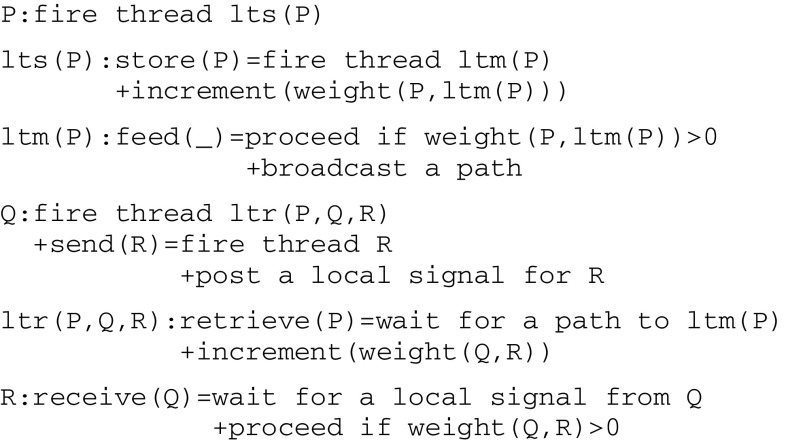
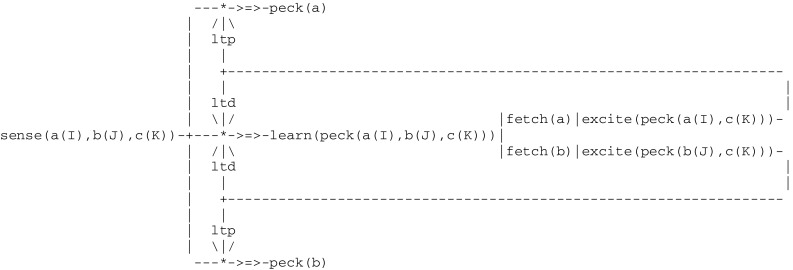
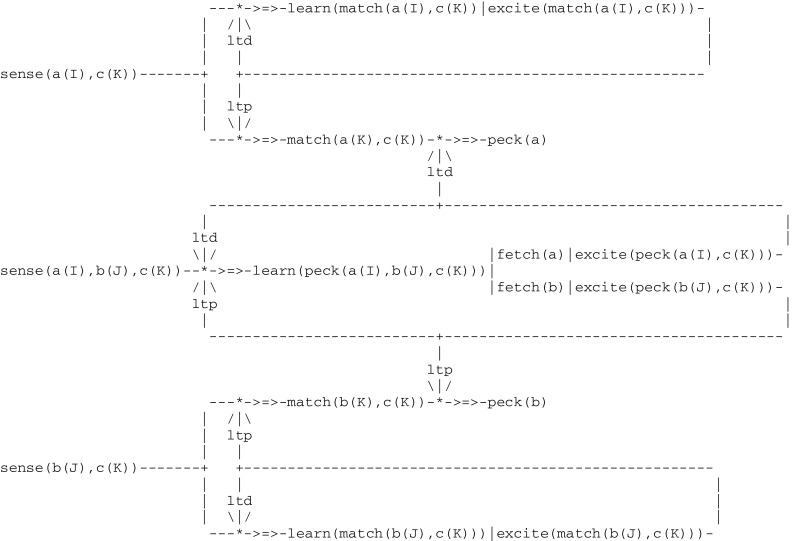
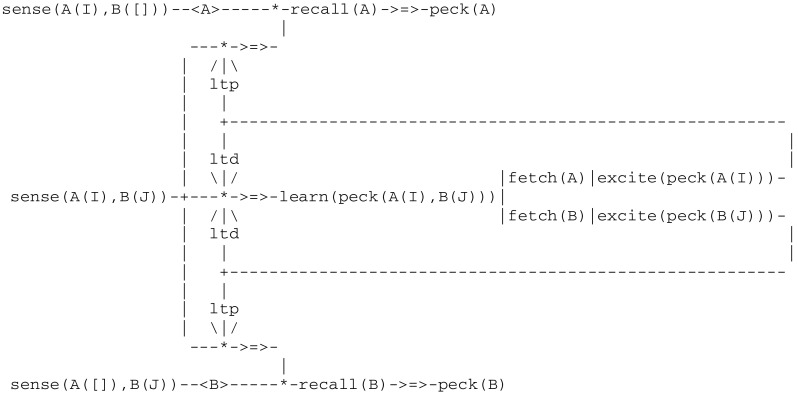
A computational architecture modeling the relation between perception and action is proposed. Basic brain processes representing synaptic plasticity are first abstracted through asynchronous communication protocols and implemented as virtual microcircuits. These are used in turn to build mesoscale circuits embodying parallel cognitive processes. Encoding these circuits into symbolic expressions gives finally rise to neuro-inspired programs that are compiled into pseudo-code to be interpreted by a virtual machine. Quantitative evaluation measures are given by the modification of synapse weights over time. This approach is illustrated by models of simple forms of behaviors exhibiting cognition up to the third level of animal awareness. As a potential benefit, symbolic models of emergent psychological mechanisms could lead to the discovery of the learning processes involved in the development of cognition. The executable specifications of an experimental platform allowing for the reproduction of simulated experiments are given in "Appendix".
Keywords: Asynchronous communications; Cognitive architecture; Cognitive development; Learning processes; Neural dynamics; Symbolic model; Virtual machine.
Figures



References
-
- Anderson JA. An introduction to neural networks. Cambridge: MIT Press; 1995.
LinkOut - more resources
Full Text Sources
Other Literature Sources
Research Materials
