


NADPH oxidase 5 (NOX5)-induced reactive oxygen signaling modulates normoxic HIF-1α and p27Kip1 expression in malignant melanoma and other human tumors
- PMID: 28762556
- PMCID: PMC5675809
- DOI: 10.1002/mc.22708
NADPH oxidase 5 (NOX5)-induced reactive oxygen signaling modulates normoxic HIF-1α and p27Kip1 expression in malignant melanoma and other human tumors
Abstract
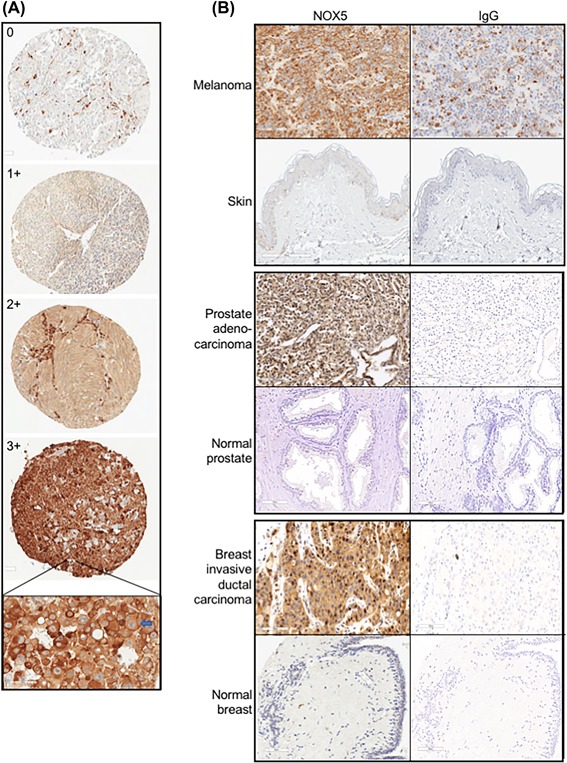
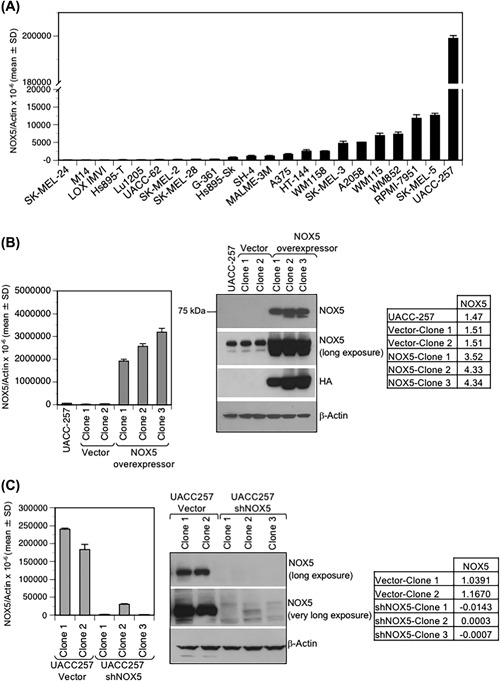
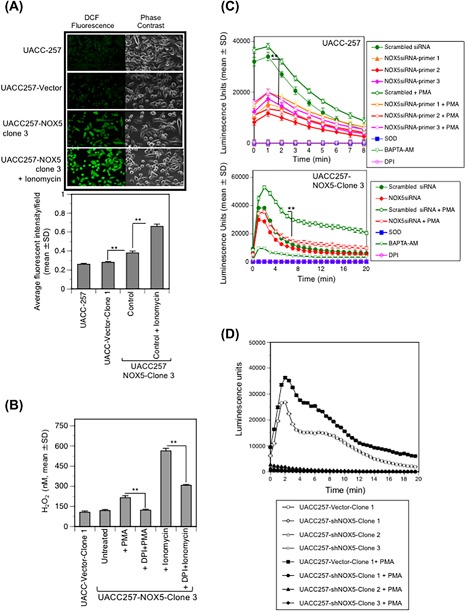
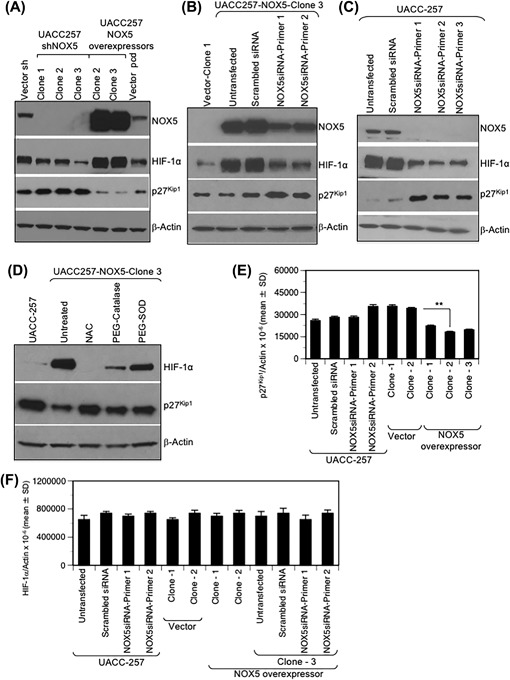
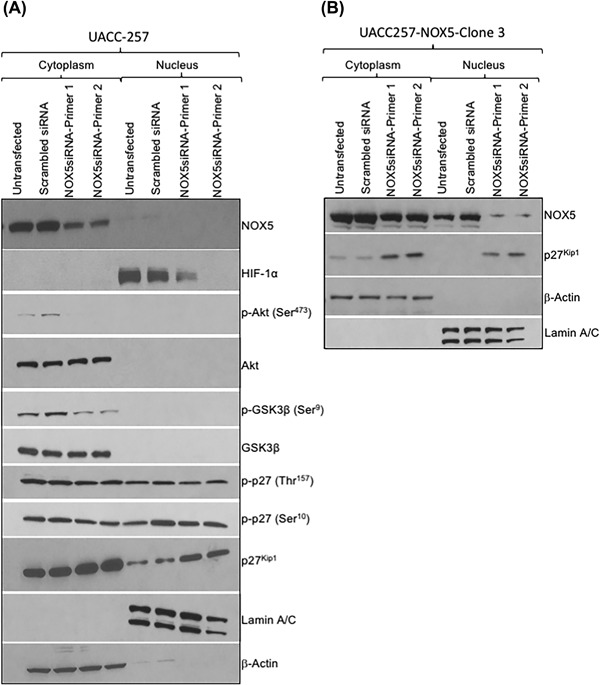
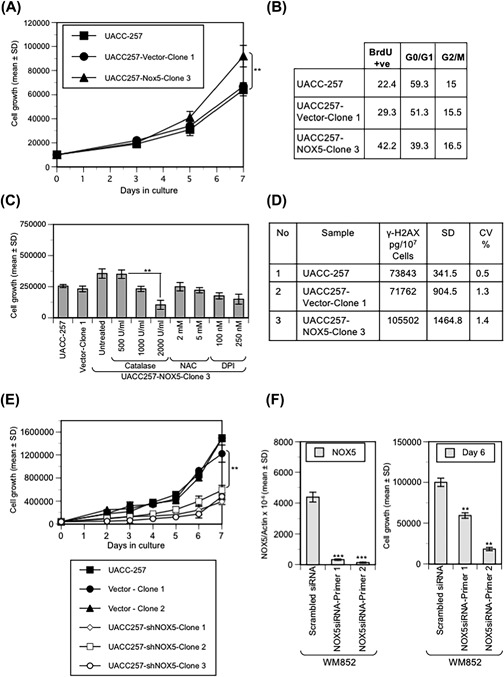
NADPH oxidase 5 (NOX5) generated reactive oxygen species (ROS) have been implicated in signaling cascades that regulate cancer cell proliferation. To evaluate and validate NOX5 expression in human tumors, we screened a broad range of tissue microarrays (TMAs), and report substantial overexpression of NOX5 in malignant melanoma and cancers of the prostate, breast, and ovary. In human UACC-257 melanoma cells that possesses high levels of functional endogenous NOX5, overexpression of NOX5 resulted in enhanced cell growth, increased numbers of BrdU positive cells, and increased γ-H2AX levels. Additionally, NOX5-overexpressing (stable and inducible) UACC-257 cells demonstrated increased normoxic HIF-1α expression and decreased p27Kip1 expression. Similarly, increased normoxic HIF-1α expression and decreased p27Kip1 expression were observed in stable NOX5-overexpressing clones of KARPAS 299 human lymphoma cells and in the human prostate cancer cell line, PC-3. Conversely, knockdown of endogenous NOX5 in UACC-257 cells resulted in decreased cell growth, decreased HIF-1α expression, and increased p27Kip1 expression. Likewise, in an additional human melanoma cell line, WM852, and in PC-3 cells, transient knockdown of endogenous NOX5 resulted in increased p27Kip1 and decreased HIF-1α expression. Knockdown of endogenous NOX5 in UACC-257 cells resulted in decreased Akt and GSK3β phosphorylation, signaling pathways known to modulate p27Kip1 levels. In summary, our findings suggest that NOX5 expression in human UACC-257 melanoma cells could contribute to cell proliferation due, in part, to the generation of high local concentrations of extracellular ROS that modulate multiple pathways that regulate HIF-1α and networks that signal through Akt/GSK3β/p27Kip1 .
Keywords: Akt/GSK3 signaling; DNA damage; NADPH oxidase; cell growth; reactive oxygen species (ROS); tumor microarray (TMA).
© 2017 Wiley Periodicals, Inc.
Figures
References
-
- Lambeth JD, Neish AS. Nox enzymes and new thinking on reactive oxygen: a double‐edged sword revisited. Annu Rev Pathol. 2014; 9:119–145. - PubMed
-
- Burdon RH. Superoxide and hydrogen peroxide in relation to mammalian cell proliferation. Free Radic Biol Med. 1995; 18:775–794. - PubMed
-
- Holmstrom KM, Finkel T. Cellular mechanisms and physiological consequences of redox‐dependent signalling. Nat Rev Mol Cell Biol. 2014; 15:411–421. - PubMed
-
- Droge W. Free radicals in the physiological control of cell function. Physiol Rev. 2002; 82:47–95. - PubMed
-
- Rhee SG. Cell signaling. H2O2, a necessary evil for cell signaling. Science. 2006; 312:1882–1883. - PubMed
MeSH terms
Substances
Grants and funding
LinkOut - more resources
Full Text Sources
Other Literature Sources
Molecular Biology Databases
Miscellaneous
