


Association of restless legs syndrome and mortality in end-stage renal disease: an analysis of the United States Renal Data System (USRDS)
- PMID: 28764654
- PMCID: PMC5540277
- DOI: 10.1186/s12882-017-0660-0
Association of restless legs syndrome and mortality in end-stage renal disease: an analysis of the United States Renal Data System (USRDS)
Abstract
Background: Objective of the study is to assess prevalence and survival among end stage renal disease patients with restless legs syndrome (RLS) within a national database (USRDS).
Methods: A case-control, retrospective analysis was performed. Differences in characteristics between the groups, RLS and those with no sleep disorder (NSD), were determined using χ2 tests. Cox proportional hazard regression was used to assess survival between those with RLS and propensity score matched controls.
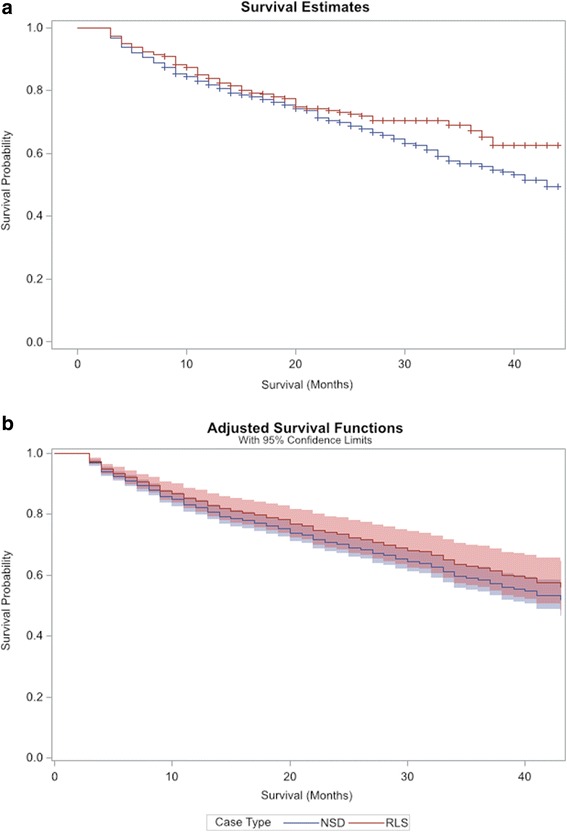
Results: Cases of restless legs syndrome were defined as patients that had received an ICD-9 code of 333.94 at any point during their treatment (n = 372). RLS group demonstrated a significantly higher proportion of patients with major depressive disorder, dysthymic disorder, anxiety, depression, minor depressive disorder, and psychological disorder. The difference between the survival was not statistically significant in those without sleep disorder as compared to those with RLS (HR =1.16±0.14, p = 0.3).
Conclusions: True prevalence of RLS in dialysis patients can only be estimated if knowledge gap for care providers in diagnosis of RLS is addressed. RLS patients also have increased incidence of certain psychological disorders which needs to be addressed.
Keywords: Diagnosis; End-stage renal disease; Hemodialysis; Mortality; Restless legs syndrome; USRDS.
Conflict of interest statement
Ethics approval and consent to participate
Not applicable, this study did not involve human or animal data or tissue. Use of the data was approved by the SUNY Downstate Medical Center Institutional Review Board and the USRDS via data use agreements.
Consent for publication
Not applicable.
Competing interests
The authors declare that they have no competing interests.
Publisher’s Note
Springer Nature remains neutral with regard to jurisdictional claims in published maps and institutional affiliations.
Figures
References
-
- Stepanski E, Faber M, Zorick F, Basner R, Roth T. Sleep disorders in patients on continuous ambulatory peritoneal dialysis. J Am Soc Nephrol. 1995;6(2):192–197. - PubMed
MeSH terms
LinkOut - more resources
Full Text Sources
Other Literature Sources
Medical
Miscellaneous
