


Setting performance-based financing in the health sector agenda: a case study in Cameroon
- PMID: 28764720
- PMCID: PMC5540528
- DOI: 10.1186/s12992-017-0278-9
Setting performance-based financing in the health sector agenda: a case study in Cameroon
Erratum in
-
Erratum to: 'Setting performance-based financing in the health sector agenda: a case study in Cameroon'.Global Health. 2017 Aug 21;13(1):60. doi: 10.1186/s12992-017-0288-7. Global Health. 2017. PMID: 28826409 Free PMC article. No abstract available.
Abstract
Background: More than 30 countries in sub-Saharan Africa have introduced performance-based financing (PBF) in their healthcare systems. Yet, there has been little research on the process by which PBF was put on the national policy agenda in Africa. This study examines the policy process behind the introduction of PBF program in Cameroon.
Methods: The research is an explanatory case study using the Kingdon multiple streams framework. We conducted a document review and 25 interviews with various types of actors involved in the policy process. We conducted thematic analysis using a hybrid deductive-inductive approach for data analysis.
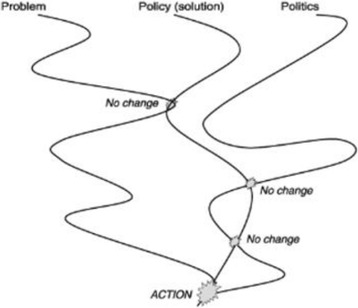
Results: By 2004, several reports and events had provided evidence on the state of the poor health outcomes and health financing in the country, thereby raising awareness of the situation. As a result, decision-makers identified the lack of a suitable health financing policy as an important issue that needed to be addressed. The change in the political discourse toward more accountability made room to test new mechanisms. A group of policy entrepreneurs from the World Bank, through numerous forms of influence (financial, ideational, network and knowledge-based) and building on several ongoing reforms, collaborated with senior government officials to place the PBF program on the agenda. The policy changes occurred as the result of two open policy windows (i.e. national and international), and in both instances, policy entrepreneurs were able to couple the policy streams to effect change.
Conclusion: The policy agenda of PBF in Cameroon underlined the importance of a perceived crisis in the policy reform process and the advantage of building a team to carry forward the policy process. It also highlighted the role of other sources of information alongside scientific evidence (eg.: workshop and study tour), as well as the role of previous policies and experiences, in shaping or influencing respectively the way issues are framed and reformers' actions and choices.
Keywords: Africa; Agenda setting; Cameroon; Case study; Health policy; Kingdon; Multiple streams approach; Performance-based financing; Policy analysis; Policy emergence.
Conflict of interest statement
Ethics approval and consent to participate
The study protocol was reviewed and approved by the Cameroon National Ethics Committee for Human Health Research (N0 2015/02/549/CE/CNERSH/SP) and the WHO Research Ethics Review Committee (RBF2014–395). Administrative authorization was granted by the Cameroonian Ministry of Health (D30-298 L/MINSANTE/SG/DROS/CRSPE/CEA2) prior to data collection. All respondents provided verbal or written informed consent before interviews. To ensure confidentiality and anonymity of the data, we replaced participants’ and interviewers’ names with codes.
Consent for publication
Key informants provided prior written consent to publish information they provided in their interview.
Competing interests
IS, JCTF and DMT have been involved in the implementation of the PBF program in Cameroon. The other authors have never been employed to implement a PBF program. The findings, interpretations and conclusions expressed in the paper are entirely those of the authors, and do not represent the views of their institution or the countries they represent.
Publisher’s Note
Springer Nature remains neutral with regard to jurisdictional claims in published maps and institutional affiliations.
Figures
References
-
- United Nations. Resolution adopted by the General Assembly on 25 September 2015. United Nations; 2015. http://www.un.org/ga/search/view_doc.asp?symbol=A/RES/70/1&Lang=E. Accessed 8 July 2017.
-
- World Health Assembly. Health in the 2030 Agenda for Sustainable Development. Report No.: A69/15. 2016. http://apps.who.int/gb/ebwha/pdf_files/WHA69/A69_15-en.pdf. Accessed 27 April 2017.
-
- United Nations. Outcome document of the Third International Conference on Financing for Development: Addis Ababa Action Agenda. United Nations; 2015. http://www.un.org/ga/search/view_doc.asp?symbol=A/CONF.227/L.1 Accessed 30 June 2017.
MeSH terms
LinkOut - more resources
Full Text Sources
Other Literature Sources
Research Materials
