


'The university should promote health, but not enforce it': opinions and attitudes about the regulation of sugar-sweetened beverages in a university setting
- PMID: 28764755
- PMCID: PMC5540300
- DOI: 10.1186/s12889-017-4626-8
'The university should promote health, but not enforce it': opinions and attitudes about the regulation of sugar-sweetened beverages in a university setting
Erratum in
-
Erratum to: BMC Public Health, Vol. 18.BMC Public Health. 2017 Sep 22;17(1):736. doi: 10.1186/s12889-017-4709-6. BMC Public Health. 2017. PMID: 28938882 Free PMC article. No abstract available.
Abstract
Background: The study aimed to determine the opinions and attitudes of a university population regarding the regulation of sugar-sweetened beverages in a university setting, primarily looking at differences in opinion between younger adults (under 30 years of age) and older adults (30 years of age or older).
Methods: An online survey was conducted at an Australian university in April-May 2016 using a convenience sample of students and staff between the ages of 16 and 84 years. The survey included questions about consumption of sugar-sweetened beverages and level of agreement and support of proposed sugar-sweetened beverage interventions. Quantitative response data and qualitative open-ended response data were analysed.
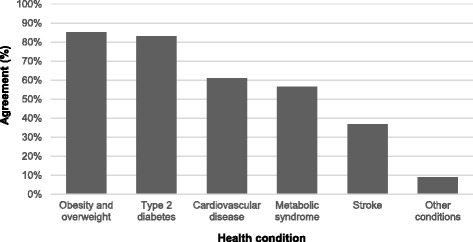
Results: Nine hundred thirteen responses from students and staff were analysed. In this population, consumption of sugar-sweetened beverages was low and awareness of the health risks of sugar-sweetened beverages was high. Overall, the surveyed population indicated more support for interventions that require higher levels of personal responsibility. The population did support some environment-centred, population-based interventions, such as increasing access to drinking water and reducing the price of healthier beverage alternatives. However there was less support for more restrictive interventions such as removing sugar-sweetened beverages from sale. Young adults tended to be less supportive of most interventions than older adults.
Conclusions: These findings indicate there is some support for environment-centred, population-based approaches to reduce the availability and appeal of sugar-sweetened beverages in an adult environment such as a university setting. However these results suggest that public health may need to focus less on educating populations about the harms associated with sugar-sweetened beverages. Instead, there should be greater emphasis on explaining to populations and communities why environment-centred approaches relating to the sale and promotion of sugar-sweetened beverages should be prioritised over interventions that simply target personal responsibility and individual behaviours.
Keywords: Sugar-sweetened beverages; Universities; Young adults.
Conflict of interest statement
Ethics approval and consent to participate
The survey was approved by the Human Research Ethics Committee of the University of Sydney, project number 2016/124. Written informed consent was obtained from all participants involved in completing the survey. All participants were required to read a Participant Information Statement and electronically agree to the Participant Consent Form before being able to access the survey.
Consent for publication
Not applicable.
Competing interests
The authors declare that they have no competing interests.
Publisher’s Note
Springer Nature remains neutral with regard to jurisdictional claims in published maps and institutional affiliations.
Figures
References
-
- Australian Bureau of Statistics . Australian health survey: first results, 2014–15. Canberra: Commonwealth of Australia; 2015.
Publication types
MeSH terms
Substances
LinkOut - more resources
Full Text Sources
Other Literature Sources
Medical
Miscellaneous
