


Does depression moderate handwashing in children?
- PMID: 28764758
- PMCID: PMC5540281
- DOI: 10.1186/s12889-017-4638-4
Does depression moderate handwashing in children?
Erratum in
-
Erratum to: BMC Public Health, Vol. 18.BMC Public Health. 2017 Sep 22;17(1):736. doi: 10.1186/s12889-017-4709-6. BMC Public Health. 2017. PMID: 28938882 Free PMC article. No abstract available.
Abstract
Background: Although diarrheal diseases are preventable and treatable, they are the leading cause of child mortality and morbidity as a consequence of poor hygiene and contaminated water. Handwashing with soap is an effective method for preventing and decreasing the incidence of diarrhea. However, mental disorders such as depression can substantially moderate an individual's ability to cope with daily life and can exert a negative influence on daily hygiene activities such as handwashing with soap, especially in children. The aim of this study was to explain the influence of depression on pupils' hand-washing behavior in Zimbabwe.
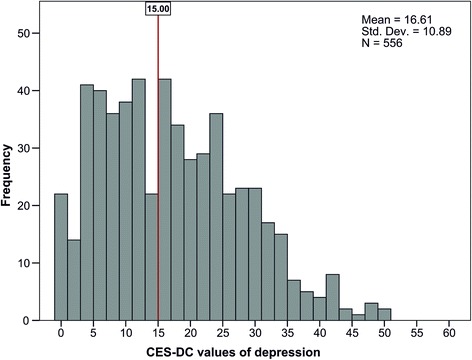
Methods: In a cross-sectional study, face-to-face interviews were carried out with primary school pupils in peri-urban Harare, Zimbabwe (n = 556) using a quantitative questionnaire to assess handwashing and its behavioral determinants in school settings. The Center for Epidemiological Studies Depression Scale for Children (CES-DC) was used to assess depression.
Results: More than half of the assessed children were depressed. Self-reported handwashing with soap among depressed children was significantly lower than among non-depressed children. Almost all behavioral determinants of hand-washing behavior were significantly lower in depressed children. The behavioral determinants worked differently in the depressed children than in the non-depressed children's group. The effects of important behavioral determinants on handwashing were moderated by depression.
Conclusions: Depression exerts a negative influence on handwashing in children. These results suggest depression-relieving measures should be conducted together with any water, sanitation, and hygiene (WASH) interventions to make such interventions more effective.
Keywords: Behavior change; Depression; Diarrhea prevention; Handwashing with soap and water; Peri-urban Zimbabwe; School children.
Conflict of interest statement
Ethics approval and consent to participate
All the procedures of the data collection were performed in accordance with the Declaration of Helsinki, and the protocol was approved by the Ethics Committee of the Research Council of Zimbabwe, Ministry of Health and Child Care, Ministry of Primary and Secondary Education in Zimbabwe, and by the Ethics Committee of the University of Zürich in Switzerland (Project ID: 7F-08209.02). Written informed consent was obtained from the parents of all children included in the study and we also obtained written assent from the children.
Consent for publication
Not applicable.
Competing interests
The authors declare that they have no competing interests.
Publisher’s Note
Springer Nature remains neutral with regard to jurisdictional claims in published maps and institutional affiliations.
Figures
References
-
- UNICEF. Diarrhoea: why children are still dying and what can be done. Geneva, Switzerland: WHO; 2009. Available: http://www.who.int/maternal_child_adolescent/documents/9789241598415/en/...; Accessed 4 April 2017.
-
- Peal A, Evans B, van der Voorden C. Hygiene and sanitation software. An overview of approaches. Water Supply and Sanitation Collaborative Council: Geneva, Switzerland; 2010.
MeSH terms
Associated data
LinkOut - more resources
Full Text Sources
Other Literature Sources
Medical
