


The shrinking health advantage: unintentional injuries among children and youth from immigrant families
- PMID: 28764763
- PMCID: PMC5540344
- DOI: 10.1186/s12889-017-4612-1
The shrinking health advantage: unintentional injuries among children and youth from immigrant families
Erratum in
-
Erratum to: BMC Public Health, Vol. 18.BMC Public Health. 2017 Sep 22;17(1):736. doi: 10.1186/s12889-017-4709-6. BMC Public Health. 2017. PMID: 28938882 Free PMC article. No abstract available.
Abstract
Background: Immigrants typically arrive in good health. This health benefit can decline as immigrants adopt behaviours similar to native-born populations. Risk of injury is low in immigrants but it is not known whether this changes with increasing time since migration. We sought to examine the association between duration of residence in Canada and risk of unintentional injury.
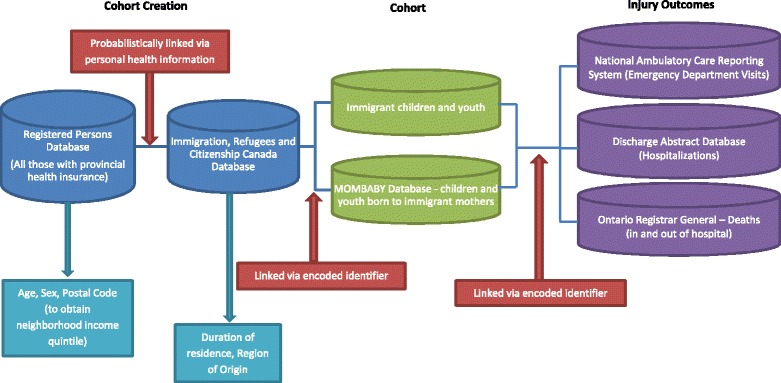
Methods: Population-based cross-sectional study of children and youth 0 to 24 years in Ontario, Canada (2011-2012), using linked health and administrative databases. The main exposure was duration of Canadian residence (recent: 0-5 years, intermediate: 6-10 years, long-term: >10 years). The main outcome measure was unintentional injuries. Cause-specific injury risk by duration of residence was also evaluated. Poisson regression models estimated rate ratios (RR) for injuries.
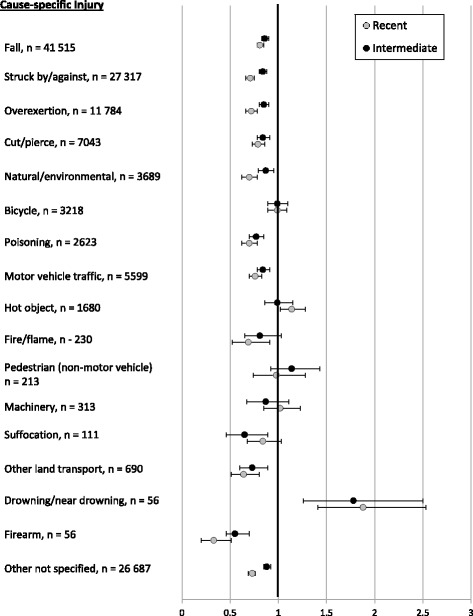
Results: 999951 immigrants were included with 24.2% recent and 26.4% intermediate immigrants. The annual crude injury rates per 100000 immigrants were 6831 emergency department visits, 151 hospitalizations, and 4 deaths. In adjusted models, recent immigrants had the lowest risk of injury and risk increased over time (RR 0.79; 95% CI 0.77, 0.81 recent immigrants, RR 0.90; 95% CI 0.88, 0.92 intermediate immigrants, versus long-term immigrants). Factors associated with injury included young age (0-4 years, RR 1.30; 95% CI 1.26, 1.34), male sex (RR 1.52; 95% CI 1.49, 1.55), and high income (RR 0.93; 95% CI 0.89, 0.96 quintile 1 versus 5). Longer duration of residence was associated with a higher risk of unintentional injuries for most causes except hot object/scald burns, machinery-related injuries, non-motor vehicle bicycle and pedestrian injuries. The risk of these latter injuries did not change significantly with increasing duration of residence in Canada. Risk of drowning was highest in recent immigrants.
Conclusions: Risk of all-cause and most cause-specific unintentional injuries in immigrants rises with increasing time since migration. This indicates the need to develop strategies for maintaining the immigrant health advantage over time while balancing the desire to support integration, active living, and healthy child development.
Keywords: Immigration; Migration; Pediatric.
Conflict of interest statement
Ethics approval and consent to participate
Ethics approval was obtained from The Hospital for Sick Children and Sunnybrook Health Sciences Centre Research Ethics Boards. Individual consent to participate was not obtained as no personal identifiers were available to investigators and individual data was anonymized.
Consent for publication
Not applicable.
Competing interests
The authors declare that they have no competing interests.
Publisher’s Note
Springer Nature remains neutral with regard to jurisdictional claims in published maps and institutional affiliations.
Figures
References
-
- Miller LS, Robinson JA, Cibula DA. Healthy Immigrant Effect: Preterm Births Among Immigrants and Refugees in Syracuse, NY. Matern Child Health J. 2016;20(2):484–93. - PubMed
Publication types
MeSH terms
LinkOut - more resources
Full Text Sources
Other Literature Sources
Medical
