. 2017 Aug 1;7(1):7025.
doi: 10.1038/s41598-017-07330-5.

2-Oxoesters: A Novel Class of Potent and Selective Inhibitors of Cytosolic Group IVA Phospholipase A2

Affiliations

2-Oxoesters: A Novel Class of Potent and Selective Inhibitors of Cytosolic Group IVA Phospholipase A2

Maroula G Kokotou et al. Sci Rep. .

Abstract

Cytosolic phospholipase A2 (GIVA cPLA2) is the only PLA2 that exhibits a marked preference for hydrolysis of arachidonic acid containing phospholipid substrates releasing free arachidonic acid and lysophospholipids and giving rise to the generation of diverse lipid mediators involved in inflammatory conditions. Thus, the development of potent and selective GIVA cPLA2 inhibitors is of great importance. We have developed a novel class of such inhibitors based on the 2-oxoester functionality. This functionality in combination with a long aliphatic chain or a chain carrying an appropriate aromatic system, such as the biphenyl system, and a free carboxyl group leads to highly potent and selective GIVA cPLA2 inhibitors (X I(50) values 0.00007-0.00008) and docking studies aid in understanding this selectivity. A methyl 2-oxoester, with a short chain carrying a naphthalene ring, was found to preferentially inhibit the other major intracellular PLA2, the calcium-independent PLA2. In RAW264.7 macrophages, treatment with the most potent 2-oxoester GIVA cPLA2 inhibitor resulted in over 50% decrease in KLA-elicited prostaglandin D2 production. The novel, highly potent and selective GIVA cPLA2 inhibitors provide excellent tools for the study of the role of the enzyme and could contribute to the development of novel therapeutic agents for the treatment of inflammatory diseases.


Conflict of interest statement

The authors declare that they have no competing interests.

Figures
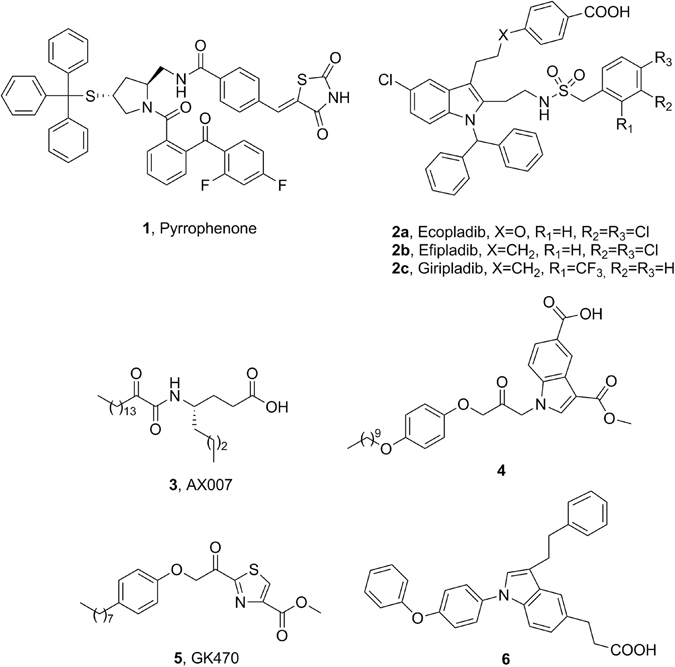
Figure 1
Figure 1
Common inhibitors of phospholipases A2.
Figure 2
Figure 2
Design of 2-oxoesters.
Figure 3
Figure 3
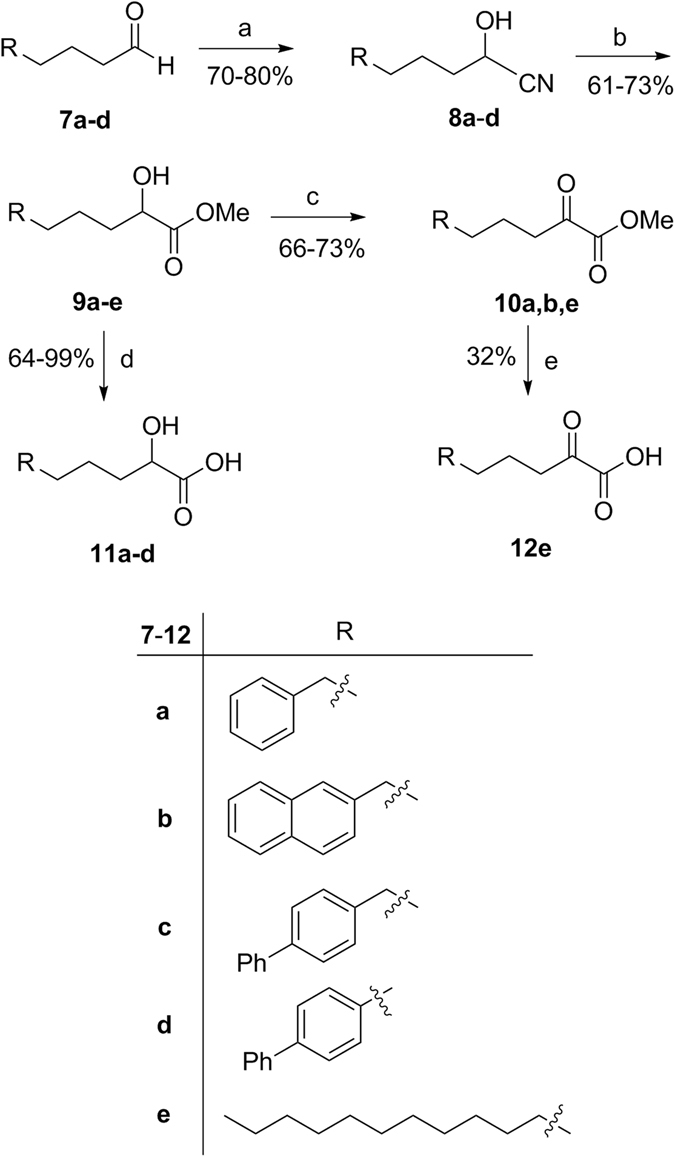
Synthesis of 2-hydroxy acids and 2-oxoacids. (a) (i) aq. sol. NaHSO3, CH2Cl2, (ii) KCN, H2O; (b) 4 N HCl/CH3OH; (c) Dess-Martin periodinane reagent, dry CH2Cl2; (d) NaOH 1 N, CH3OH; (e) 20% aq. sol. Cs2CO3, CH3OH.
Figure 4
Figure 4
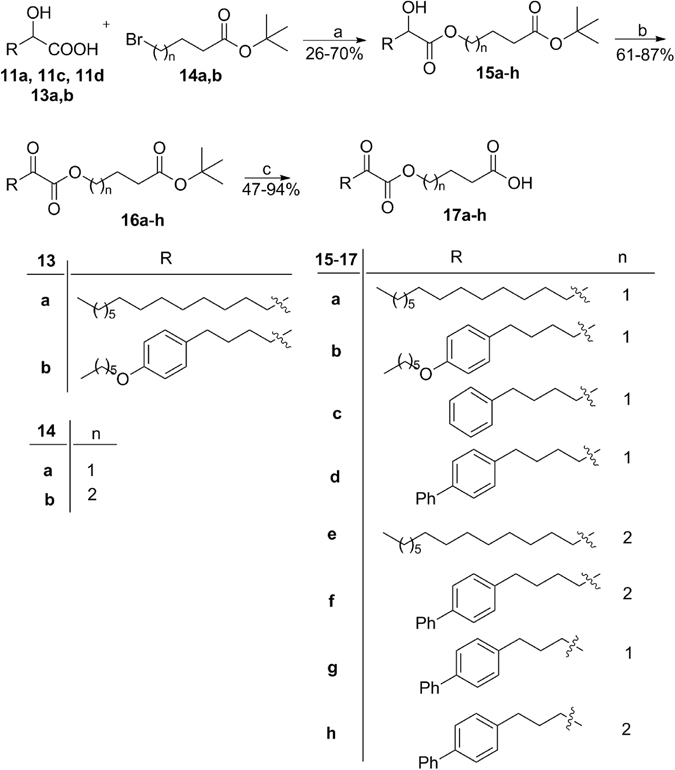
Synthesis of 2-oxoesters. (a) i. 20% aq. sol. Cs2CO3, THF, H2O, ii. Br(CH2)nCH2CH2COOBut, DMF, reflux overnight; (b) Dess-Martin periodinane reagent, dry CH2Cl2; (c) 50% CF3COOH in CH2Cl2.
Figure 5
Figure 5
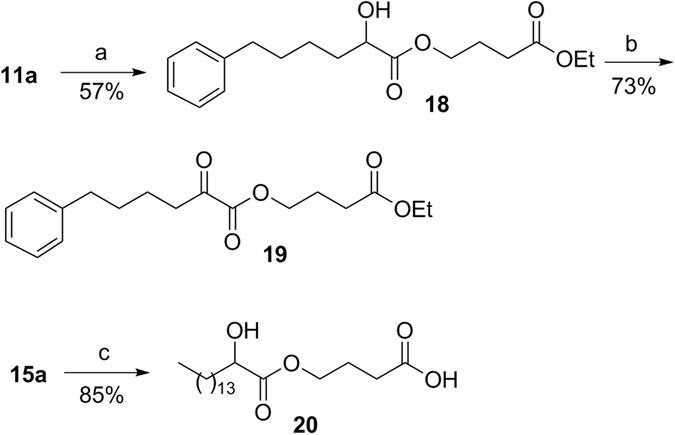
Synthesis of compounds 19 and 20. (a) i. 20% aq. sol. Cs2CO3, THF, H2O, ii. BrCH2CH2CH2COOEt, DMF, reflux overnight; (b) Dess-Martin periodinane reagent, dry CH2Cl2; (c) 50% CF3COOH in CH2Cl2.
Figure 6
Figure 6
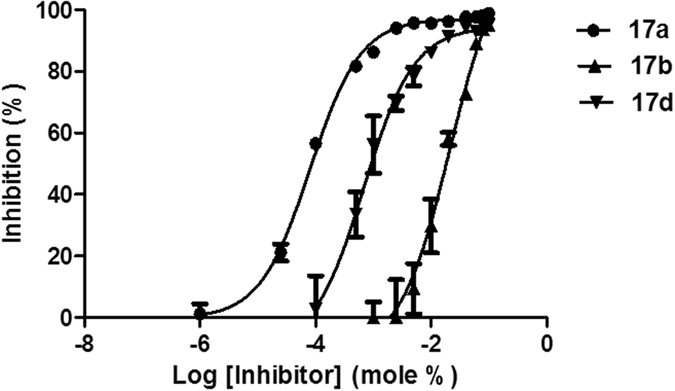
Inhibition curves for 17a, 17b and 17d. The curves were generated using GraphPad Prism with a nonlinear regression targeted at symmetrical sigmoidal curves based on plots of % inhibition versus log(inhibitor concentration). The reported X I(50) values were calculated from the resultant plots.
Figure 7
Figure 7
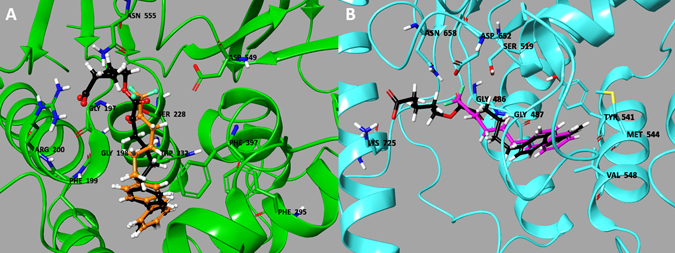
Binding mode of inhibitor 17f in the active site of (a) GIVA cPLA2 and (b) GVIA iPLA2.
Figure 8
Figure 8
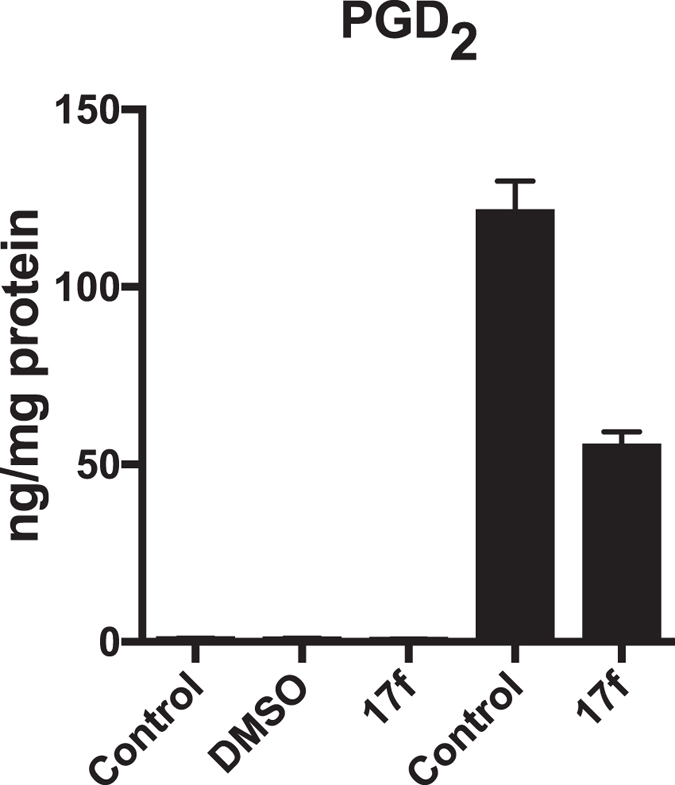
Inhibitor 17f inhibits KLA-elicited prostaglandin D2 biosynthesis by macrophages. Macrophages were pre-treated with media (control), vehicle control (DMSO, 0.1%) or inhibitor 17f (5 μM) 1 hr before KLA (100 ng/mL, ■) or mock (□) treatment. Supernatants were collected 24 hr following stimulation for eicosanoid quantification. Graph displays the mean ± SEM of a single experiment containing technical duplicates that is representative of 2 independent experiments. * indicates statistical difference compared to KLA treatment (P ≤ 0.05).

References

    1. Dennis EA, Cao J, Hsu YH, Magrioti V, Kokotos G. Phospholipase A2 enzymes: physical structure, biological function, disease implication, chemical inhibition, and therapeutic intervention. Chem. Rev. 2011;111:6130–6185. doi: 10.1021/cr200085w. - DOI - PMC - PubMed
    1. Ghosh M, Tucker DE, Burchett SA, Leslie CC. Properties of the group IV phospholipase A2 family. Prog. Lipid Res. 2006;45:487–510. doi: 10.1016/j.plipres.2006.05.003. - DOI - PubMed
    1. Dennis EA, Norris PC. Eicosanoid storm in infection and inflammation. Nat. Rev. Immunol. 2015;15:511–523. doi: 10.1038/nri3859. - DOI - PMC - PubMed
    1. Murakami M, et al. Recent progress in phospholipase A2 research: from cells to animals to humans. Prog. Lipid Res. 2011;50:152–192. doi: 10.1016/j.plipres.2010.12.001. - DOI - PubMed
    1. Leslie CC. Cytosolic phospholipase A2: physiological function and role in disease. J. Lipid Res. 2015;56:1386–1402. doi: 10.1194/jlr.R057588. - DOI - PMC - PubMed

Publication types

MeSH terms