


Deleterious Effect of RAS and Evolutionary High-risk TP53 Double Mutation in Colorectal Liver Metastases
- PMID: 28767562
- PMCID: PMC7462436
- DOI: 10.1097/SLA.0000000000002450
Deleterious Effect of RAS and Evolutionary High-risk TP53 Double Mutation in Colorectal Liver Metastases
Abstract
Objective: To assess the impact of somatic gene mutations on survival among patients undergoing resection of colorectal liver metastases (CLM).
Background: Patients undergoing CLM resection have heterogeneous outcomes, and accurate risk stratification is necessary to optimize patient selection for surgery.
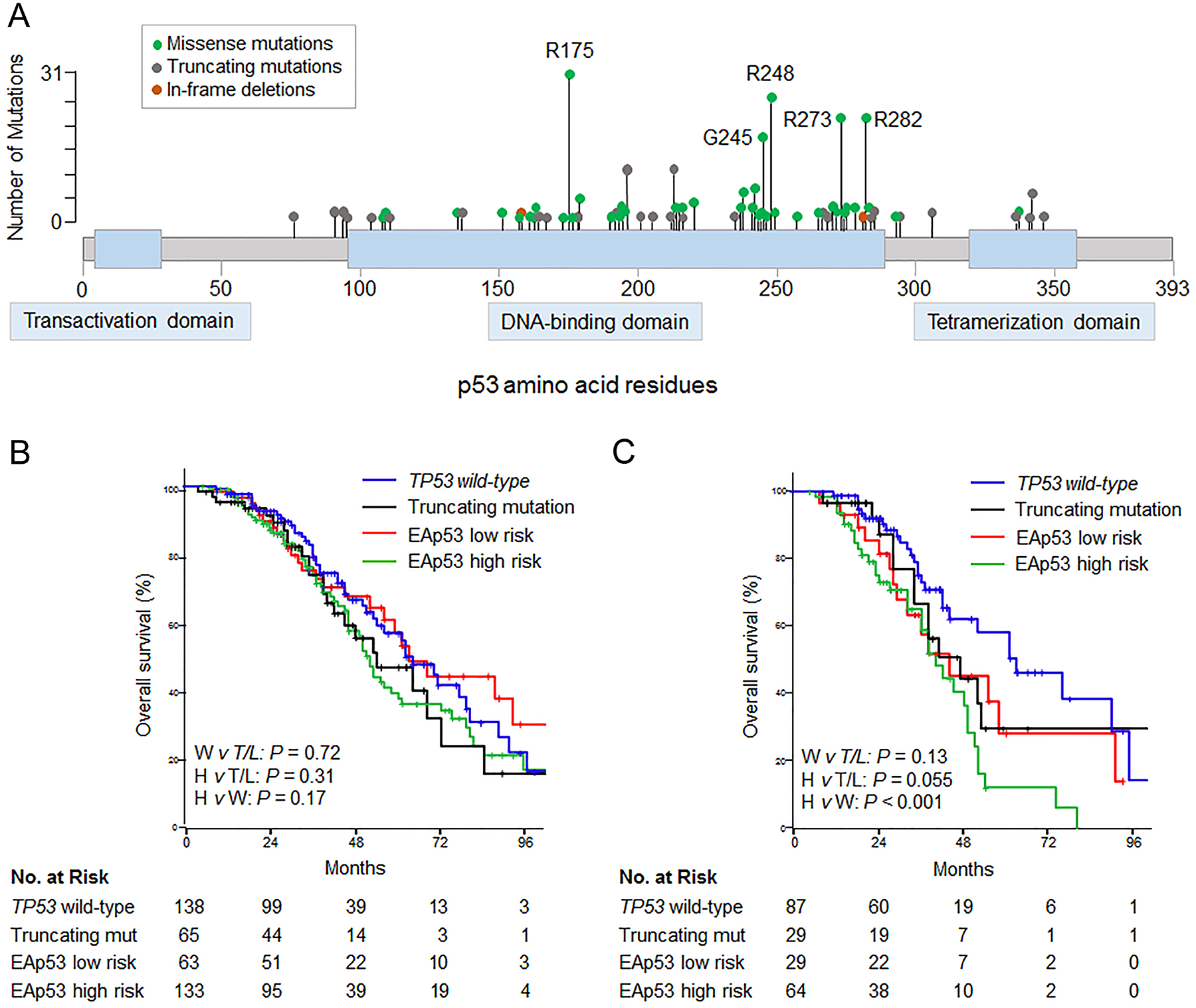
Methods: Next-generation sequencing of 50 cancer-related genes was performed from primary tumors and/or liver metastases in 401 patients undergoing CLM resection. Missense TP53 mutations were classified by the evolutionary action score (EAp53)-a novel approach that dichotomizes mutations as low or high risk.
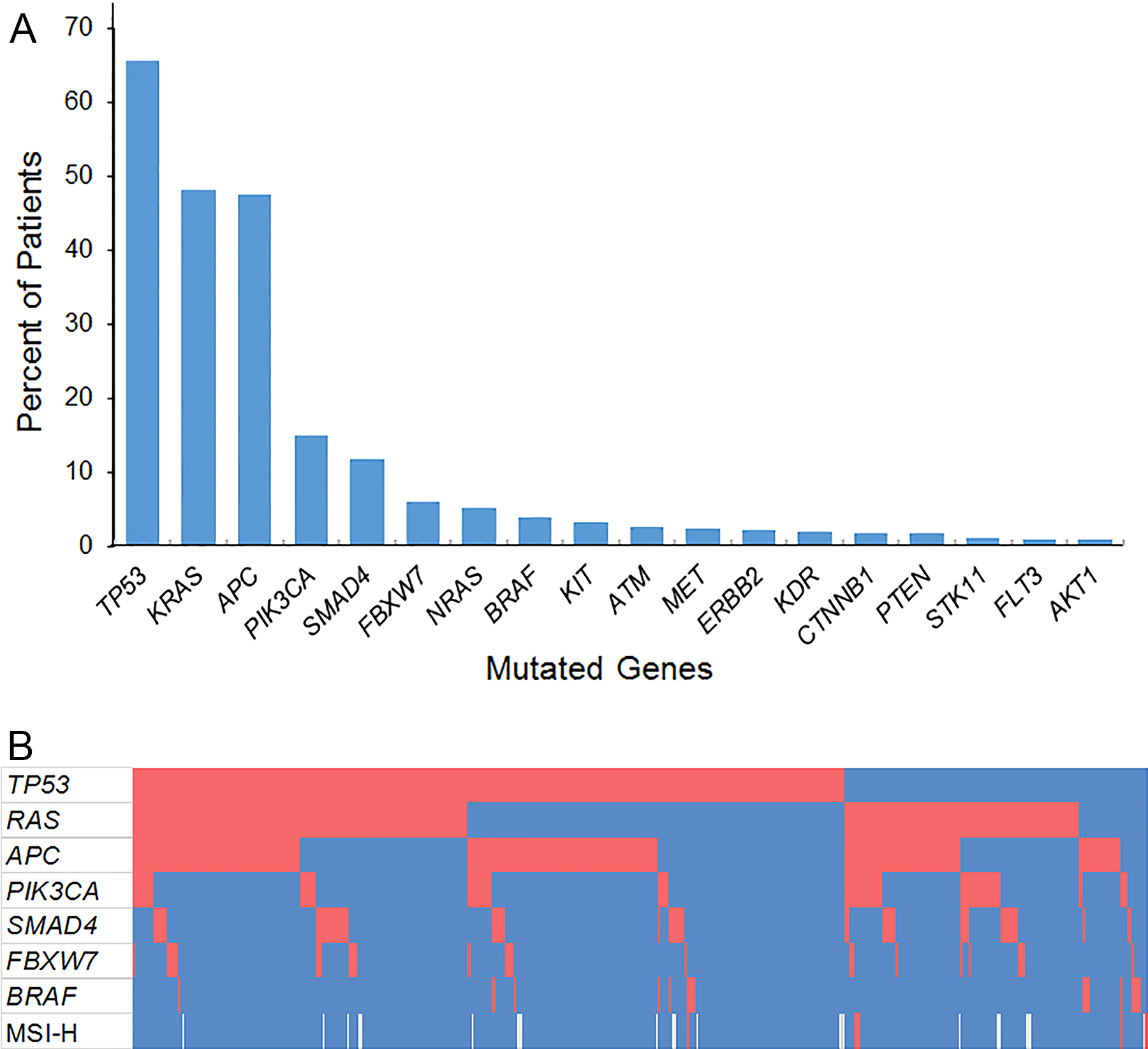
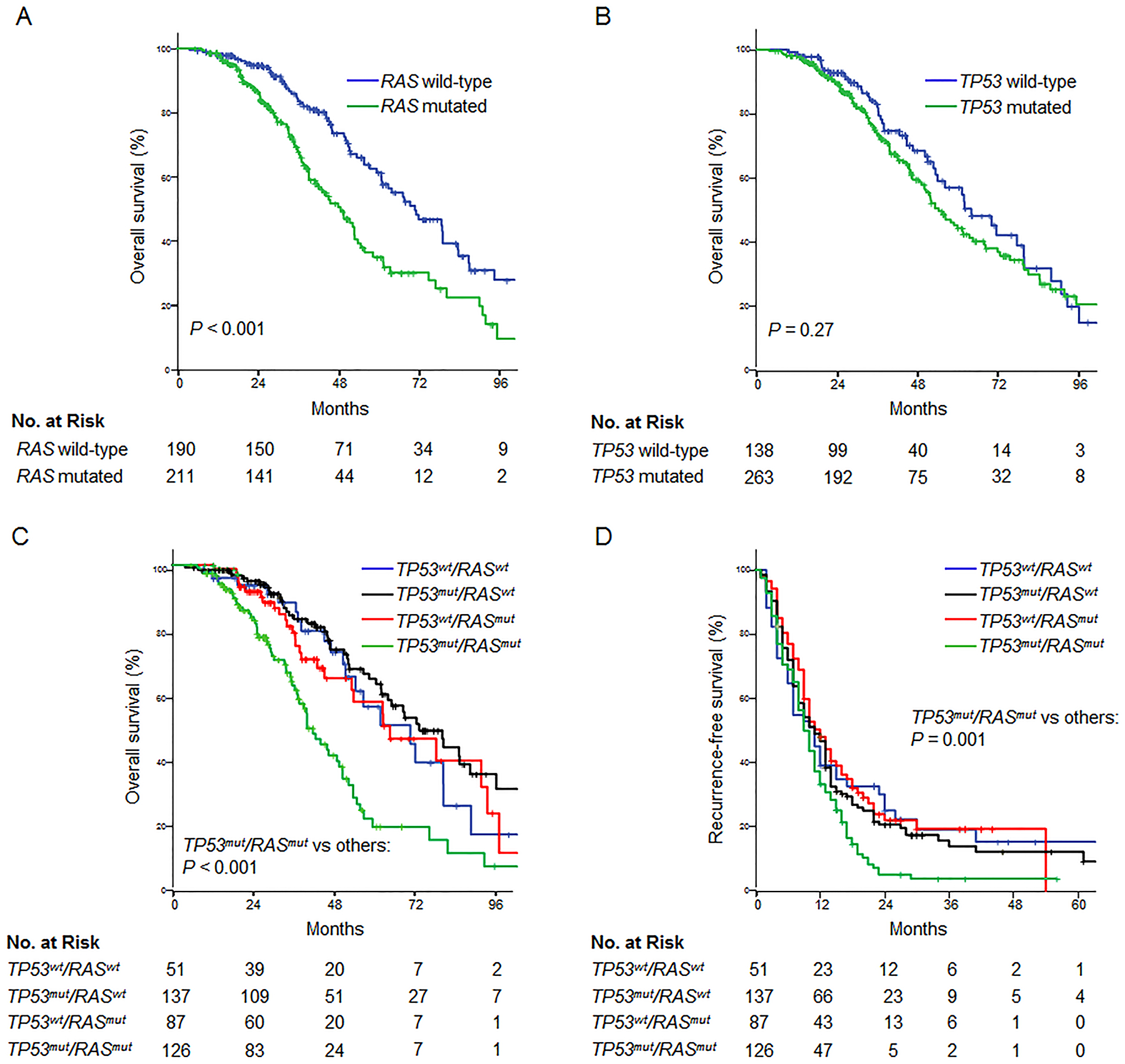
Results: The most frequent somatic gene mutations were TP53 (65.6%), followed by KRAS (48.1%) and APC (47.4%). Double mutation in RAS/TP53, identified in 31.4% of patients, was correlated with primary tumor location in the right colon (P = 0.006). On multivariable analysis, RAS/TP53 double mutation was an independent predictor of shorter overall survival (hazard ratio 2.62, 95% confidence interval 1.41-4.87, P = 0.002). In patients with co-mutated RAS, EAp53 high-risk mutations were associated with shorter 5-year overall survival of 12.2%, compared with 55.7% for TP53 wild type (P < 0.001). The negative prognostic effects of RAS and TP53 mutations were limited to tumors harboring mutations in both genes.
Conclusions: Concomitant RAS and TP53 mutations are associated with decreased survival after CLM resection. A high EAp53 predicts a subset of patients with worse prognosis. These preliminary analyses suggest that surgical resection of liver metastases should be carefully considered in this subset of patients.
Figures
Comment in
-
Comment on "Deleterious Effect of RAS and Evolutionary High-risk TP53 Double Mutation in Colorectal Liver Metastases".Ann Surg. 2020 Feb;271(2):e16. doi: 10.1097/SLA.0000000000003594. Ann Surg. 2020. PMID: 31478981 No abstract available.
-
Comment on "Deleterious Effect of RAS and Evolutionary High-risk TP53 Double Mutation in Colorectal Liver Metastases".Ann Surg. 2020 Feb;271(2):e15-e16. doi: 10.1097/SLA.0000000000003600. Ann Surg. 2020. PMID: 31478983 No abstract available.
-
Response to Comment on "Deleterious Effect of RAS and Evolutionary High Risk TP53 Double Mutation in Colorectal Liver Metastases".Ann Surg. 2020 Feb;271(2):e16-e17. doi: 10.1097/SLA.0000000000003589. Ann Surg. 2020. PMID: 31913924 No abstract available.
References
-
- Siegel RL, Miller KD, Jemal A. Cancer statistics, 2016. CA Cancer J Clin 2016; 66(1):7–30. - PubMed
-
- Passot G, Denbo JW, Yamashita S, et al. Is hepatectomy justified for patients with RAS mutant colorectal liver metastases? An analysis of 524 patients undergoing curative liver resection. Surgery 2017; 161(2):332–340. - PubMed
-
- Loupakis F, Cremolini C, Masi G, et al. Initial therapy with FOLFOXIRI and bevacizumab for metastatic colorectal cancer. N Engl J Med 2014; 371(17):1609–18. - PubMed
MeSH terms
Substances
Grants and funding
LinkOut - more resources
Full Text Sources
Other Literature Sources
Medical
Research Materials
Miscellaneous
