


Early rigorous control interventions can largely reduce dengue outbreak magnitude: experience from Chaozhou, China
- PMID: 28768542
- PMCID: PMC5541667
- DOI: 10.1186/s12889-017-4616-x
Early rigorous control interventions can largely reduce dengue outbreak magnitude: experience from Chaozhou, China
Erratum in
-
Erratum to: BMC Public Health, Vol. 18.BMC Public Health. 2017 Sep 22;17(1):736. doi: 10.1186/s12889-017-4709-6. BMC Public Health. 2017. PMID: 28938882 Free PMC article. No abstract available.
Abstract
Background: Dengue fever is a severe public heath challenge in south China. A dengue outbreak was reported in Chaozhou city, China in 2015. Intensified interventions were implemented by the government to control the epidemic. However, it is still unknown the degree to which intensified control measures reduced the size of the epidemics, and when should such measures be initiated to reduce the risk of large dengue outbreaks developing?
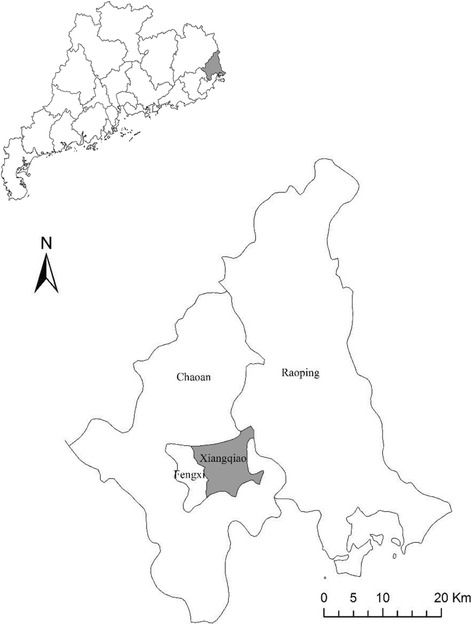
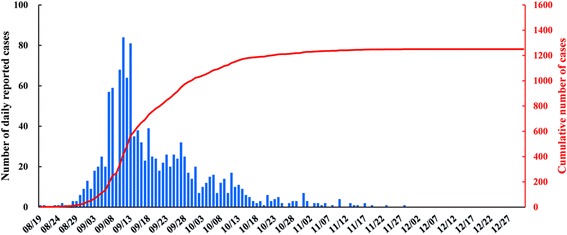
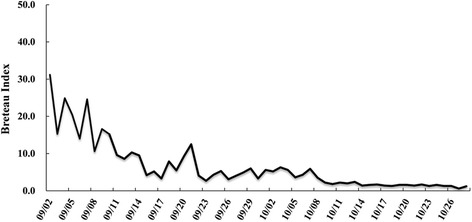
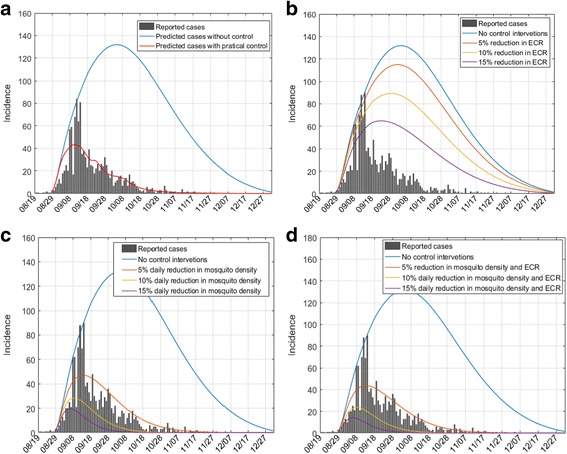
Methods: We selected Xiangqiao district as study setting because the majority of the indigenous cases (90.6%) in Chaozhou city were from this district. The numbers of daily indigenous dengue cases in 2015 were collected through the national infectious diseases and vectors surveillance system, and daily Breteau Index (BI) data were reported by local public health department. We used a compartmental dynamic SEIR (Susceptible, Exposed, Infected and Removed) model to assess the effectiveness of control interventions, and evaluate the control effect of intervention timing on dengue epidemic.
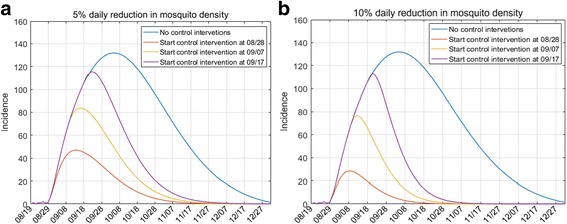
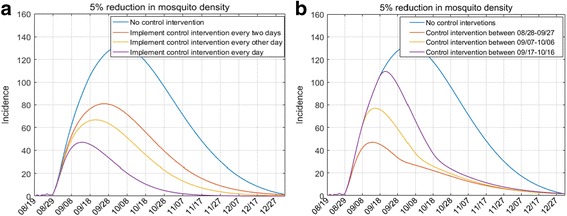
Results: A total of 1250 indigenous dengue cases was reported from Xiangqiao district. The results of SEIR modeling using BI as an indicator of actual control interventions showed a total of 1255 dengue cases, which is close to the reported number (n = 1250). The size and duration of the outbreak were highly sensitive to the intensity and timing of interventions. The more rigorous and earlier the control interventions implemented, the more effective it yielded. Even if the interventions were initiated several weeks after the onset of the dengue outbreak, the interventions were shown to greatly impact the prevalence and duration of dengue outbreak.
Conclusions: This study suggests that early implementation of rigorous dengue interventions can effectively reduce the epidemic size and shorten the epidemic duration.
Keywords: Compartmental dynamic model; Dengue fever; Epidemic; SEIR model.
Conflict of interest statement
Ethics approval and consent to participate
All data used in this study were provided by Guangdong Provincial Center for Disease Control and Prevention.
Consent for publication
Not applicable.
Competing interests
The authors declare that they have no competing interests.
Publisher’s Note
Springer Nature remains neutral with regard to jurisdictional claims in published maps and institutional affiliations.
Figures
References
MeSH terms
LinkOut - more resources
Full Text Sources
Other Literature Sources
Medical
