


More accurate systolic blood pressure measurement is required for improved hypertension management: a perspective
- PMID: 28769596
- PMCID: PMC5533571
- DOI: 10.2147/MDER.S141599
More accurate systolic blood pressure measurement is required for improved hypertension management: a perspective
Abstract
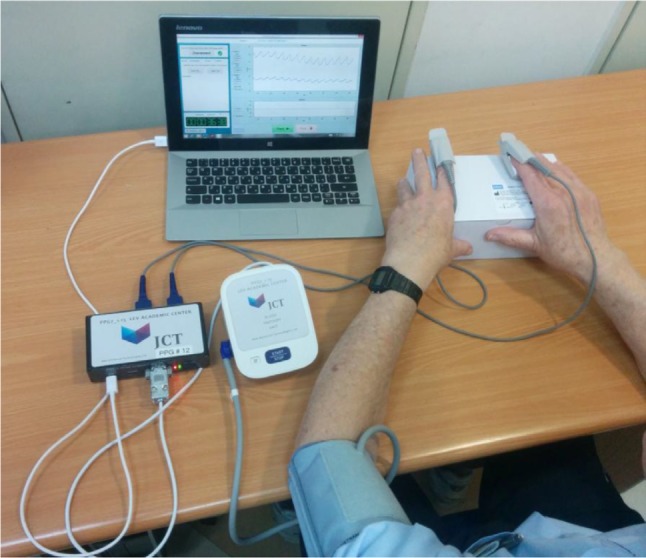
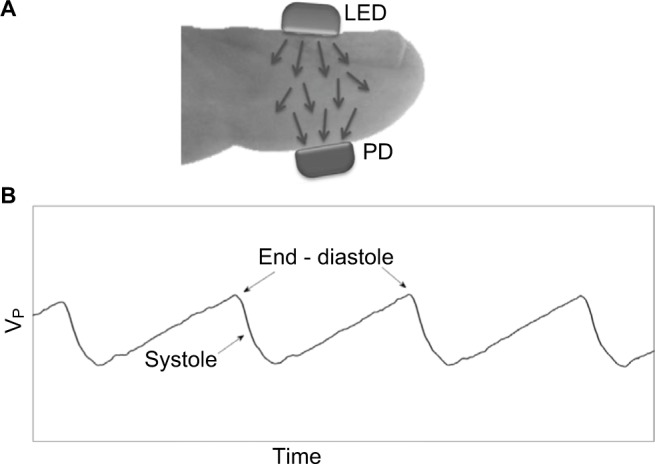
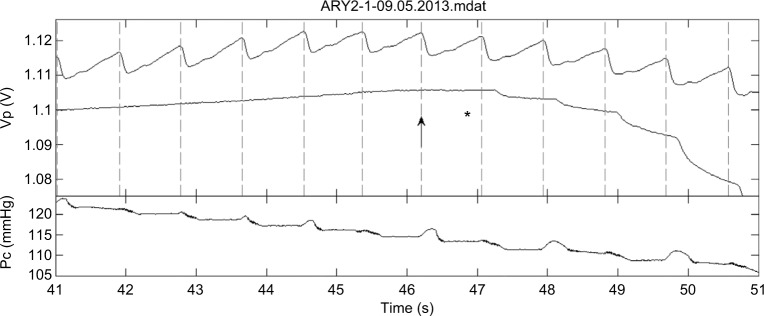
The commonly used techniques for systolic blood pressure (SBP) and diastolic blood pressure (DBP) measurement are the auscultatory Korotkoff-based sphygmomanometry and oscillometry. The former technique is relatively accurate but is limited to a physician's office because its automatic variant is subject to noise artifacts. Consequently, the Korotkoff-based measurement overestimates the blood pressure in some patients due to white coat effect, and because it is a single measurement, it cannot properly represent the variable blood pressure. Automatic oscillometry can be used at home by the patient and is preferred even in clinics. However, the technique's accuracy is low and errors of 10-15 mmHg are common. Recently, we have developed an automatic technique for SBP measurement, based on an arm pressure cuff and a finger photoplethysmographic probe. The technique was found to be significantly more accurate than oscillometry, and comparable to the Korotkoff-based technique, the reference-standard for non-invasive blood pressure measurements. The measurement of SBP is a mainstay for the diagnosis and follow-up of hypertension, which is a major risk factor for several adverse events, mainly cardiovascular. Lowering blood pressure evidently reduces the risk, but excessive lowering can result in hypotension and consequently hypoperfusion to vital organs, since blood pressure is the driving force for blood flow. Erroneous measurement by 10 mmHg can lead to a similar unintended reduction of SBP and may adversely affect patients treated to an SBP of 120-130 mmHg. In particular, in elderly patients, unintended excessive reduction of blood pressure due to inaccurate SBP measurement can result in cerebral hypoperfusion and consequent cognitive decline. By using a more accurate technique for automatic SBP measurement (such as the photoplethysmographic-based technique), the optimal blood pressure target can be achieved with lower risk for hypotension and its adverse events.
Keywords: cognitive impairment; hypotension; oscillometry; photoplethysmography.
Conflict of interest statement
Disclosure Meir Nitzan has a US patent on a PPG-based systolic blood pressure meter and has also applied for another US patent. The authors report no other conflicts of interest in this work.
Figures
References
-
- Stergiou GS, Ntineri A, Kollias A, Ohkubo T, Imai Y, Parati G. Blood pressure variability assessed by home measurements: a systematic review. Hypertens Res. 2014;37(6):565–572. - PubMed
-
- McDonald C, Pearce MS, Kerr SR, Newton JL. Blood pressure variability and cognitive decline in older people: a 5-year longitudinal study. J Hypertens. 2017;35(1):140–147. - PubMed
-
- Ng KG, Small CF. Survey of automated noninvasive blood pressure monitors. J Clin Eng. 1994;19(6):452–475. - PubMed
-
- Forouzanfar M, Dajani HR, Groza VZ, Bolic M, Rajan S, Batkin I. Oscillometric blood pressure estimation: past, present, and future. IEEE Rev Biomed Eng. 2015;8:44–63. - PubMed
-
- Stergiou GS, Siontis KC, Ioannidis JP. Home blood pressure as a cardiovascular outcome predictor: it’s time to take this method seriously. Hypertension. 2010;55(6):1301–1303. - PubMed
LinkOut - more resources
Full Text Sources
Other Literature Sources
