Review
. 2017 Aug 2;95(3):490-503.
doi: 10.1016/j.neuron.2017.05.039.

The Biology of Forgetting-A Perspective

Affiliations
Review

The Biology of Forgetting-A Perspective

Ronald L Davis et al. Neuron. .

Abstract

Pioneering research studies, beginning with those using Drosophila, have identified several molecular and cellular mechanisms for active forgetting. The currently known mechanisms for active forgetting include neurogenesis-based forgetting, interference-based forgetting, and intrinsic forgetting, the latter term describing the brain's chronic signaling systems that function to slowly degrade molecular and cellular memory traces. The best-characterized pathway for intrinsic forgetting includes "forgetting cells" that release dopamine onto engram cells, mobilizing a signaling pathway that terminates in the activation of Rac1/Cofilin to effect changes in the actin cytoskeleton and neuron/synapse structure. Intrinsic forgetting may be the default state of the brain, constantly promoting memory erasure and competing with processes that promote memory stability like consolidation. A better understanding of active forgetting will provide insights into the brain's memory management system and human brain disorders that alter active forgetting mechanisms.

Keywords: Rac1; active forgetting; consolidation; dopamine; hippocampal neurogenesis; intrinsic forgetting; memory.


Figures

Figure 1
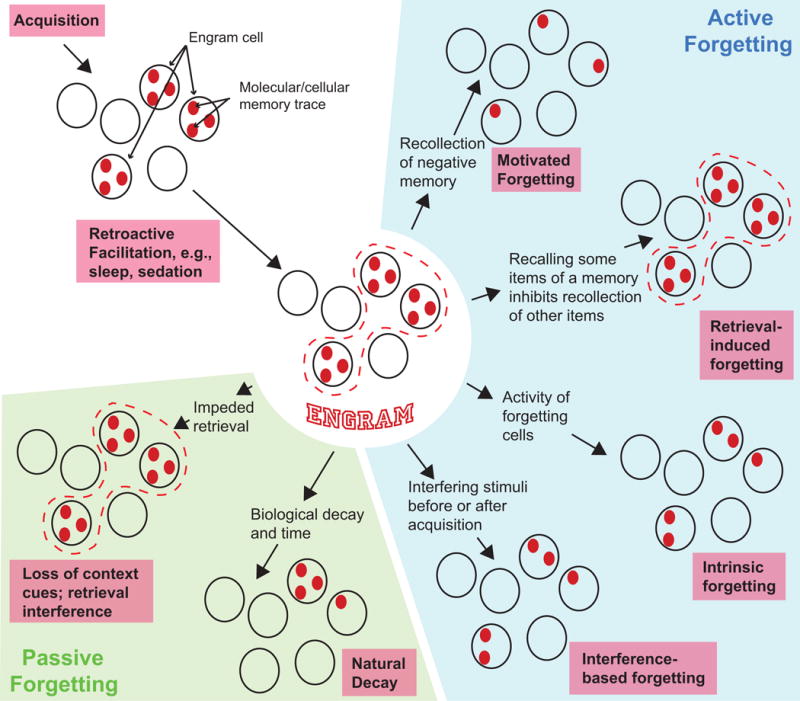
Figure 1. The Engram, Engram Cells, Molecular and Cellular Memory Traces, and Constructs of Forgetting from Experimental Psychology
Acquisition leads to the formation of molecular and cellular memory traces (red ovals) within a set of neurons – the engram cells – that store learned information. Sleep or sedation, after acquisition, can protect from interfering stimuli and thus strengthen memory traces (center of figure). The memory engram is envisioned as the composite of all molecular and cellular memory traces that form during acquisition within the population of engram cells (dashed red line) that encode a memory. Memory encoding can lead to weak or strong memory engrams depending on the strength and nature of the learned information. Passive forgetting (lower left of figure) is postulated to occur through at least three separate mechanisms: (1) loss of context cues across time that make retrieval difficult, (2) interference during retrieval from other similar memories accumulated across time, and (3) the “natural” decay of memory traces from the general instability of biological materials and the passage of time. Loss of context cues and retrieval interference may leave the engram intact, whereas natural decay would lead to a loss of its integrity. At least three major forms of active forgetting have been postulated from research in experimental psychology (right side of figure). Interference-based forgetting posits that other competing information or activities before (proactive) or after (retroactive) the learning event accelerate the decay of memory traces. Motivated forgetting occurs when cognitive mechanisms are voluntarily engaged to weaken memory traces, often because the memory has some unpleasant quality. Retrieval-induced forgetting, offered here as an example for contrast, occurs when some aspects of a memory are recalled that suppress the recall of other aspects related to the recalled memory. This type of forgetting may disrupt the retrieval of a relatively intact memory engram. We introduce in this Perspective the concept of intrinsic forgetting – one type of active forgetting – that involves the activity of forgetting cells and the brain’s intrinsic biochemical and molecular pathways to degrade molecular and cellular memory traces.
Figure 2
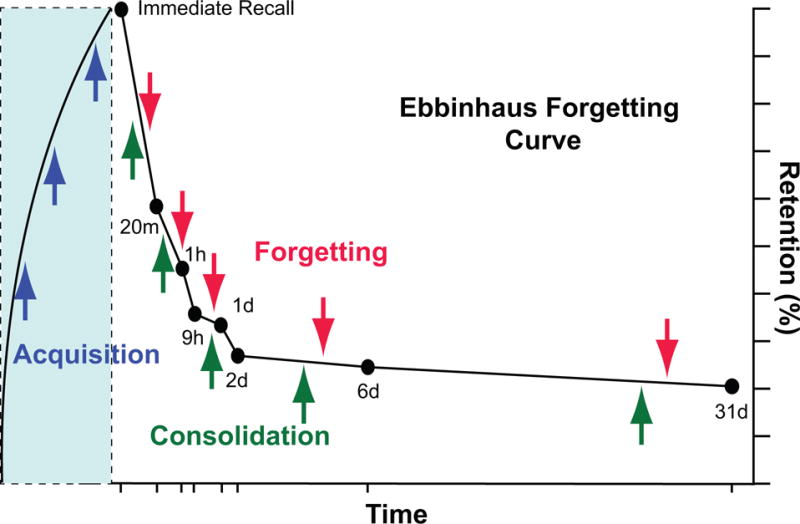
Figure 2. Balance between Acquisition/Consolidation Forces and Forgetting
Graph using Ebbinhaus’s famous forgetting curve to display the balance between the strengthening forces of acquisition and consolidation and the weakening forces of forgetting in forming a memory engram. Acquisition leads to molecular and cellular memory traces in engram cells that encode memory (Figure 1). These are stabilized, and evolve, by the process of consolidation, leading to a rather stable memory shown in this case to occur at 2 days after acquisition. Active forgetting provides a balance to these biological processes by eroding memory traces. Traditional studies in the neuroscience of learning and memory have emphasized processes underlying acquisition and consolidation. More recently, biological insights into the mechanisms for active forgetting have been made.
Figure 3
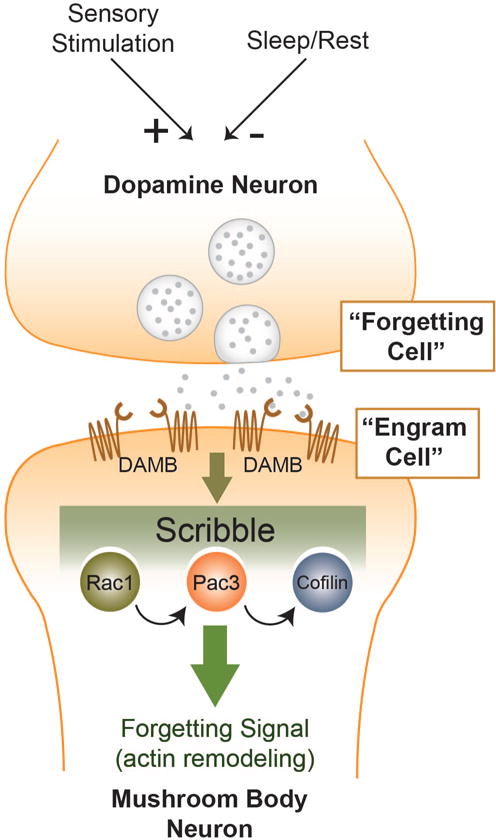
Figure 3. The Dopamine Neuron/Rac1/Cofilin Signaling Pathway for Active Forgetting
A subset of dopamine neurons that innervate the mushroom body neurons promote forgetting. Although these neurons exhibit chronic activity, they are modulated by external and internal factors with increased sensory stimulation increasing their activity and sleep/rest decreasing their activity. The signal from the dopamine neurons is received by the DAMB receptor expressed on mushroom body neurons. This signal is communicated through a signaling complex scaffolded by the protein Scribble and containing Rac1, Pac3, and Cofilin. Cofilin regulates the remodeling of the actin cytoskeleton to mediate active forgetting. As conceptualized in Figure 1, the mushroom body neurons in this case are “engram cells.” Neurons that promote forgetting (dopamine neurons) in the engram cells are thus termed “forgetting cells.”
Figure 4
Figure 4. Small G-protein Involvement in the Active Forgetting of Memory Types in Drosophila
Memory retention after aversive olfactory classical conditioning is depicted as the solid line and is composed of at least two types of memory, anesthesia-sensitive memory (ASM) and anesthesia-resistant (ARM) memory. Experimental studies have revealed that Rac1 is involved in the biochemistry of forgetting ASM whereas cdc42 is involved in the biochemistry of forgetting ASM.
Figure 5
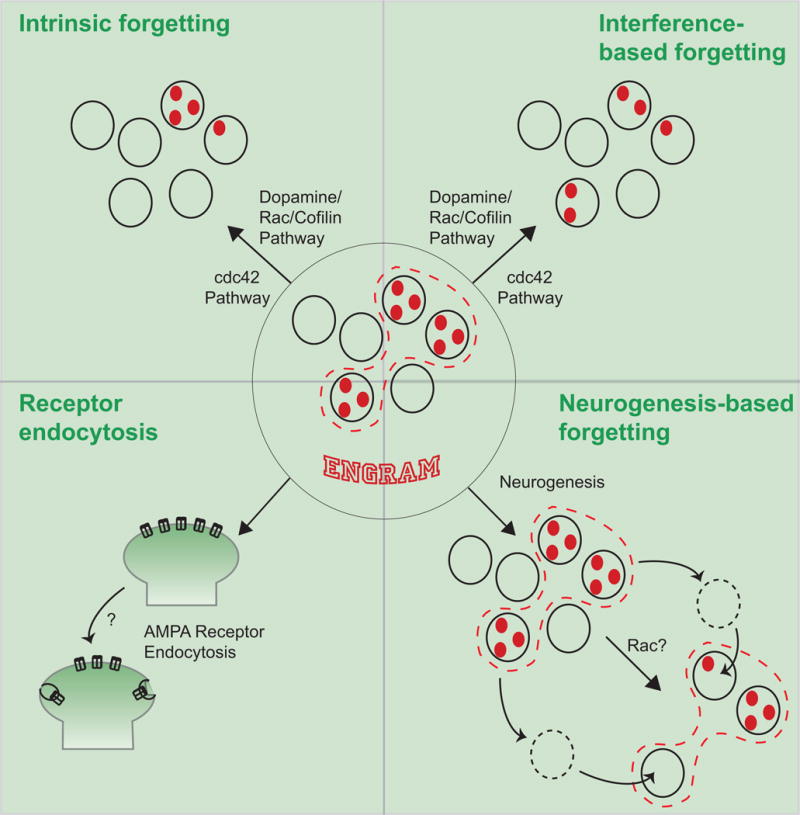
Figure 5. Biological Mechanisms for Active Forgetting
Recent neuroscience studies have identified several biological mechanisms for active forgetting. Two different biochemical pathways, one including Dopamine➔Rac1➔Cofilin and the other involving cdc42 are involved in both intrinsic forgetting and interference-based active forgetting. Although it is likely that both pathways lead to the erosion of the memory engram, this has not yet been shown experimentally. Hippocampal-based memories are subject to active forgetting through neurogenesis degrading existing memory engrams, which may also involve the activity of Rac1. AMPA receptor endocytosis has been hypothesized to offer a fourth active forgetting mechanism operating on some types of memory.

References

    1. Akalal DBG, Wilson CF, Zong L, Tanaka NK, Ito K, Davis RL. Roles for Drosophila mushroom body neurons in olfactory learning and memory. Learn Mem. 2006;13:659–668. - PMC - PubMed
    1. Akers KG, Martinez-Canabal A, Restivo L, Yiu AP, De Cristofaro A, Hsiang HL, Wheeler AL, Guskjolen A, Niibori Y, Shoji H, et al. Hippocampal neurogenesis regulates forgetting during adulthood and infancy. Science. 2014;344:598–602. - PubMed
    1. Alberini CM, Kandel ER. The regulation of transcription in memory consolidation. Cold Spring Harb Perspect Biol. 2015;7:a021741. - PMC - PubMed
    1. Anderson MC. Rethinking interference theory: Executive control and the mechanisms of forgetting. J Mem Lang. 2003;49:415–445.
    1. Anderson MC, Bjork RA. In: Mechanisms of Inhibition in Long-Term Memory In Inhibitory Processes in Attention, Memory, and Language. Dagenbach D, Carr T, editors. Academic Press; 1994. pp. 265–325.

LinkOut - more resources