


Advances in nonhuman primate models of autism: Integrating neuroscience and behavior
- PMID: 28774750
- PMCID: PMC5810939
- DOI: 10.1016/j.expneurol.2017.07.021
Advances in nonhuman primate models of autism: Integrating neuroscience and behavior
Abstract
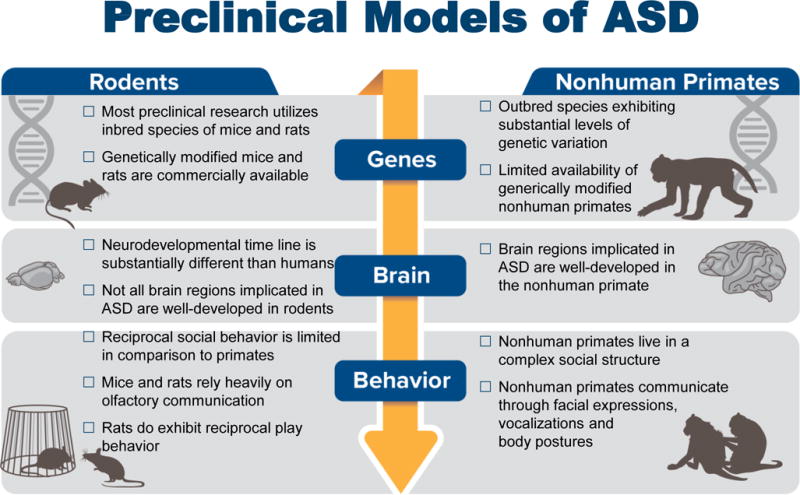
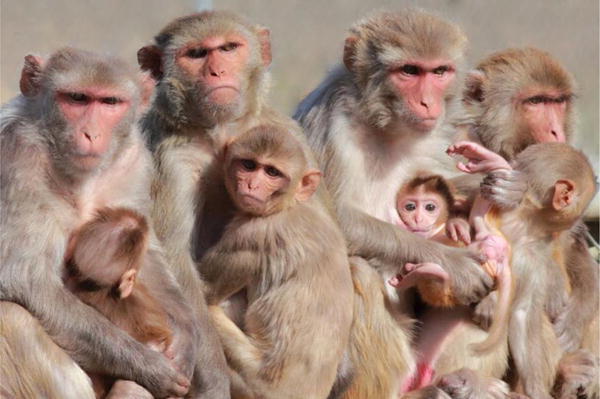
Given the prevalence and societal impact of autism spectrum disorders (ASD), there is an urgent need to develop innovative preventative strategies and treatments to reduce the alarming number of cases and improve core symptoms for afflicted individuals. Translational efforts between clinical and preclinical research are needed to (i) identify and evaluate putative causes of ASD, (ii) determine the underlying neurobiological mechanisms, (iii) develop and test novel therapeutic approaches and (iv) ultimately translate basic research into safe and effective clinical practices. However, modeling a uniquely human brain disorder, such as ASD, will require sophisticated animal models that capitalize on unique advantages of diverse species including drosophila, zebra fish, mice, rats, and ultimately, species more closely related to humans, such as the nonhuman primate. Here we discuss the unique contributions of the rhesus monkey (Macaca mulatta) model to ongoing efforts to understand the neurobiology of the disorder, focusing on the convergence of brain and behavior outcome measures that parallel features of human ASD.
Keywords: Animal model; Autism spectrum disorder; Preclinical; Rhesus monkey.
Copyright © 2017 Elsevier Inc. All rights reserved.
Figures
References
Publication types
MeSH terms
Grants and funding
LinkOut - more resources
Full Text Sources
Other Literature Sources
