


Modafinil improves attentional performance in healthy, non-sleep deprived humans at doses not inducing hyperarousal across species
- PMID: 28774856
- PMCID: PMC6472902
- DOI: 10.1016/j.neuropharm.2017.07.031
Modafinil improves attentional performance in healthy, non-sleep deprived humans at doses not inducing hyperarousal across species
Abstract
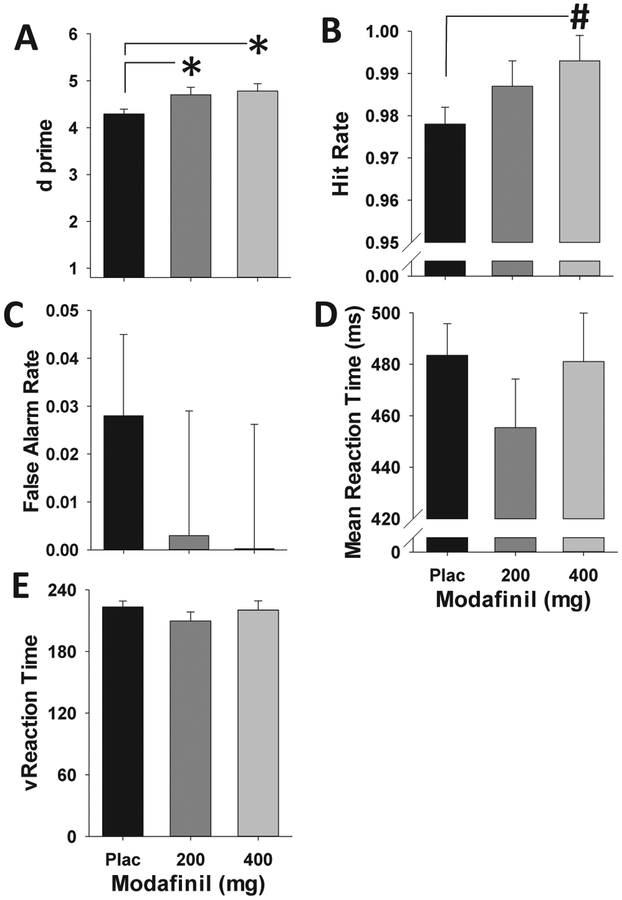
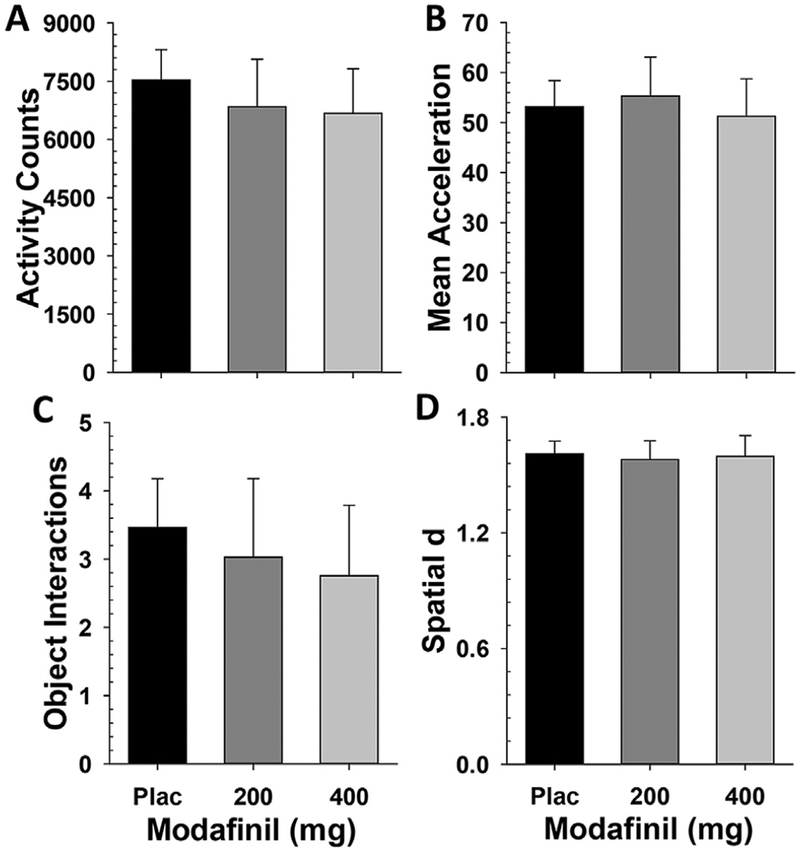
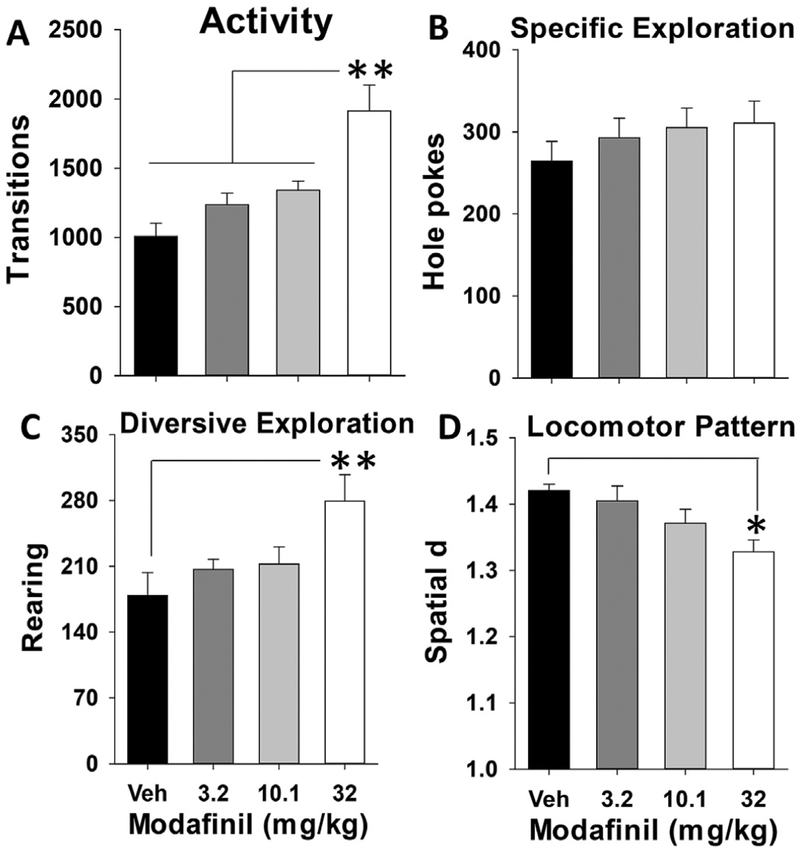
The wake-promoting drug modafinil is frequently used off-label to improve cognition in psychiatric and academic populations alike. The domain-specific attentional benefits of modafinil have yet to be quantified objectively in healthy human volunteers using tasks validated for comparison across species. Further, given that modafinil is a low-affinity inhibitor for the dopamine and norepinephrine transporters (DAT/NET respectively) it is unclear if any effects are attributable to a non-specific increase in arousal, a feature of many catecholamine reuptake inhibitors (e.g., cocaine, amphetamine). These experiments were designed to test for domain-specific enhancement of attention and cognitive control by modafinil (200 and 400 mg) in healthy volunteers using the 5-choice continuous performance task (5C-CPT) and Wisconsin Card Sort Task (WCST). An additional cross-species assessment of arousal and hyperactivity was performed in this group and in mice (3.2, 10, or 32 mg/kg) using species-specific versions of the behavioral pattern monitor (BPM). Modafinil significantly enhanced attention (d prime) in humans performing the 5C-CPT at doses that did not affect WCST performance or induce hyperactivity in the BPM. In mice, only the highest dose elicited increased activity in the BPM. These results indicate that modafinil produces domain-specific enhancement of attention in humans not driven by hyperarousal, unlike other drugs in this class, and higher equivalent doses were required for hyperarousal in mice. Further, these data support the utility of using the 5C-CPT across species to more precisely determine the mechanism(s) underlying the pro-cognitive effects of modafinil and potentially other pharmacological treatments.
Keywords: Activity; Attention; Cognitive control; Continuous performance task; Healthy; Mice; Modafinil (PubChem CID: 4236); Stimulant.
Copyright © 2017 Elsevier Ltd. All rights reserved.
Conflict of interest statement
Disclosure of biomedical financial interests and potential conflicts of interest
Dr. Geyer has received consulting compensation from Lundbeck, Omeros, Otsuka, and Sunovion, and holds an equity interest in San Diego Instruments. Dr. Young has received funding from Cerca Insights and Lundbeck Ltd, and has received consulting compensation for Amgen, and honoraria from Arena Pharmaceuticals and Sunovion. Drs. Cope, Perry, Minassian, and MacQueen, plus Ms. Kreitner and Milienne-Petiot report no biomedical financial interests or potential conflict of interest.
Figures
References
-
- Baranski JV, Pigeau R, Dinich P, Jacobs I, 2004. Effects of modafinil on cognitive and meta-cognitive performance. Hum. Psychopharmacol 19, 323–332. - PubMed
-
- Battleday RM, Brem AK, 2015. Modafinil for cognitive neuroenhancement in healthy non-sleep-deprived subjects: a systematic review. Eur. Neuropsychopharmacol 25, 1865–1881. - PubMed
-
- Bensadoun JC, Brooks SP, Dunnett SB, 2004. Free operant and discrete trial performance of mice in the nine-hole box apparatus: validation using amphetamine and scopolamine. Psychopharmacol. Berl 174, 396–405. - PubMed
Publication types
MeSH terms
Substances
Grants and funding
LinkOut - more resources
Full Text Sources
Other Literature Sources
