


Ndrg1 promotes adipocyte differentiation and sustains their function
- PMID: 28775290
- PMCID: PMC5543145
- DOI: 10.1038/s41598-017-07497-x
Ndrg1 promotes adipocyte differentiation and sustains their function
Abstract
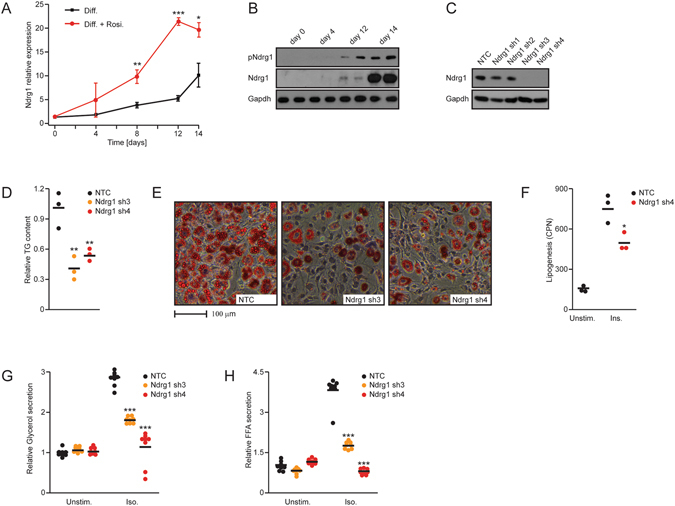
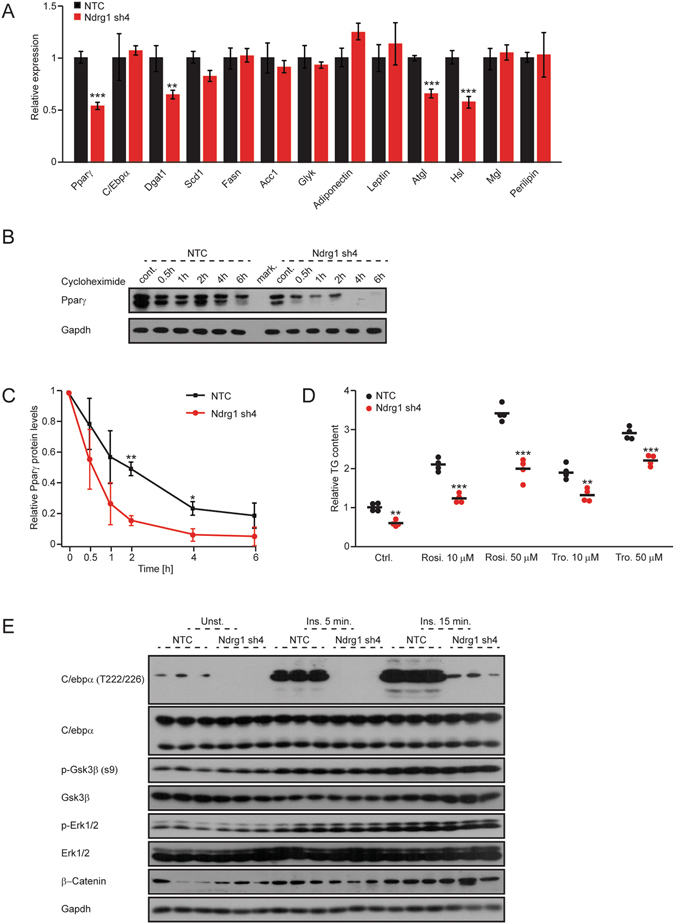
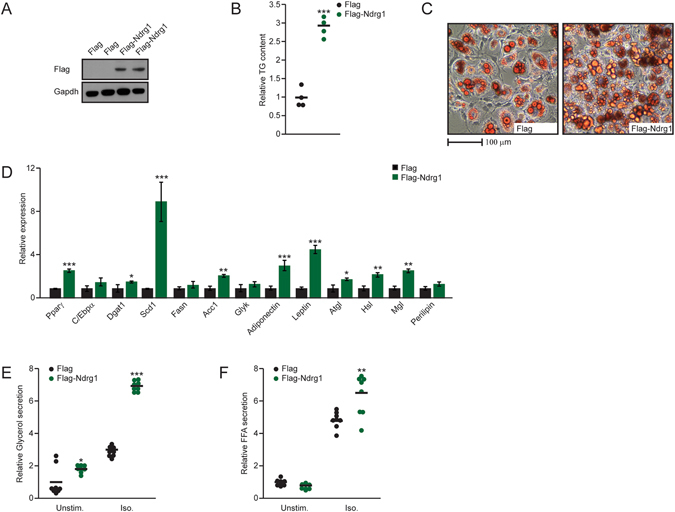
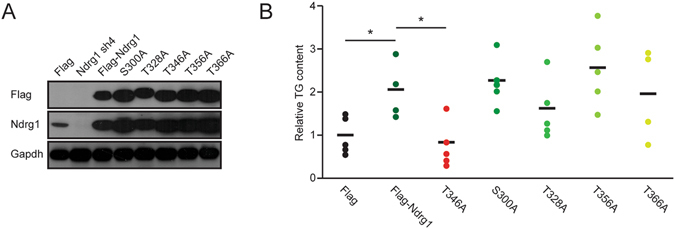
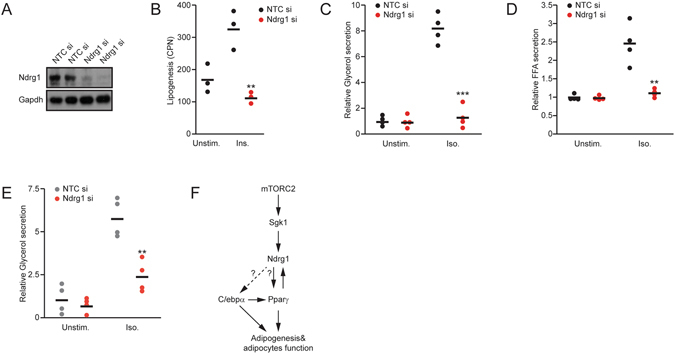
Adipocytes play a central role in maintaining metabolic homeostasis in the body. Differentiation of adipocyte precursor cells requires the transcriptional activity of peroxisome proliferator-activated receptor-γ (Pparγ) and CCAAT/enhancer binding proteins (C/Ebps). Transcriptional activity is regulated by signaling modules activated by a plethora of hormones and nutrients. Mechanistic target of rapamacin complexes (mTORC) 1 and 2 are central for the coordination of hormonal and nutritional inputs in cells and are essential for adipogenesis. Serum glucocorticoid kinase 1 (Sgk1)-dependent phosphorylation of N-Myc downstream-regulated gene 1 (Ndrg1) is a hallmark of mTORC2 activation in cells. Moreover, Pparγ activation promotes Ndrg1 expression. However, the impact of Ndrg1 on adipocyte differentiation and function has not yet been defined. Here, we show that Ndrg1 expression and its Sgk1-dependent phosphorylation are induced during adipogenesis. Consistently, we demonstrate that Ndrg1 promotes adipocyte differentiation and function by inducing Pparγ expression. Additionally, our results indicate that Ndrg1 is required for C/Ebpα phosphorylation. Moreover, we found that Ndrg1 phosphorylation by Sgk1 promotes adipocyte formation. Taken together, we show that induction of Ndrg1 expression by Pparγ and its phosphorylation by Sgk1 kinase are required for the acquisition of adipocyte characteristics by precursor cells.
Conflict of interest statement
The authors declare that they have no competing interests.
Figures
References
Publication types
MeSH terms
Substances
LinkOut - more resources
Full Text Sources
Other Literature Sources
Molecular Biology Databases
Research Materials
