Structural variants in genes associated with human Williams-Beuren syndrome underlie stereotypical hypersociability in domestic dogs
- PMID: 28776031
- PMCID: PMC5517105
- DOI: 10.1126/sciadv.1700398
Structural variants in genes associated with human Williams-Beuren syndrome underlie stereotypical hypersociability in domestic dogs
Abstract
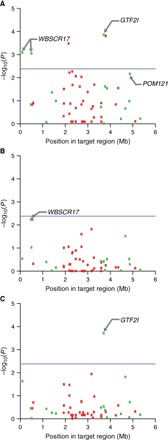
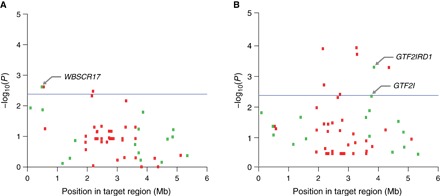
Although considerable progress has been made in understanding the genetic basis of morphologic traits (for example, body size and coat color) in dogs and wolves, the genetic basis of their behavioral divergence is poorly understood. An integrative approach using both behavioral and genetic data is required to understand the molecular underpinnings of the various behavioral characteristics associated with domestication. We analyze a 5-Mb genomic region on chromosome 6 previously found to be under positive selection in domestic dog breeds. Deletion of this region in humans is linked to Williams-Beuren syndrome (WBS), a multisystem congenital disorder characterized by hypersocial behavior. We associate quantitative data on behavioral phenotypes symptomatic of WBS in humans with structural changes in the WBS locus in dogs. We find that hypersociability, a central feature of WBS, is also a core element of domestication that distinguishes dogs from wolves. We provide evidence that structural variants in GTF2I and GTF2IRD1, genes previously implicated in the behavioral phenotype of patients with WBS and contained within the WBS locus, contribute to extreme sociability in dogs. This finding suggests that there are commonalities in the genetic architecture of WBS and canine tameness and that directional selection may have targeted a unique set of linked behavioral genes of large phenotypic effect, allowing for rapid behavioral divergence of dogs and wolves, facilitating coexistence with humans.
Figures
References
-
- Frank H., Evolution of canine information processing under conditions of natural and artificial selection. Z. Tierpsychol. 53, 389–399 (1980). - PubMed
-
- Miklósi Á., Topál J., Csányi V., Comparative social cognition: What can dogs teach us? Anim. Behav. 67, 995–1004 (2004).
-
- Hare B., Tomasello M., Human-like social skills in dogs? Trends Cogn. Sci. 9, 439–444 (2005). - PubMed
-
- Udell M. A. R., Dorey N. R., Wynne C. D. L., What did domestication do to dogs? A new account of dogs’ sensitivity to human actions. Biol. Rev. Camb. Philos. Soc. 85, 327–345 (2010). - PubMed
Publication types
MeSH terms
Grants and funding
LinkOut - more resources
Full Text Sources
Other Literature Sources
Miscellaneous