The prevalence of Anaplasma platys and a potential novel Anaplasma species exceed that of Ehrlichia canis in asymptomatic dogs and Rhipicephalus sanguineus in Taiwan
- PMID: 28781347
- PMCID: PMC5627318
- DOI: 10.1292/jvms.17-0224
The prevalence of Anaplasma platys and a potential novel Anaplasma species exceed that of Ehrlichia canis in asymptomatic dogs and Rhipicephalus sanguineus in Taiwan
Abstract
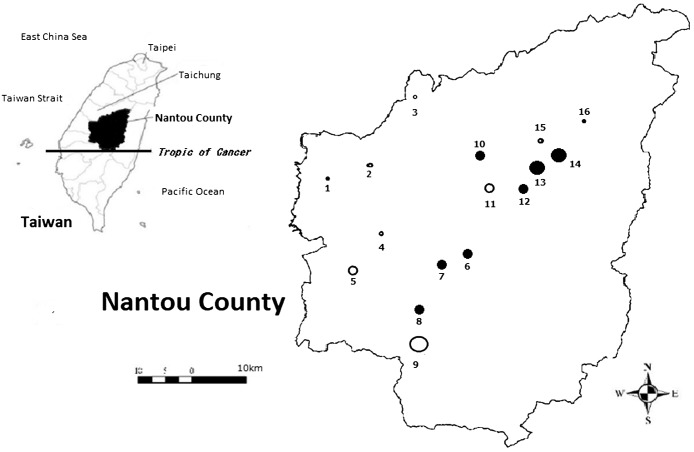
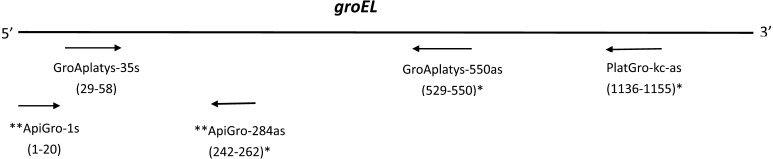
Canine anaplasmosis is regarded as an infection by Anaplasma platys rather than zoonotic Anaplasma phagocytophilum in subtropical areas based on the assumption that the common dog tick species is Rhipicephalus sanguineus, which transmits E. canis and presumably A. platys. We investigated asymptomatic dogs and dog ticks from 16 communities in Nantou County, Taiwan to identify common dog tick species and to determine the prevalence of Anaplasma and Ehrlichia spp. Of total 175 canine blood samples and 315 ticks, including 306 R. sanguineus and 9 Haemaphysalis hystricis, 15 dogs and 3 R. sanguineus ticks were positive for E. canis, while 47 dogs and 71 R. sanguineus ticks were positive for A. platys, via nested PCR for 16S rDNA and DNA sequencing of selected positive amplicons. However, among the dogs and ticks that were positive to A. platys 16S rDNA, only 20 dogs and 11 ticks were positive to nested PCR for A. platys groEL gene. These results revealed the importance of searching for novel Anaplasma spp. closely related to A. platys in dogs and ticks. Seropositivity to a commercial immunochromatographic test SNAP 4Dx Anaplasma sp. was not significantly associated with PCR positivity for A. platys but with infestation by ticks carrying A. platys (P<0.05). Accordingly, R. sanguineus may be involved in transmission of A. platys but may not act as a reservoir of E. canis and PCR results for 16S rDNA could be a problematic diagnostic index for A. platys infection.
Keywords: 16S rDNA; Anaplasma platys; Ehrlichia canis; Rhipicephalus sanguineus; groEL gene.
Conflict of interest statement
The authors declare no conflict of interest.
Figures
References
-
- Alleman A. R., Wamsley H. L.2008. An update on anaplasmosis in dogs. Vet. Med. 103: 212–220.
-
- Beall M. J., Chandrashekar R., Eberts M. D., Cyr K. E., Diniz P. P. V. P., Mainville C., Hegarty B. C., Crawford J. M., Breitschwerdt E. B.2008. Serological and molecular prevalence of Borrelia burgdorferi, Anaplasma phagocytophilum, and Ehrlichia species in dogs from Minnesota. Vector Borne Zoonotic Dis. 8: 455–464. doi: 10.1089/vbz.2007.0236 - DOI - PubMed
-
- Beaufils J. P., Inokuma H., Martin-Granel J., Jumelle P., Barbault-Jumelle M., Brouqui P.2002. Anaplasma platys (Ehrlichia platys) infection in a dog in France: description of the case, and characterization of the agent. Rev. Med. Vet. 153: 85–90.
MeSH terms
Substances
LinkOut - more resources
Full Text Sources
Other Literature Sources
Research Materials
Miscellaneous