An LC-MS/MS-Based Method for the Quantification of Pyridox(am)ine 5'-Phosphate Oxidase Activity in Dried Blood Spots from Patients with Epilepsy
- PMID: 28782931
- PMCID: PMC5588098
- DOI: 10.1021/acs.analchem.7b01358
An LC-MS/MS-Based Method for the Quantification of Pyridox(am)ine 5'-Phosphate Oxidase Activity in Dried Blood Spots from Patients with Epilepsy
Abstract
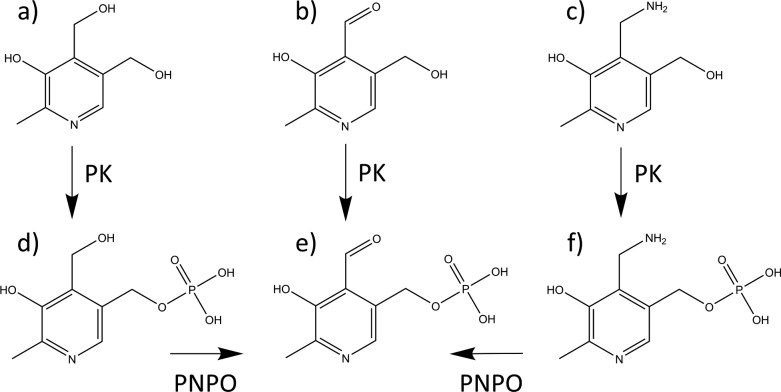
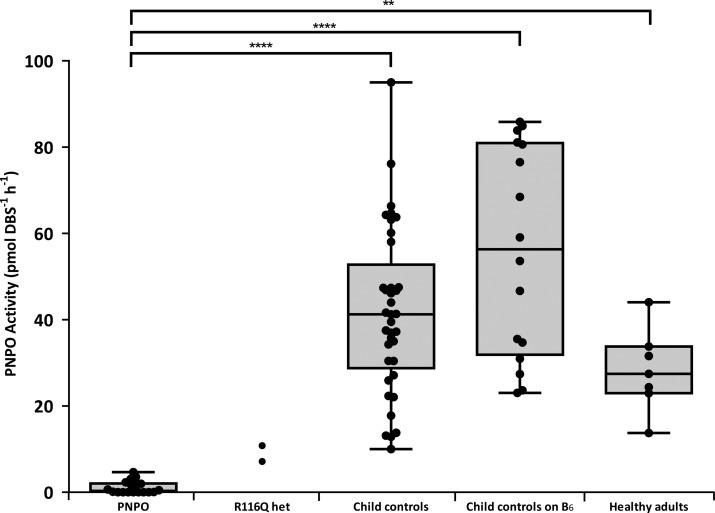
We report the development of a rapid, simple, and robust LC-MS/MS-based enzyme assay using dried blood spots (DBS) for the diagnosis of pyridox(am)ine 5'-phosphate oxidase (PNPO) deficiency (OMIM 610090). PNPO deficiency leads to potentially fatal early infantile epileptic encephalopathy, severe developmental delay, and other features of neurological dysfunction. However, upon prompt treatment with high doses of vitamin B6, affected patients can have a normal developmental outcome. Prognosis of these patients is therefore reliant upon a rapid diagnosis. PNPO activity was quantified by measuring pyridoxal 5'-phosphate (PLP) concentrations in a DBS before and after a 30 min incubation with pyridoxine 5'-phosphate (PNP). Samples from 18 PNPO deficient patients (1 day-25 years), 13 children with other seizure disorders receiving B6 supplementation (1 month-16 years), and 37 child hospital controls (5 days-15 years) were analyzed. DBS from the PNPO-deficient samples showed enzyme activity levels lower than all samples from these two other groups as well as seven adult controls; no false positives or negatives were identified. The method was fully validated and is suitable for translation into the clinical diagnostic arena.
Conflict of interest statement
The authors declare no competing financial interest.
Figures
References
-
- Mills P. B.; Camuzeaux S. S.; Footitt E. J.; Mills K. A.; Gissen P.; Fisher L.; Das K. B.; Varadkar S. M.; Zuberi S.; McWilliam R.; Stodberg T.; Plecko B.; Baumgartner M. R.; Maier O.; Calvert S.; Riney K.; Wolf N. I.; Livingston J. H.; Bala P.; Morel C. F.; Feillet F.; Raimondi F.; Del Giudice E.; Chong W. K.; Pitt M.; Clayton P. T. Brain 2014, 137, 1350–1360. 10.1093/brain/awu051. - DOI - PMC - PubMed
-
- Mackey A. D.; McMahon R. J.; Townsend J. H.; Gregory J. F. III. J. Nutr. 2004, 134, 842–846. - PubMed
Publication types
MeSH terms
Substances
Grants and funding
LinkOut - more resources
Full Text Sources
Other Literature Sources
Medical
Research Materials
Miscellaneous