


Modulating NAD+ metabolism, from bench to bedside
- PMID: 28784597
- PMCID: PMC5599801
- DOI: 10.15252/embj.201797135
Modulating NAD+ metabolism, from bench to bedside
Abstract
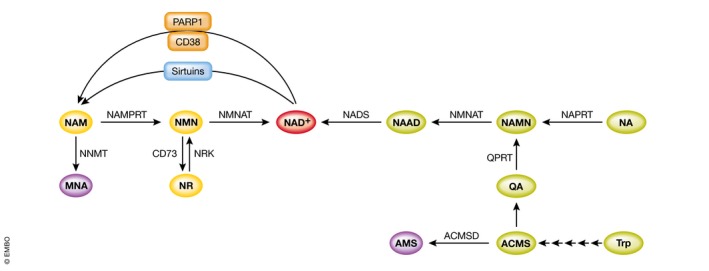
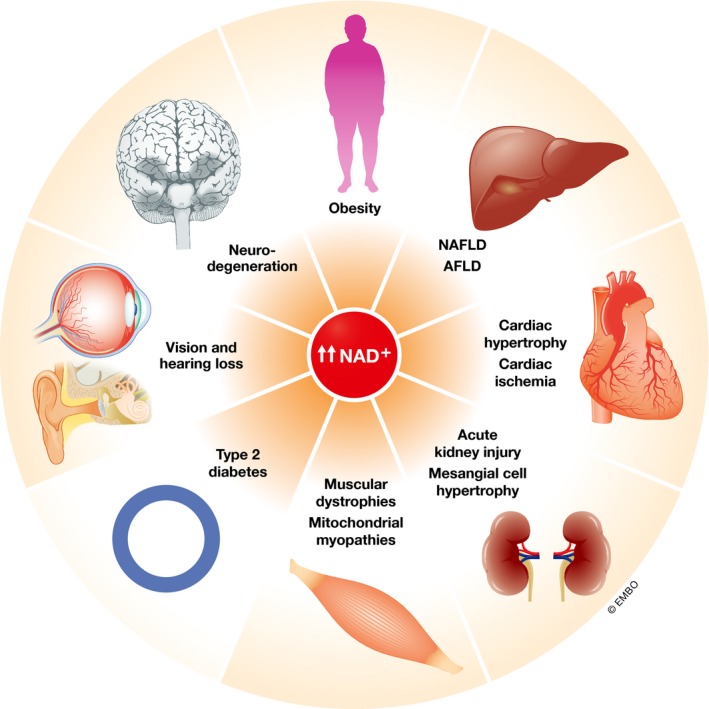
Discovered in the beginning of the 20th century, nicotinamide adenine dinucleotide (NAD+) has evolved from a simple oxidoreductase cofactor to being an essential cosubstrate for a wide range of regulatory proteins that include the sirtuin family of NAD+-dependent protein deacylases, widely recognized regulators of metabolic function and longevity. Altered NAD+ metabolism is associated with aging and many pathological conditions, such as metabolic diseases and disorders of the muscular and neuronal systems. Conversely, increased NAD+ levels have shown to be beneficial in a broad spectrum of diseases. Here, we review the fundamental aspects of NAD+ biochemistry and metabolism and discuss how boosting NAD+ content can help ameliorate mitochondrial homeostasis and as such improve healthspan and lifespan.
Keywords: aging; metabolic disorders; neurodegeneration; nicotinamide adenine dinucleotide; poly ADP‐ribose polymerase.
© 2017 The Authors.
Figures
References
-
- Agrimi G, Brambilla L, Frascotti G, Pisano I, Porro D, Vai M, Palmieri L (2011) Deletion or overexpression of mitochondrial NAD+ carriers in Saccharomyces cerevisiae alters cellular NAD and ATP contents and affects mitochondrial metabolism and the rate of glycolysis. Appl Environ Microbiol 77: 2239–2246 - PMC - PubMed
-
- Aksoy S, Szumlanski CL, Weinshilboum RM (1994) Human liver nicotinamide N‐methyltransferase. cDNA cloning, expression, and biochemical characterization. J Biol Chem 269: 14835–14840 - PubMed
-
- Aksoy P, Escande C, White TA, Thompson M, Soares S, Benech JC, Chini EN (2006a) Regulation of SIRT 1 mediated NAD dependent deacetylation: a novel role for the multifunctional enzyme CD38. Biochem Biophys Res Comm 349: 353–359 - PubMed
-
- Aksoy P, White TA, Thompson M, Chini EN (2006b) Regulation of intracellular levels of NAD: a novel role for CD38. Biochem Biophys Res Comm 345: 1386–1392 - PubMed
-
- Alano CC, Ying W, Swanson RA (2004) Poly(ADP‐ribose) polymerase‐1‐mediated cell death in astrocytes requires NAD+ depletion and mitochondrial permeability transition. J Biol Chem 279: 18895–18902 - PubMed
Publication types
MeSH terms
Substances
Grants and funding
LinkOut - more resources
Full Text Sources
Other Literature Sources
