Review
. 2017 Jul 21;23(27):4867-4878.
doi: 10.3748/wjg.v23.i27.4867.

Significance of dormant forms of Helicobacter pylori in ulcerogenesis

Affiliations
Review

Significance of dormant forms of Helicobacter pylori in ulcerogenesis

Vasiliy Ivanovich Reshetnyak et al. World J Gastroenterol. .

Abstract

Nearly half of the global population are carriers of Helicobacter pylori (H. pylori), a Gram-negative bacterium that persists in the healthy human stomach. H. pylori can be a pathogen and causes development of peptic ulcer disease in a certain state of the macroorganism. It is well established that H. pylori infection is the main cause of chronic gastritis and peptic ulcer disease (PUD). Decontamination of the gastric mucosa with various antibiotics leads to H. pylori elimination and longer remission in this disease. However, the reasons for repeated detection of H. pylori in recurrent PUD after its successful eradication remain unclear. The reason for the redetection of H. pylori in recurrent PUD can be either reinfection or ineffective anti-Helicobacter therapy. The administration of antibacterial drugs can lead not only to the emergence of resistant strains of microorganisms, but also contribute to the conversion of H. pylori into the resting (dormant) state. The dormant forms of H. pylori have been shown to play a potential role in the development of relapses of PUD. The paper discusses morphological H. pylori forms, such as S-shaped, C-shaped, U-shaped, and coccoid ones. The authors proposes the classification of H. pylori according to its morphological forms and viability.

Keywords: Culturable forms of H. pylori; Dormant forms of H. pylori; Forms of H. pylori; Helicobacter pylori; Non-viable forms of H. pylori; Physiological states of H. pylori; Resuscitation of dormant H. pylori; Ulcerogenesis; Unculturable forms of H. pylor; Viable forms of H. pylori.


Conflict of interest statement

Conflict-of-interest statement: Reshetnyak VI and Reshetnyak TM declare no conflicts of interest exist in relation to this publication.

Figures
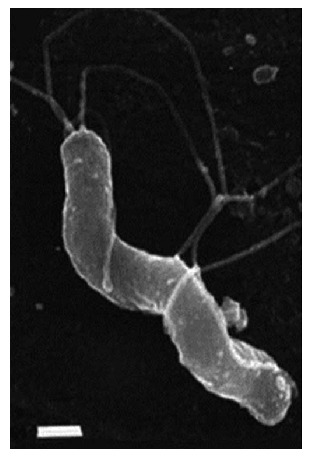
Figure 1
Figure 1
Morphology of Helicobacter pylori. S-shaped H. pylori with five to seven sheathed polar flagella. Field emission SEM, bar = 0.5 μm. (Field emission SEMs courtesy of L. Thompson and negative stains courtesy of S. Danon, School of Microbiology and Immunology, University of New South Wales). From: Helicobacter pylori: Physiology and Genetics. Mobley HLT, Mendz GL, Hazell SL, editors. Washington (DC): ASM Press; 2001. Chapter 6, Morphology and Ultrastructure[54].
Figure 2
Figure 2
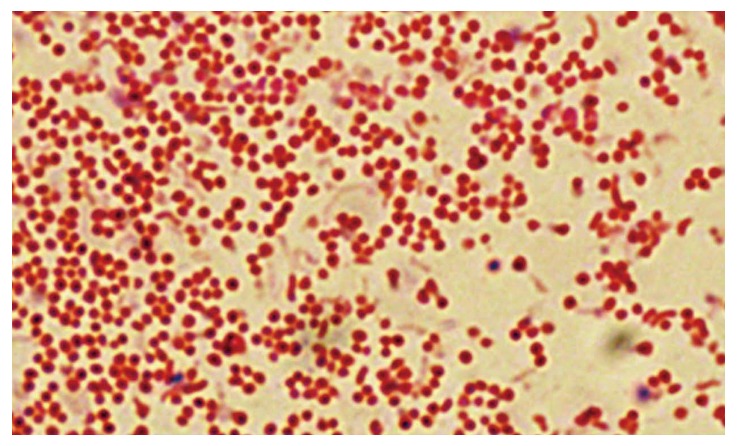
Microscopic images of coccoid forms of Helicobacter pylori after 6-d exposure to antibiotics. From: Faghri et al[65].
Figure 3
Figure 3
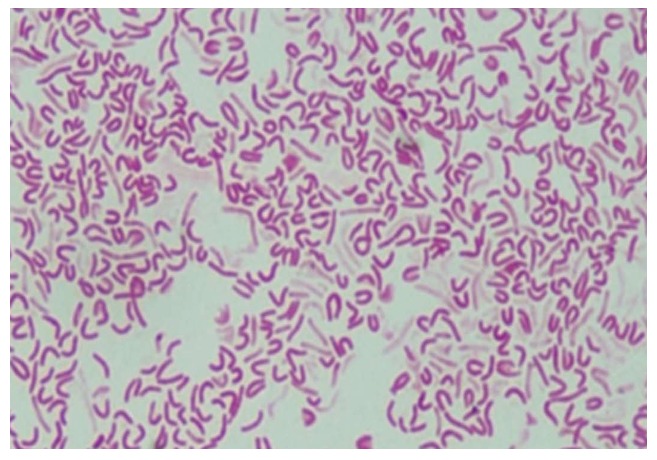
Microscopic images of morphological forms of Helicobacter pylori after exposure to antibiotics: S-shaped, U-shaped, C-shaped and coccoid-shaped. From: Faghri et al[65].
Figure 4
Figure 4
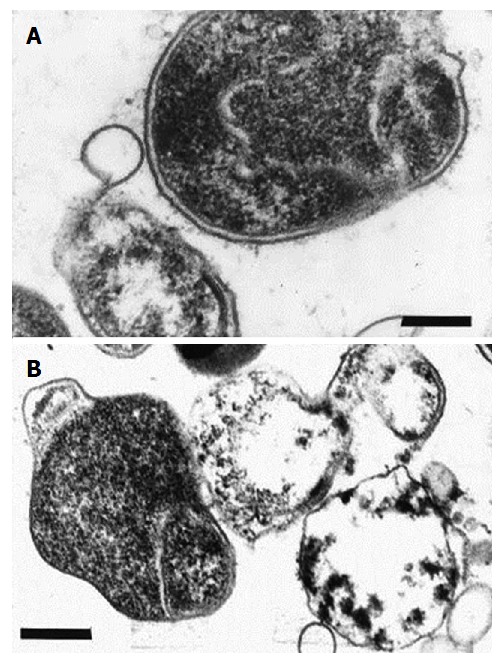
Electronograms of coccoid forms of Helicobacter pylori. A: Initial ingrowth in the periplasmic space resulting in the formation of U-shaped cells; B: Conversion to the coccoid form. Ultrathin section, bar = 0.5 μm. From: Helicobacter pylori: Physiology and Genetics. Mobley HLT, Mendz GL, Hazell SL, editors. Washington (DC): ASM Press; 2001. Chapter 6, Morphology and Ultrastructure[54].
Figure 5
Figure 5
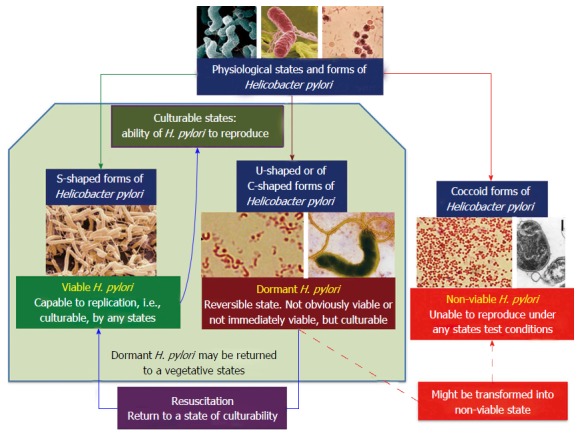
Major physiological states and forms of Helicobacter pylori[101]. H. pylori: Helicobacter pylori.

References

    1. Graham DY. History of Helicobacter pylori, duodenal ulcer, gastric ulcer and gastric cancer. World J Gastroenterol. 2014;20:5191–5204. - PMC - PubMed
    1. Sakurai K, Suda H, Ido Y, Takeichi T, Okuda A, Hasuda K, Hattori M. Comparative study: Vonoprazan and proton pump inhibitors in Helicobacter pylori eradication therapy. World J Gastroenterol. 2017;23:668–675. - PMC - PubMed
    1. Lin LC, Hsu TH, Huang KW, Tam KW. Nonbismuth concomitant quadruple therapy for Helicobacter pylori eradication in Chinese regions: A meta-analysis of randomized controlled trials. World J Gastroenterol. 2016;22:5445–5453. - PMC - PubMed
    1. Ghotaslou R, Leylabadlo HE, Asl YM. Prevalence of antibiotic resistance in Helicobacter pylori: A recent literature review. World J Methodol. 2015;5:164–174. - PMC - PubMed
    1. Papastergiou V, Georgopoulos SD, Karatapanis S. Treatment of Helicobacter pylori infection: Past, present and future. World J Gastrointest Pathophysiol. 2014;5:392–399. - PMC - PubMed

MeSH terms