


Predictors of Bowel Function in Long-term Rectal Cancer Survivors with Anastomosis
- PMID: 28785900
- PMCID: PMC5659930
- DOI: 10.1245/s10434-017-6017-x
Predictors of Bowel Function in Long-term Rectal Cancer Survivors with Anastomosis
Erratum in
-
Erratum to: Predictors of Bowel Function in Long-term Rectal Cancer Survivors with Anastomosis.Ann Surg Oncol. 2017 Dec;24(Suppl 3):694. doi: 10.1245/s10434-017-6056-3. Ann Surg Oncol. 2017. PMID: 28815447 No abstract available.
Abstract
Background: Bowel function in long-term rectal cancer survivors with anastomosis has not been characterized adequately. We hypothesized that bowel function is associated with patient, disease, and treatment characteristics.
Methods: The cohort study included Kaiser Permanente members who were long-term (≥5 years) rectal cancer survivors with anastomosis. Bowel function was scored using the self-administered, 14-item Memorial Sloan-Kettering Cancer Center Bowel Function Index. Patient, cancer, and treatment variables were collected from the electronic medical chart. We used multiple regression to assess the relationship of patient- and treatment-related variables with the bowel function score.
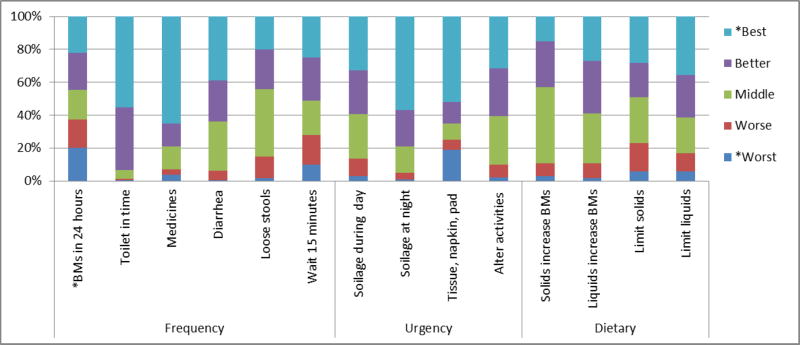
Results: The study included 381 anastomosis patients surveyed an average 12 years after their rectal cancer surgeries. The total bowel function score averaged 53 (standard deviation, 9; range, 31-70, higher scores represent better function). Independent factors associated with worse total bowel function score included receipt of radiation therapy (yes vs. no: 5.3-unit decrement, p < 0.0001), tumor distance from the anal verge (≤6 cm vs. >6 cm: 3.2-unit decrement, p < 0.01), and history of a temporary ostomy (yes vs. no: 4.0-unit decrement, p < 0.01). One factor measured at time of survey was also associated with worse total bowel function score: ever smoking (2.3-unit decrement, p < 0.05). The regression model explained 20% of the variation in the total bowel function score.
Conclusions: Low tumor location, radiation therapy, temporary ostomy during initial treatment, and history of smoking were linked with decreased long-term bowel function following an anastomosis. These results should improve decision-making about surgical options.
Conflict of interest statement
Dr. Herrinton has had research contracts in the past three years with Medimmune that was unrelated to this study. The other authors have no disclosures.
Figures
References
-
- American Cancer Society. [accessed June 29-2016];Fact Sheet Colorectal Cancer Facts & Figures 2011–2013. Available: http://www.cancer.org/acs/groups/content/@epidemiologysurveilance/docume....
-
- Altekruse S, Kosary C, Krapcho M, et al., editors. SEER Cancer Statistics Review 1975–2007. Bethesda, MD: National Cancer Institute; Apr, 2010. 2010.
-
- Kosinski L, Habr-Gama A, Ludwig K, Perez R. Shifting concepts in rectal cancer management: a review of contemporary primary rectal cancer treatment strategies. CA Cancer J Clin. 2012 May-Jun;62(3):173–202. - PubMed
-
- Juul T, Ahlberg M, Biondo S, et al. Low anterior resection syndrome and quality of life: an international multicenter study. Dis Colon Rectum. 2014;57:585–591. - PubMed
-
- Emmertsen KJ, Laurberg S. Bowel dysfunction after treatment for rectal cancer. Acta Oncologica. 2008;47(6):994–1003. - PubMed
MeSH terms
Grants and funding
LinkOut - more resources
Full Text Sources
Other Literature Sources
Medical
