


Phenolic Compounds Contained in Little-known Wild Fruits as Antiadhesive Agents Against the Beverage-Spoiling Bacteria Asaia spp
- PMID: 28788076
- PMCID: PMC6152331
- DOI: 10.3390/molecules22081256
Phenolic Compounds Contained in Little-known Wild Fruits as Antiadhesive Agents Against the Beverage-Spoiling Bacteria Asaia spp
Abstract
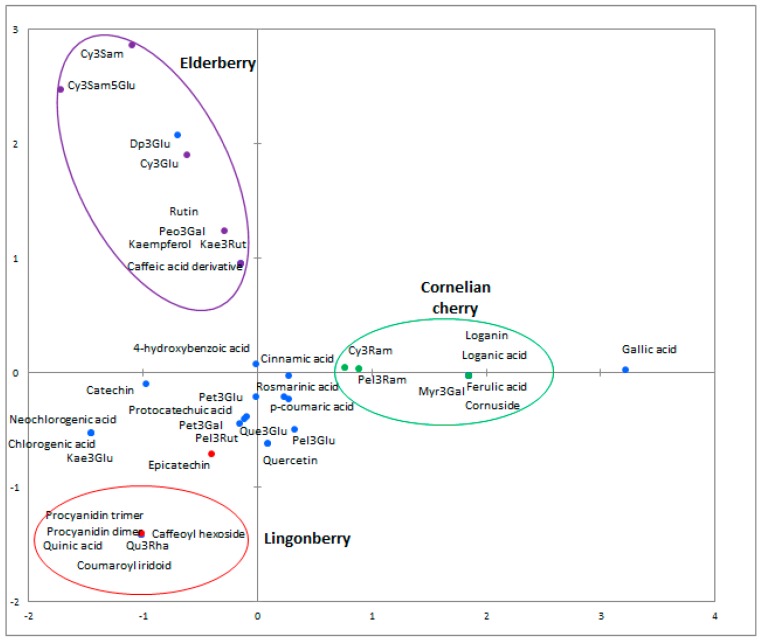
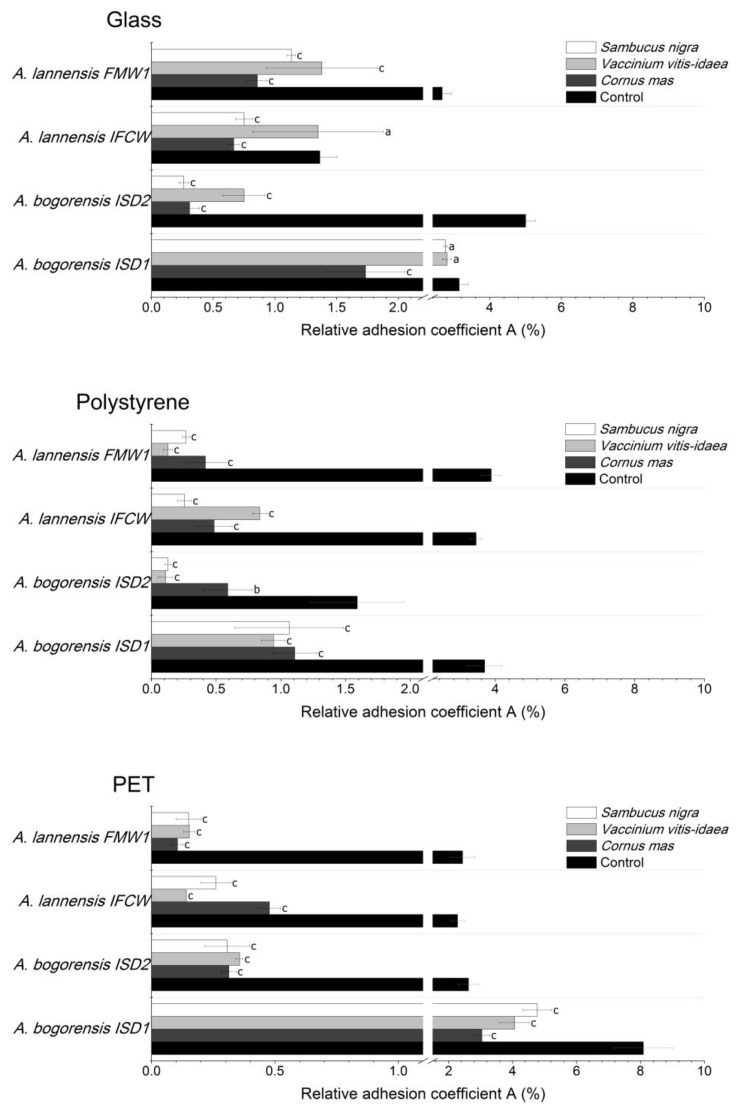
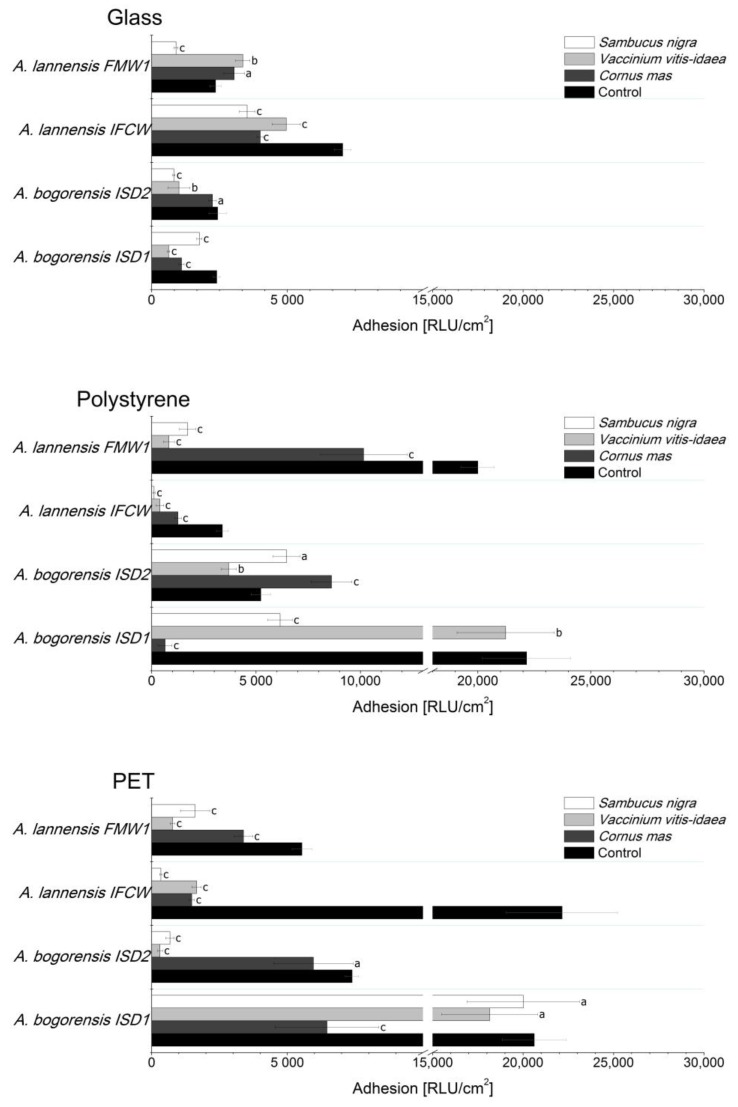
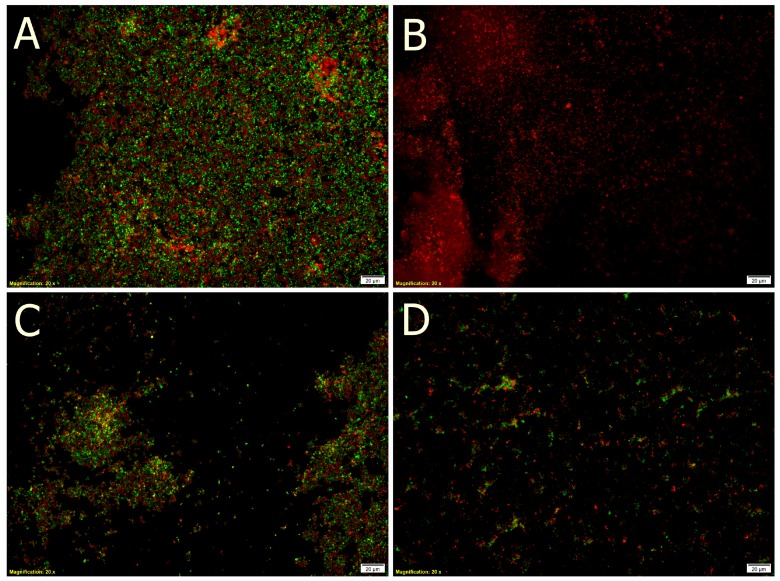
The aim of the study was to evaluate antioxidant activity and total phenolic content of juice from three different types of fruits: elderberry (Sambucusnigra), lingonberry (Vacciniumvitis-idaea) and cornelian cherry (Cornusmas), and their action against adhesion of bacterial strains of Asaialannensis and Asaiabogorensis isolated from spoiled soft drinks. The antioxidant profiles were determined by total antioxidant capacity (2,2-diphenyl-1-picrylhydrazyl, DPPH), and ferric-reducing antioxidant power (FRAP). Additionally, total polyphenol content (TPC) was investigated. Chemical compositions of juices were tested using the chromatographic techniques: high-performance liquid chromatography (HPLC) and liquid chromatography-mass spectrometry (LC-MS). Adhesion properties of Asaia spp. cells to various abiotic materials were evaluated by luminometry, plate count and fluorescence microscopy. Antioxidant activity of fruit juices expressed as inhibitory concentration (IC50) ranged from 0.042 ± 0.001 (cornelian cherry) to 0.021 ± 0.001 g/mL (elderberry). TPC ranged from 8.02 ± 0.027 (elderberry) to 2.33 ± 0.013 mg/mL (cornelian cherry). Cyanidin-3-sambubioside-5-glucoside, cyanidin-3-glucoside, and cyanidin-3-sambubioside were detected as the major anthocyanins and caffeic, cinnamic, gallic, protocatechuic, and p-coumaric acids as the major phenolic acids. A significant linear correlation was noted between TPC and antioxidant capacity. In the presence of fruit juices a significant decrease of bacterial adhesion from 74% (elderberry) to 67% (lingonberry) was observed. The high phenolic content indicated that these compounds may contribute to the reduction of Asaia spp. adhesion.
Keywords: Asaia spp.; anti-adhesion; berry juices; fruit juices; polyphenols.
Conflict of interest statement
The authors declare no conflict of interest.
Figures
References
-
- Lia R., Kudab T., Yanoa T. Effect of food residues on efficiency of surfactant disinfectants against food related pathogens adhered on polystyrene and ceramic surfaces. LWT Food Sci. Technol. 2014;57:200–206. doi: 10.1016/j.lwt.2013.11.018. - DOI
-
- Kręgiel D. Attachment of Asaia lannensis to materials commonly used in beverage industry. Food Control. 2013;32:537–542. doi: 10.1016/j.foodcont.2013.01.037. - DOI
MeSH terms
Substances
LinkOut - more resources
Full Text Sources
Other Literature Sources
Medical
Miscellaneous
