. 2017 Aug;14(2):1648-1656.
doi: 10.3892/ol.2017.6355. Epub 2017 Jun 8.

Cytotoxic effects of zoledronic acid-loaded hydroxyapatite and bone cement in malignant tumors

Affiliations

Cytotoxic effects of zoledronic acid-loaded hydroxyapatite and bone cement in malignant tumors

Kazutaka Koto et al. Oncol Lett. 2017 Aug.

Abstract

Metastatic and primary bone tumors are malignant tumors affecting the skeleton. Although the prognosis of patients with these tumors has improved with the development of effective chemotherapy, the challenges of local recurrence, subsequent osteolysis, degradation of bone strength and unresectable tumors persist. Local control of these tumors is therefore a key strategy to address these limitations. The third-generation bisphosphonate (BP), zoledronic acid (ZOL), has been demonstrated to reduce osteoclasts and exhibited potent antitumor effects in a number of malignancies. Hydroxyapatite (HA) and polymethyl methacrylate (PMMA) bone cement are used in orthopedic surgery as bone graft substitutes, for implant arthroplasty and bone strengthening, and as a sustained-release system for drugs such as antibiotics. At present, the antitumor effects of ZOL-loaded HA in vitro or in vivo or of ZOL-loaded bone cement in vivo have not been described. Therefore, the present study assessed the effects of ZOL-loaded HA and bone cement in malignant tumor cells. The two materials exerted strong antitumor effects against osteosarcoma, fibrosarcoma, synovial sarcoma, renal cancer, prostate cancer and lung cancer cells upon releasing ZOL. The antitumor effects of ZOL-loaded HA were less potent compared with those of ZOL-loaded bone cement, possibly as BPs exhibit higher affinity to HA. ZOL-loaded bone cement also exerted antitumor effects against pulmonary metastases and primary lesions, without exhibiting systemic toxicity in vivo. These results demonstrate that these materials may be beneficial for the treatment of malignant bone tumors, including metastatic bone tumors. In addition, as these materials are already in clinical use, such applications may be easily implemented.

Keywords: HA; PMMA; ZOL; bone cement; metastatic bone tumor; osteosarcoma.


Figures
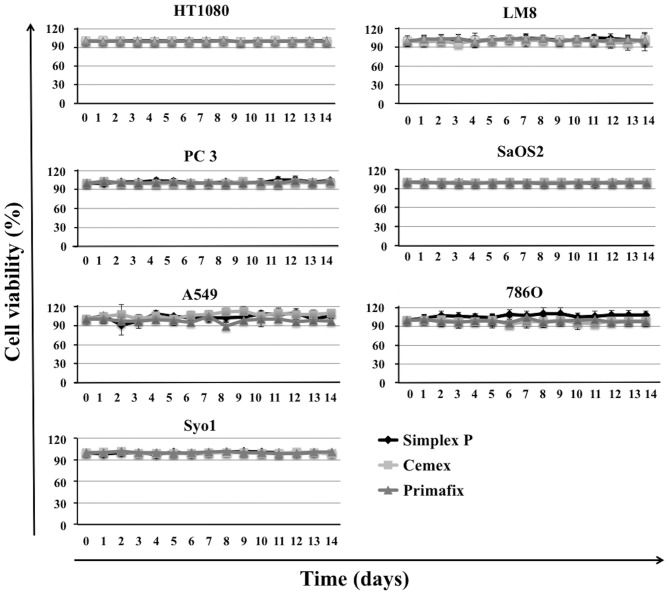
Figure 1.
Figure 1.
Effects of HA/bone cement without ZOL on cell growth. The growth effects of control HA/bone cement were determined by MTT assay. HA/bone cement without ZOL did not affect tumor cell growth. HA, hydroxyapatite; ZOL, zoledronic acid.
Figure 2.
Figure 2.
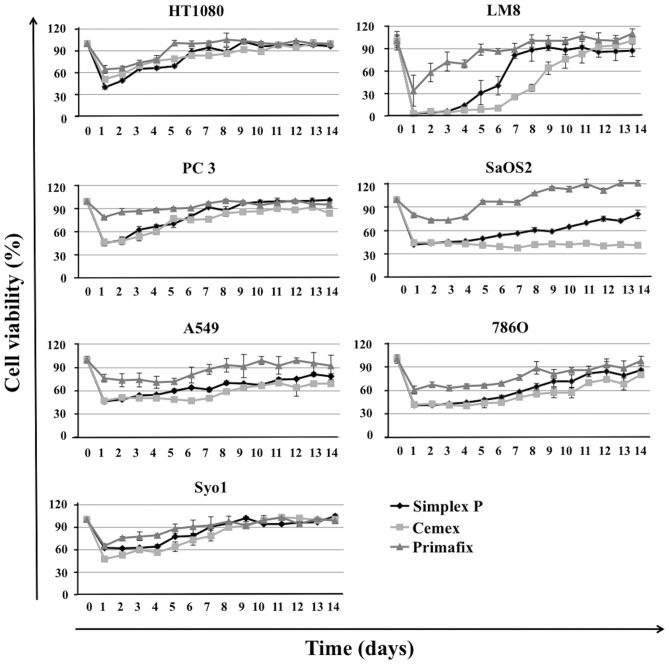
Effects of ZOL-loaded HA/bone cement on cell growth. The inhibitory effects of ZOL-loaded HA/bone cement were determined by MTT assay. ZOL-loaded HA/bone cement inhibited the growth of tumor cells. Although ZOL-loaded Primafix® demonstrated inhibitory effects in these tumor cells, the growth inhibitory effects were weak and short-acting compared with the other materials. There were no significant differences in effects on cell growth observed between the two types of ZOL-loaded bone cement, Simplex P® and Cemex RX®, the polymerization temperatures of which reached 70–110°C, and 40–55°C, respectively. The growth inhibitory effects of these materials gradually decreased over 14 days, and strong inhibitory effects were observed in LM8 cells in particular. HA, hydroxyapatite; ZOL, zoledronic acid.
Figure 3.
Figure 3.
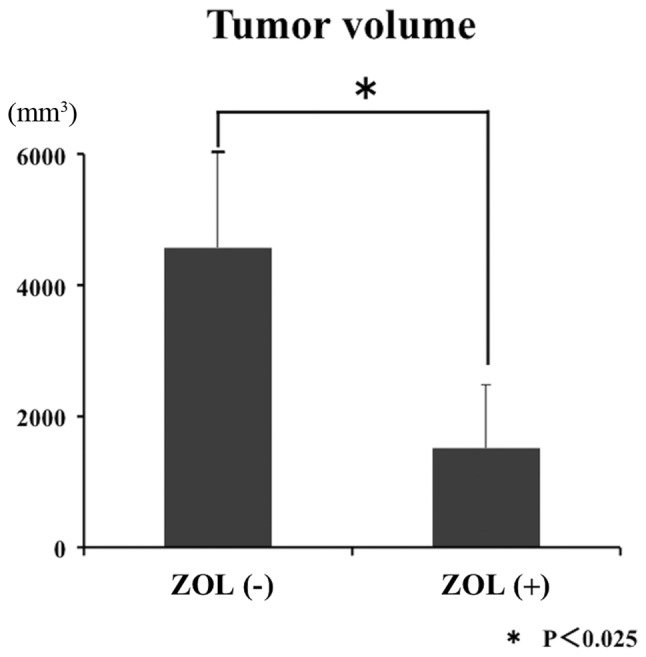
ZOL-loaded bone cement inhibits LM8 tumor xenograft growth in C3H/He mice. The mean tumor volume/mouse (mm3) was significantly reduced in ZOL-loaded bone cement-treated mice compared with the control bone cement-treated mice. The statistical significance of the differences in tumor volume between control and the treated groups was calculated using a Student's t-test. ZOL, zoledronic acid.
Figure 4.
Figure 4.
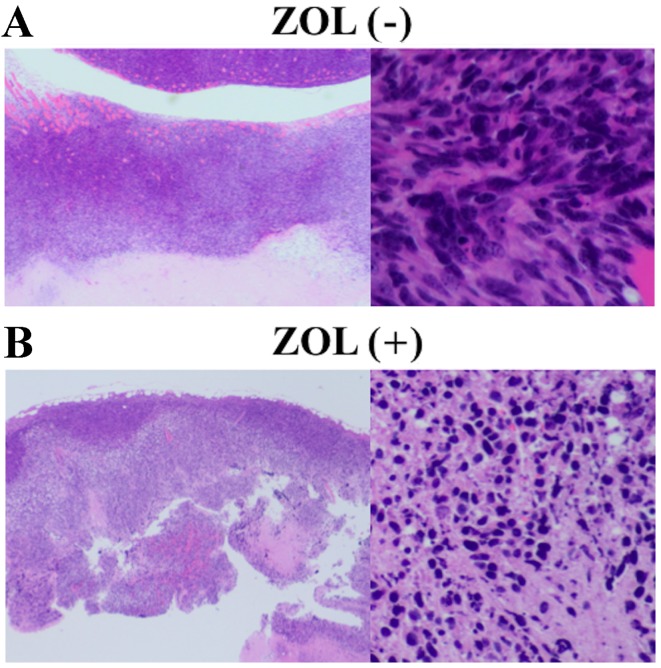
Histopathological results of resected tumors in C3H/He mice. (A) Tumor treated with control bone cement. Central necrosis was observed, although tumor cells proliferated in the outer layer. Osteosarcoma with highly atypical spindle cells was observed. (B) Tumor treated with ZOL-loaded bone cement. Tumor cells were observed only on the outer layer. The number of viable tumor cells was considerably less compared with those observed following control bone cement treatment. Tumor cell necrosis was observed just below the outer layer. ZOL, zoledronic acid.
Figure 5.
Figure 5.
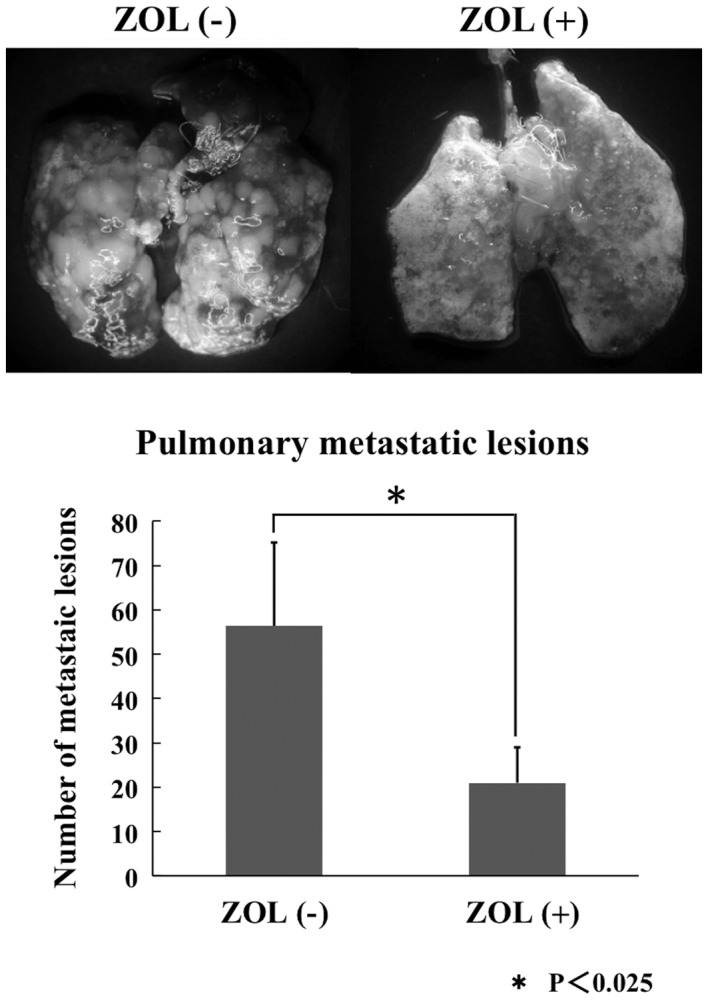
Stereomicroscope imaging of a mouse lung. Spontaneous lung metastases were observed in each group during the week that lung tissue was harvested in, subsequent to LM8 cell inoculation. However, the growth of these metastases following ZOL-loaded bone cement treatment was significantly inhibited. Statistical significance of differences in the number of metastatic lesion between control and the treated groups was calculated using a Student's t-test. ZOL, zoledronic acid.
Figure 6.
Figure 6.
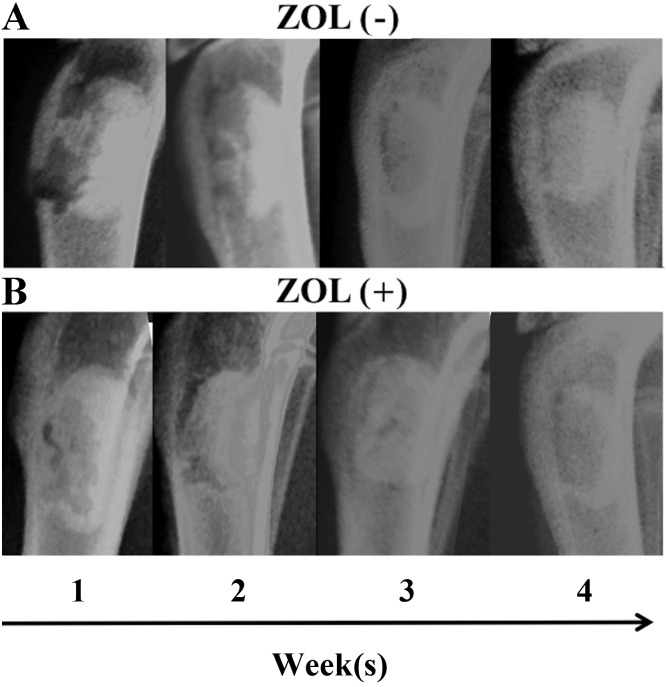
X-ray imaging of the rabbit tibia packed with ZOL-loaded/−unloaded Cemex RX®. As with the control group, the marginal lucent zone diminished gradually with time following ZOL-loaded bone cement treatment. Upper panel represents control group. Lower panel represents ZOL-loaded bone cement group. ZOL, zoledronic acid.
Figure 7.
Figure 7.
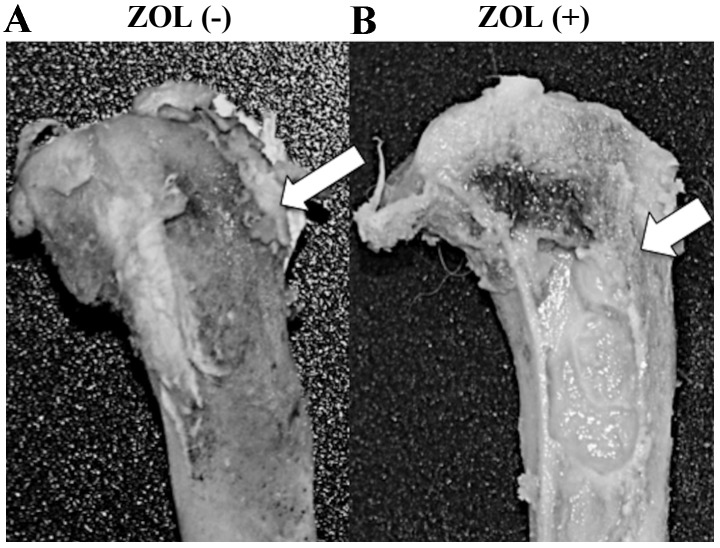
Rabbit bone tissue subsequent to removal of control and ZOL-loaded Cemex RX®. Novel bone formation was observed around the bone cement in the control and ZOL-treated bone tissues. The cortical window became increasingly unclear over time (white arrow). (A) Control Cemex RX®. (B) ZOL-loaded Cemex RX®. ZOL, zoledronic acid.
Figure 8.
Figure 8.
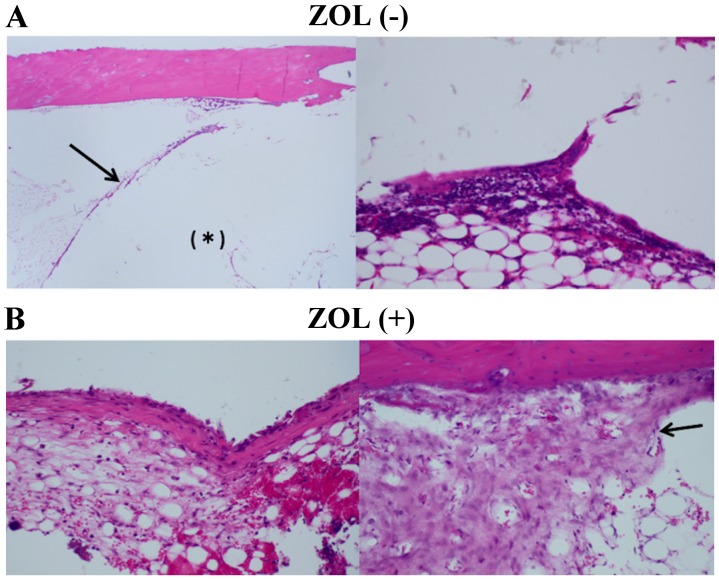
Histopathology of bone tissue surrounding implanted bone cement. (A) Control bone cement was packed into the tibia bones of rabbits. *Internal side of the arrowhead indicates the area filled with bone cement (B) ZOL-loaded bone cement was packed into tibia bones of rabbits. Bone cement was covered with fibrous tissue, which is lined with multinucleated giant cells and lymphocytes. Fibrous tissue was slightly increased with ZOL-treatment. Proliferated osteoid tissue is observed at a distance from the bone cement (black arrow). There was no obvious osteonecrosis observed compared with control bone cement treatment. ZOL, zoledronic acid.
Figure 9.
Figure 9.
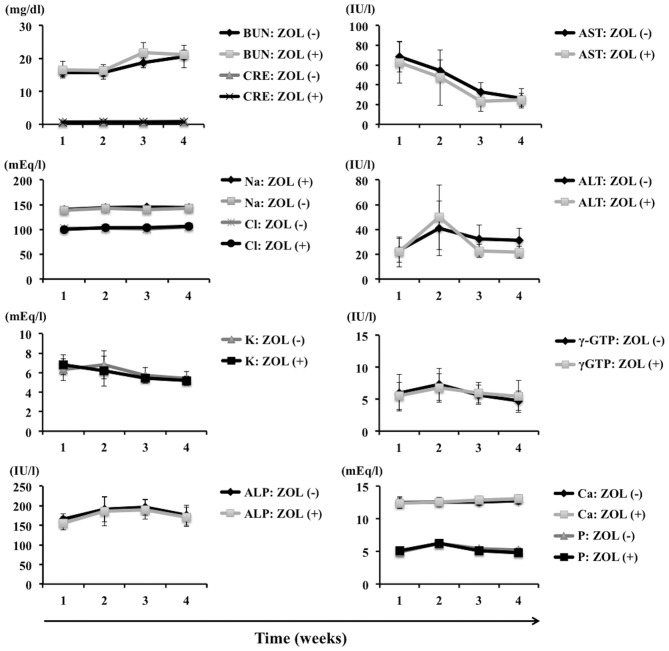
Laboratory assessment of blood parameters. Blood from control and ZOL-treated rabbits was obtained at 1 week intervals for 4 weeks subsequent to surgery. No differences were observed between the two groups, and all assessed parameters remained within normal limits. ZOL, zoledronic acid; BUN, blood urea nitrogen; CRE, creatinine; Na, Sodium; Cl, Calcium; K, potassium; ALP, alkaline phosphatase level.

References

    1. Unni KK, Inwards CY. Dahlin's bone tumors, General Aspects and Data on 10,165 Cases. Lippincott Williams & Wilkins; Philadelphia, PA: 2010. p. 305.
    1. Desai S, Jambhekar N. Clinicopathological evaluation of metastatic carcinomas of bone: A retrospective analysis of 114 cases over 10 years. Indian J Pathol Microbiol. 1995;38:49–54. - PubMed
    1. Doung YC, Kenan S, Rapp T. Metastatic lesions of the proximal femur. Bull NYU Hosp Jt Dis. 2011;69:81–86. - PubMed
    1. Weiss RJ, Forsberg JA, Wedin R. Surgery of skeletal metastases in 306 patients with prostate cancer. Acta Orthop. 2012;83:74–79. doi: 10.3109/17453674.2011.645197. - DOI - PMC - PubMed
    1. Wedin R, Bauer HC, Wersäll P. Failures after operation for skeletal metastatic lesions of long bones. Clin Orthop Relat Res. 1999:1–139. - PubMed