


Cryptosporidium parvum vaccine candidates are incompletely modified with O-linked-N-acetylgalactosamine or contain N-terminal N-myristate and S-palmitate
- PMID: 28792526
- PMCID: PMC5549699
- DOI: 10.1371/journal.pone.0182395
Cryptosporidium parvum vaccine candidates are incompletely modified with O-linked-N-acetylgalactosamine or contain N-terminal N-myristate and S-palmitate
Abstract
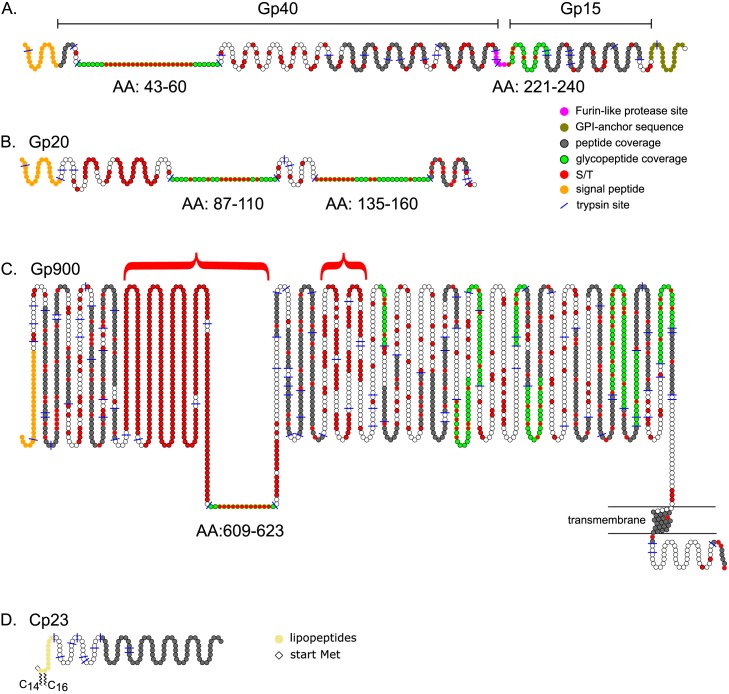
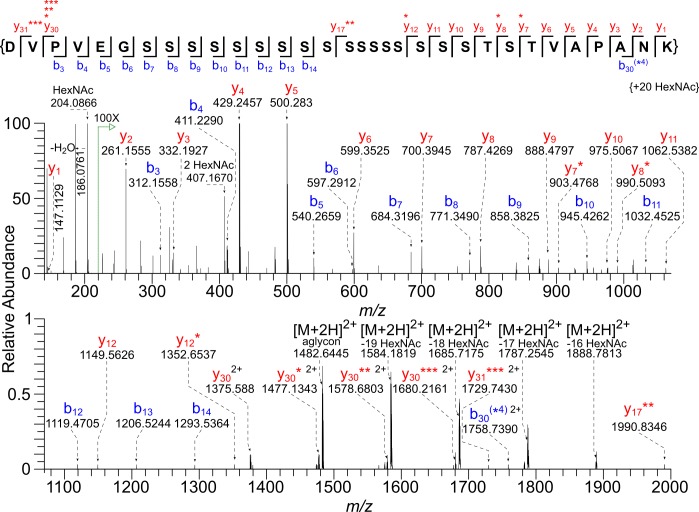
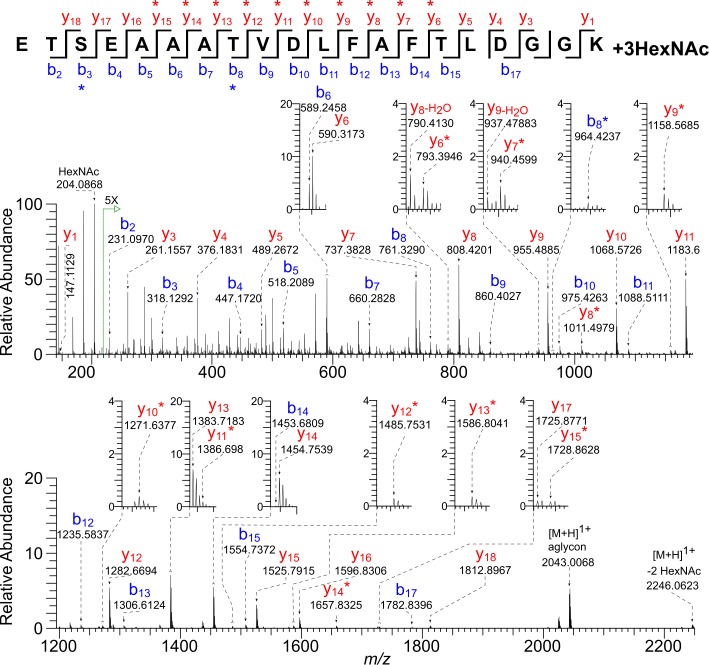
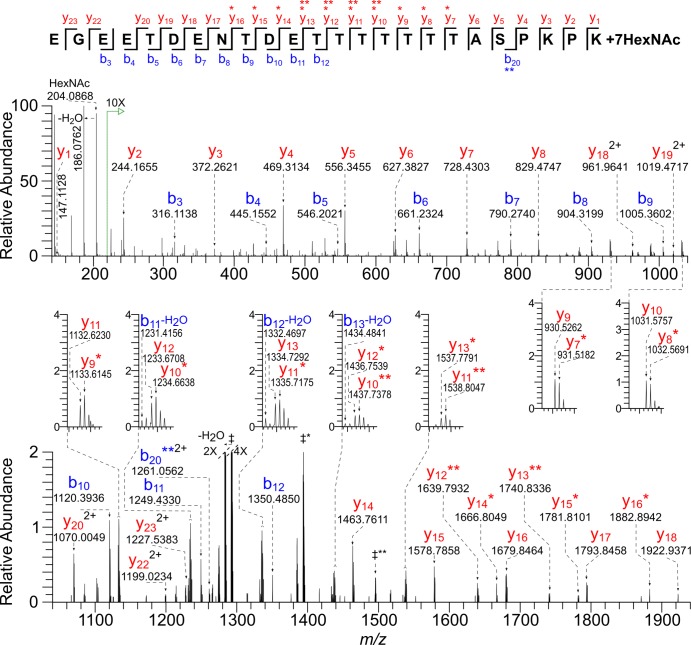
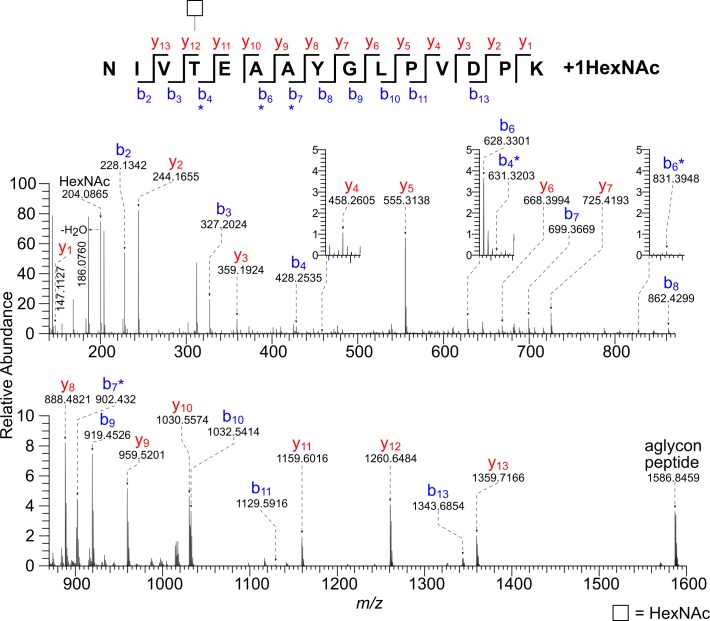
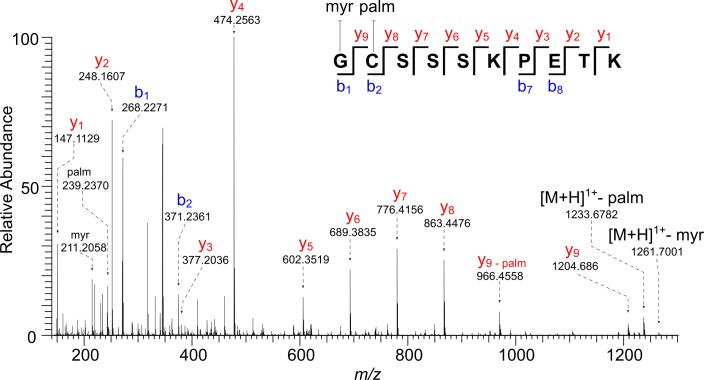
Cryptosporidium parvum (studied here) and Cryptosporidium hominis are important causes of diarrhea in infants and immunosuppressed persons. C. parvum vaccine candidates, which are on the surface of sporozoites, include glycoproteins with Ser- and Thr-rich domains (Gp15, Gp40, and Gp900) and a low complexity, acidic protein (Cp23). Here we used mass spectrometry to determine that O-linked GalNAc is present in dense arrays on a glycopeptide with consecutive Ser derived from Gp40 and on glycopeptides with consecutive Thr derived from Gp20, a novel C. parvum glycoprotein with a formula weight of ~20 kDa. In contrast, the occupied Ser or Thr residues in glycopeptides from Gp15 and Gp900 are isolated from one another. Gly at the N-terminus of Cp23 is N-myristoylated, while Cys, the second amino acid, is S-palmitoylated. In summary, C. parvum O-GalNAc transferases, which are homologs of host enzymes, densely modify arrays of Ser or Thr, as well as isolated Ser and Thr residues on C. parvum vaccine candidates. The N-terminus of an immunodominant antigen has lipid modifications similar to those of host cells and other apicomplexan parasites. Mass spectrometric demonstration here of glycopeptides with O-glycans complements previous identification C. parvum O-GalNAc transferases, lectin binding to vaccine candidates, and human and mouse antibodies binding to glycopeptides. The significance of these post-translational modifications is discussed with regards to the function of these proteins and the design of serological tests and vaccines.
Conflict of interest statement
Figures
References
-
- Checkley W, White AC Jr., Jaganath D, Arrowood MJ, Chalmers RM, Chen XM, et al. A review of the global burden, novel diagnostics, therapeutics, and vaccine targets for cryptosporidium. Lancet Infect Dis. 2015;15(1):85–94. doi: 10.1016/S1473-3099(14)70772-8 ; PubMed Central PMCID: PMCPMC4401121. - DOI - PMC - PubMed
-
- Esch KJ, Petersen CA. Transmission and epidemiology of zoonotic protozoal diseases of companion animals. Clin Microbiol Rev. 2013;26(1):58–85. doi: 10.1128/CMR.00067-12 ; PubMed Central PMCID: PMCPMC3553666. - DOI - PMC - PubMed
-
- Fayer R, Xiao L. Cryptosporidium and cryptosporidiosis: CRC press; 2007.
-
- Tzipori S, Widmer G. A hundred-year retrospective on cryptosporidiosis. Trends Parasitol. 2008;24(4):184–9. doi: 10.1016/j.pt.2008.01.002 ; PubMed Central PMCID: PMCPMC2716703. - DOI - PMC - PubMed
MeSH terms
Substances
Grants and funding
LinkOut - more resources
Full Text Sources
Other Literature Sources
Molecular Biology Databases
