


Prevalence of transactive response DNA-binding protein 43 (TDP-43) proteinopathy in cognitively normal older adults: systematic review and meta-analysis
- PMID: 28793370
- PMCID: PMC5902737
- DOI: 10.1111/nan.12430
Prevalence of transactive response DNA-binding protein 43 (TDP-43) proteinopathy in cognitively normal older adults: systematic review and meta-analysis
Abstract
Objective: To perform a systematic review and meta-analysis on the prevalence of transactive response DNA-binding protein 43 (TDP-43) proteinopathy in cognitively normal older adults.
Methods: We systematically reviewed and performed a meta-analysis on the prevalence of TDP-43 proteinopathy in older adults with normal cognition, evaluated by the Mini-Mental State Examination or the Clinical Dementia Rating. We estimated the overall prevalence of TDP-43 using random-effect models, and stratified by age, sex, sample size, study quality, antibody used to assess TDP-43 aggregates, analysed brain regions, Braak stage, Consortium to Establish a Registry for Alzheimer's Disease score, hippocampal sclerosis and geographic location.
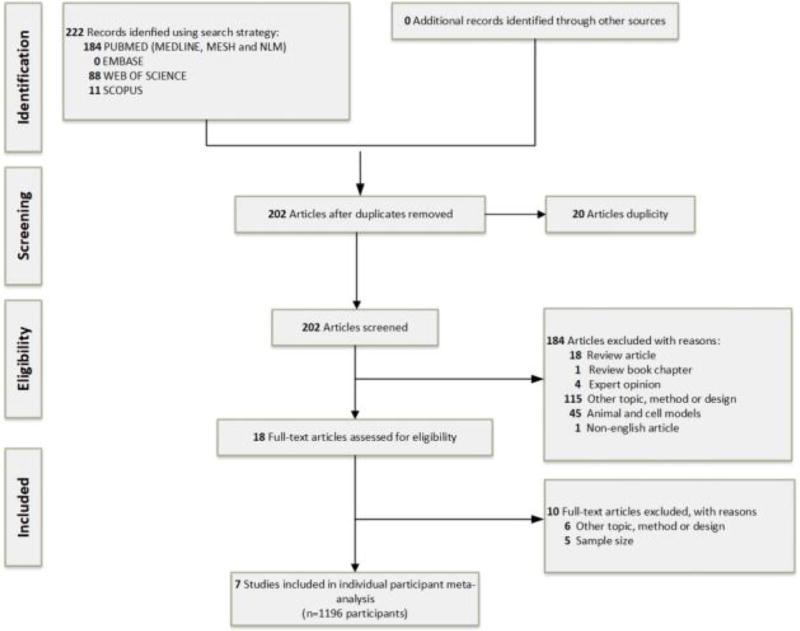
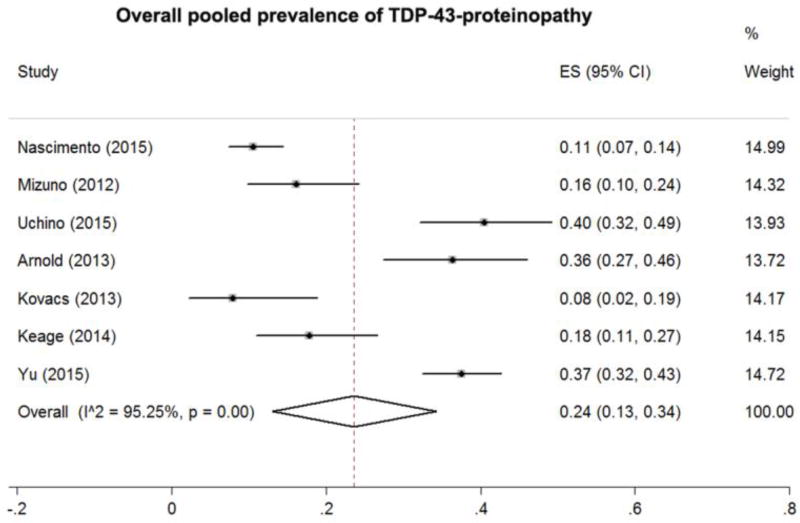
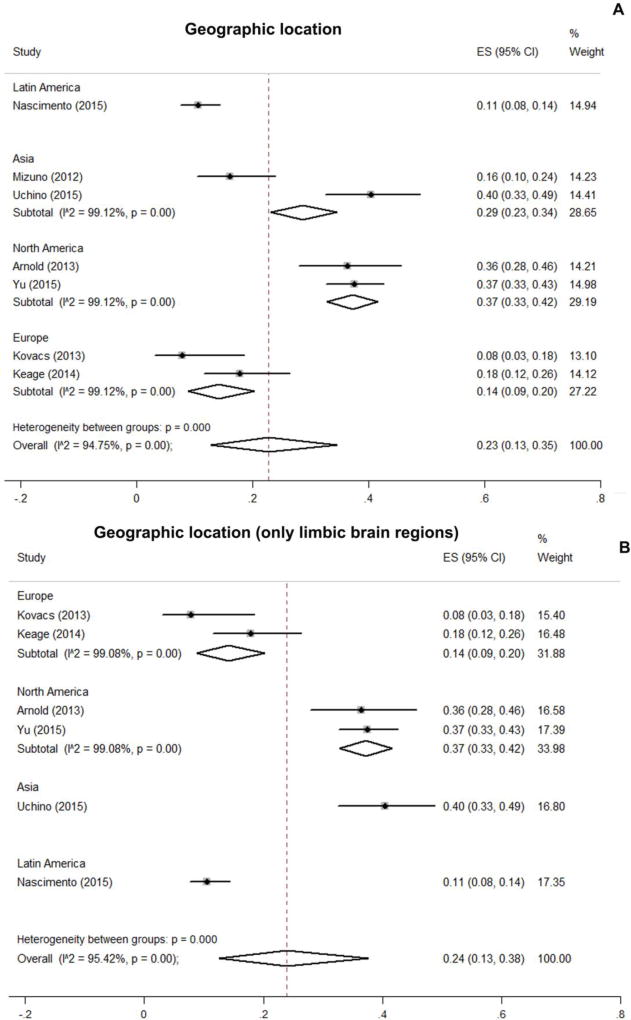
Results: A total of 505 articles were identified in the systematic review, and 7 were included in the meta-analysis with 1196 cognitively normal older adults. We found an overall prevalence of TDP-43 proteinopathy of 24%. Prevalence of TDP-43 proteinopathy varied widely across geographic location (North America: 37%, Asia: 29%, Europe: 14%, and Latin America: 11%). Estimated prevalence of TDP-43 proteinopathy also varied according to study quality (quality score >7: 22% vs. quality score <7: 42%), antibody used to assess TDP-43 proteinopathy (native: 18% vs. hyperphosphorylated: 24%) and presence of hippocampal sclerosis (without 24% vs. with hippocampal sclerosis: 48%). Other stratified analyses by age, sex, analysed brain regions, sample size and severity of AD neuropathology showed similar pooled TDP-43 prevalence.
Conclusions: Different methodology to access TDP-43, and also differences in lifestyle and genetic factors across different populations could explain our results. Standardization of TDP-43 measurement, and future studies about the impact of genetic and lifestyle characteristics on the development of neurodegenerative diseases are needed.
Keywords: post mortem; TDP-43 proteinopathy; brain ageing; dementia; elderly.
© 2017 British Neuropathological Society.
Figures
References
-
- Neumann M, Sampathu DM, Kwong LK, Truax AC, Micsenyi MC, Chou TT, Bruce J, Schuck T, Grossman M, Clark CM, McCluskey LF, Miller BL, Masliah E, Mackenzie IR, Feldman H, Feiden W, Kretzschmar HA, Trojanowski JQ, Lee VM. Ubiquitinated TDP-43 in frontotemporal lobar degeneration and amyotrophic lateral sclerosis. Science. 2006;314:130–133. - PubMed
-
- Tan RH, Kril JJ, Fatima M, McGeachie A, McCann H, Shepherd C, Forrest SL, Affleck A, Kwok JB, Hodges JR, Kiernan MC, Halliday GM. TDP-43 proteinopathies: pathological identification of brain regions differentiating clinical phenotypes. Brain. 2015;138:3110–3122. - PubMed
-
- Brettschneider J, Del Tredici K, Toledo JB, Robinson JL, Irwin DJ, Grossman M, Suh E, Van Deerlin VM, Wood EM, Baek Y, Kwong L, Lee EB, Elman L, McCluskey L, Fang L, Feldengut S, Ludolph AC, Lee VM, Braak H, Trojanowski JQ. Stages of pTDP-43 pathology in amyotrophic lateral sclerosis. Annals of neurology. 2013;74:20–38. - PMC - PubMed
-
- Brettschneider J, Del Tredici K, Irwin DJ, Grossman M, Robinson JL, Toledo JB, Lee EB, Fang L, Van Deerlin VM, Ludolph AC, Lee VM, Braak H, Trojanowski JQ. Erratum to: Sequential distribution of pTDP-43 pathology in behavioral variant frontotemporal dementia (bvFTD) Acta neuropathol. 2015;129:929. - PubMed
Publication types
MeSH terms
Substances
Grants and funding
LinkOut - more resources
Full Text Sources
Other Literature Sources
