


Macrophages, Foreign Body Giant Cells and Their Response to Implantable Biomaterials
- PMID: 28793529
- PMCID: PMC5512621
- DOI: 10.3390/ma8095269
Macrophages, Foreign Body Giant Cells and Their Response to Implantable Biomaterials
Abstract
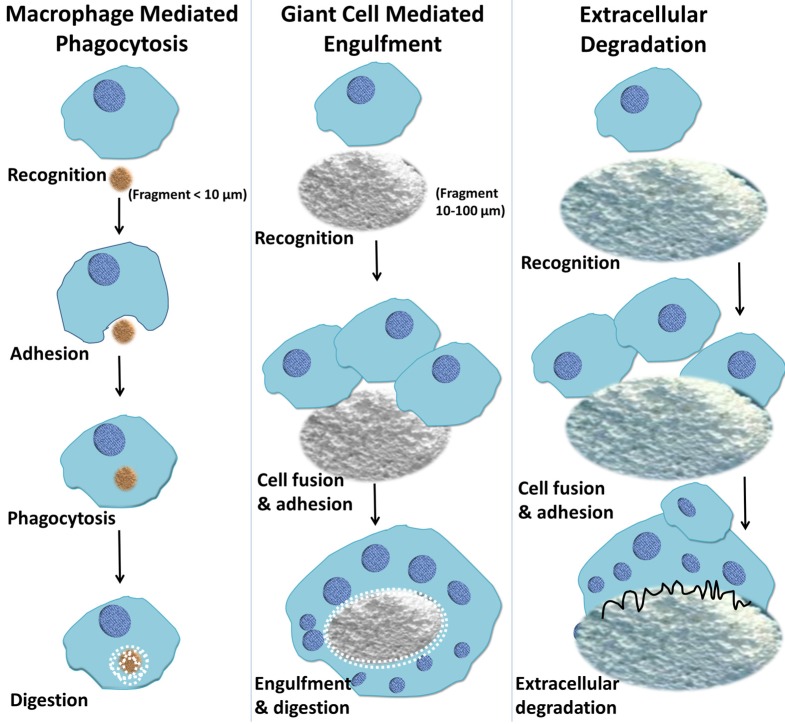
All biomaterials, when implanted in vivo, elicit cellular and tissue responses. These responses include the inflammatory and wound healing responses, foreign body reactions, and fibrous encapsulation of the implanted materials. Macrophages are myeloid immune cells that are tactically situated throughout the tissues, where they ingest and degrade dead cells and foreign materials in addition to orchestrating inflammatory processes. Macrophages and their fused morphologic variants, the multinucleated giant cells, which include the foreign body giant cells (FBGCs) are the dominant early responders to biomaterial implantation and remain at biomaterial-tissue interfaces for the lifetime of the device. An essential aspect of macrophage function in the body is to mediate degradation of bio-resorbable materials including bone through extracellular degradation and phagocytosis. Biomaterial surface properties play a crucial role in modulating the foreign body reaction in the first couple of weeks following implantation. The foreign body reaction may impact biocompatibility of implantation devices and may considerably impact short- and long-term success in tissue engineering and regenerative medicine, necessitating a clear understanding of the foreign body reaction to different implantation materials. The focus of this review article is on the interactions of macrophages and foreign body giant cells with biomaterial surfaces, and the physical, chemical and morphological characteristics of biomaterial surfaces that play a role in regulating the foreign body response. Events in the foreign body response include protein adsorption, adhesion of monocytes/macrophages, fusion to form FBGCs, and the consequent modification of the biomaterial surface. The effect of physico-chemical cues on macrophages is not well known and there is a complex interplay between biomaterial properties and those that result from interactions with the local environment. By having a better understanding of the role of macrophages in the tissue healing processes, especially in events that follow biomaterial implantation, we can design novel biomaterials-based tissue-engineered constructs that elicit a favorable immune response upon implantation and perform for their intended applications.
Keywords: biomaterials; cell-material interaction; cellular and tissue response; foreign body reaction; implantable materials; macrophages.
Conflict of interest statement
The authors declare no conflict of interest.
Figures
References
-
- Barrere F., Mahmood T., De Groot K., Van Blitterswijk C. Advanced biomaterials for skeletal tissue regeneration: Instructive and smart functions. Mater. Sci. Eng. R Rep. 2008;59:38–71. doi: 10.1016/j.mser.2007.12.001. - DOI
Publication types
LinkOut - more resources
Full Text Sources
Other Literature Sources
