Nasal high flow therapy: a novel treatment rather than a more expensive oxygen device
- PMID: 28794144
- PMCID: PMC9488954
- DOI: 10.1183/16000617.0028-2017
Nasal high flow therapy: a novel treatment rather than a more expensive oxygen device
Abstract
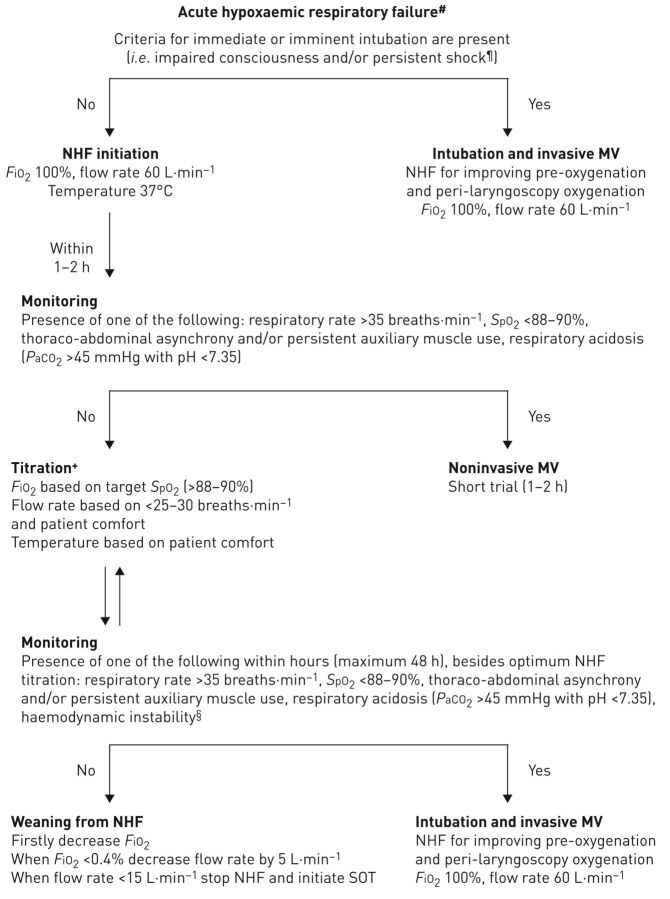
Nasal high flow is a promising novel oxygen delivery device, whose mechanisms of action offer some beneficial effects over conventional oxygen systems. The administration of a high flow of heated and humidified gas mixture promotes higher and more stable inspiratory oxygen fraction values, decreases anatomical dead space and generates a positive airway pressure that can reduce the work of breathing and enhance patient comfort and tolerance. Nasal high flow has been used as a prophylactic tool or as a treatment device mostly in patients with acute hypoxaemic respiratory failure, with the majority of studies showing positive results. Recently, its clinical indications have been expanded to post-extubated patients in intensive care or following surgery, for pre- and peri-oxygenation during intubation, during bronchoscopy, in immunocompromised patients and in patients with "do not intubate" status. In the present review, we differentiate studies that suggest an advantage (benefit) from other studies that do not suggest an advantage (no benefit) compared to conventional oxygen devices or noninvasive ventilation, and propose an algorithm in cases of nasal high flow application in patients with acute hypoxaemic respiratory failure of almost any cause.
Copyright ©ERS 2017.
Conflict of interest statement
Conflict of interest: None declared.
Figures
References
-
- Chanques G, Riboulet F, Molinari N, et al. Comparison of three high flow oxygen therapy delivery devices: a clinical physiological cross-over study. Minerva Anestesiol 2013; 79: 1344–1355. - PubMed
-
- Spoletini G, Alotaibi M, Blasi F, et al. Heated humidified high-flow nasal oxygen in adults: mechanisms of action and clinical implications. Chest 2015; 148: 253–261. - PubMed
-
- Ritchie JE, Williams AB, Gerard C, et al. Evaluation of a humidified nasal high-flow oxygen system, using oxygraphy, capnography and measurement of upper airway pressures. Anaesth Intensive Care 2011; 39: 1103–1110. - PubMed
-
- Gotera C, Díaz Lobato S, Pinto T, et al. Clinical evidence on high flow oxygen therapy and active humidification in adults. Rev Port Pneumol 2013; 19: 217–227. - PubMed
-
- Corley A, Caruana LR, Barnett AG, et al. Oxygen delivery through high-flow nasal cannulae increase end-expiratory lung volume and reduce respiratory rate in post-cardiac surgical patients. Br J Anaesth 2011; 107: 998–1004. - PubMed
Publication types
MeSH terms
LinkOut - more resources
Full Text Sources
Other Literature Sources
Medical