


The Effect of Menstrual Cycle and Contraceptives on ACL Injuries and Laxity: A Systematic Review and Meta-analysis
- PMID: 28795075
- PMCID: PMC5524267
- DOI: 10.1177/2325967117718781
The Effect of Menstrual Cycle and Contraceptives on ACL Injuries and Laxity: A Systematic Review and Meta-analysis
Abstract
Background: Women are at substantially greater risk for anterior cruciate ligament (ACL) injuries than are men.
Purpose: To conduct a systematic review and meta-analysis of the literature to clarify the effect of the menstrual cycle and contraceptives on the laxity of and noncontact injuries to the ACL.
Study design: Systematic review; Level of evidence, 4.
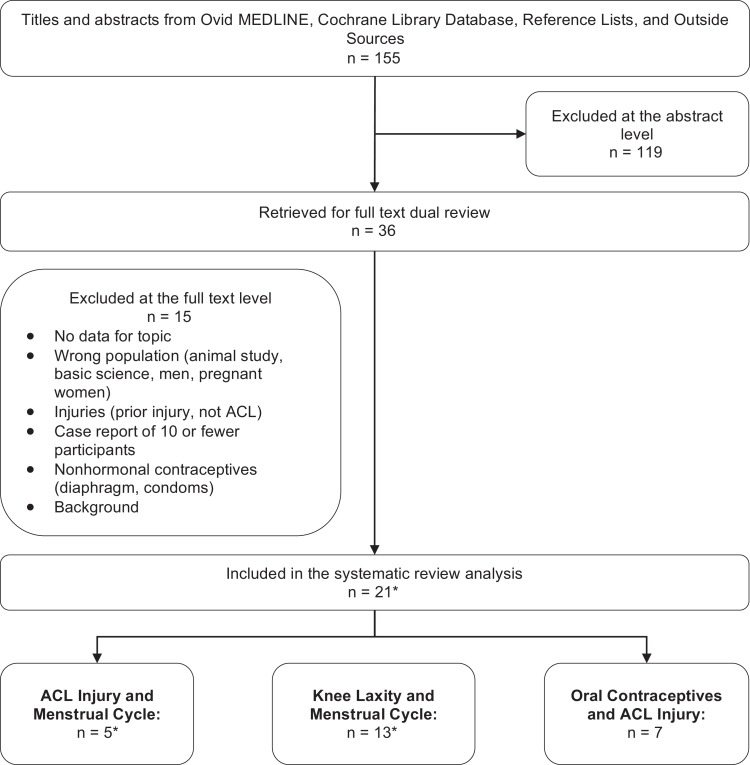
Methods: Searches were conducted using MEDLINE (1946-August 2016), the Cochrane Library Database, clinical trial registries, and related reference lists. Search terms included athletic injuries, knee injuries, ligaments, joint instability, menstrual cycle, ovulation, hormones, and contraceptives. Investigators independently dually abstracted and reviewed study details and quality using predefined criteria and evaluated overall strength of evidence using the GRADE (Grading of Recommendations Assessment, Development and Evaluation) criteria.
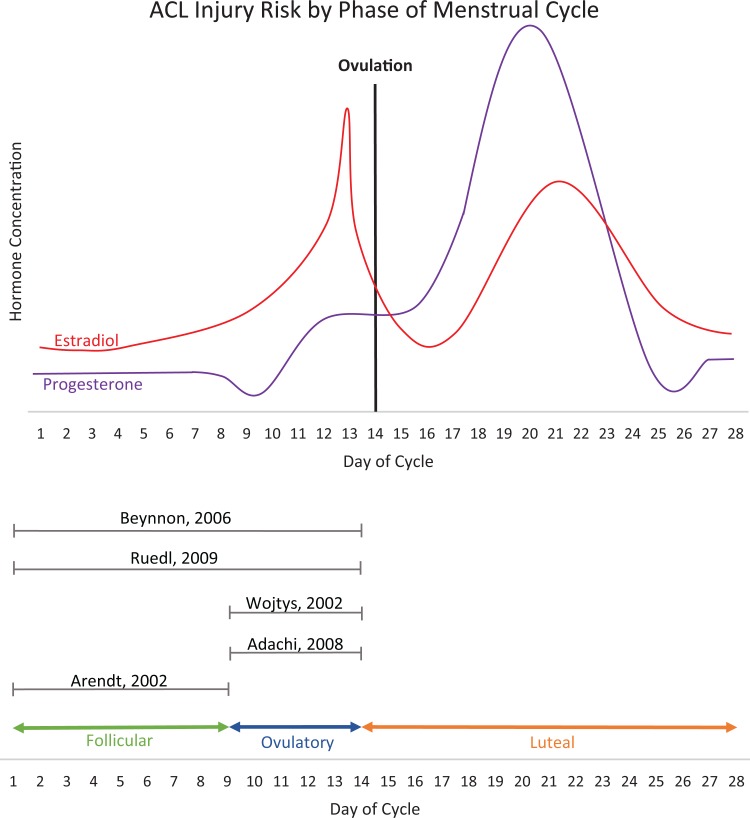
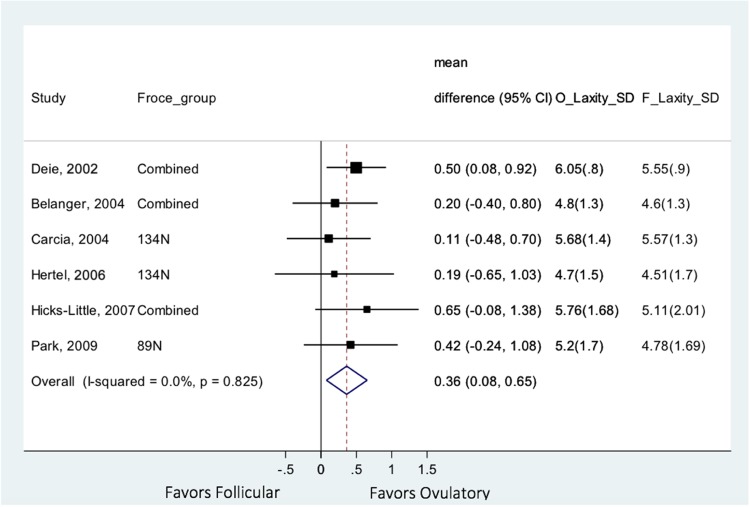
Results: Twenty-one studies totaling 68,758 participants were included: 5 on the menstrual cycle and ACL injury, 7 on hormonal contraceptives and ACL injury, as well as 13 on menstrual cycle and ligament laxity. Four of 5 studies of women not using hormonal contraception indicated that the luteal phase was the least associated with ACL injuries. The 2 largest and highest quality studies on hormonal contraceptives suggested that hormonal contraceptives may be protective against ACL injury. Six of 12 studies on ACL laxity provided quantitative data for meta-analysis, finding significantly increased laxity during the ovulatory phase compared with the follicular phase.
Conclusion: The literature suggests an association between hormonal fluctuations and ACL injury. Recent studies have suggested that oral contraceptives may offer up to a 20% reduction in risk of injury. The literature on ACL injuries and the menstrual cycle has more than doubled over the past decade, permitting quantitative analysis for the first time. However, the overall strength of this evidence is low. Promising potential directions for future research include long-term observational studies with ongoing hormonal assays and large interventional trials of follicular suppression, including newer hormonal methods.
Keywords: anterior cruciate ligament; female; hormonal contraceptives; human; knee injury; menstrual cycle; meta-analysis; sports medicine; systematic review.
Conflict of interest statement
The authors declared that they have no conflicts of interest in the authorship and publication of this contribution.
Figures
References
-
- Adachi N, Nawata K, Maeta M, Kurozawa Y. Relationship of the menstrual cycle phase to anterior cruciate ligament injuries in teenaged female athletes. Arch Orthop Trauma Surg. 2008;128:473–478. - PubMed
-
- Agel J, Bershadsky B, Arendt EA. Hormonal therapy: ACL and ankle injury. Med Sci Sports Exerc. 2006;38:7–12. - PubMed
-
- Arendt EA, Bershadsky B, Agel J. Periodicity of noncontact anterior cruciate ligament injuries during the menstrual cycle. J Gend Specif Med. 2002;5(2):19–26. - PubMed
-
- Beck NA, Lawrence JT, Nordin JD, DeFor TA, Tompkins M. ACL tears in school-aged children and adolescents over 20. Pediatrics. 2017;139(3):E20161877. - PubMed
-
- Belanger MJ, Moore DC, Crisco JJ, 3rd, Fadale PD, Hulstyn MJ, Ehrlich MG. Knee laxity does not vary with the menstrual cycle, before or after exercise. Am J Sports Med. 2004;32:1150–1157. - PubMed
Publication types
LinkOut - more resources
Full Text Sources
Other Literature Sources
Medical
Miscellaneous
