


The epidemiology of medically attended respiratory syncytial virus in older adults in the United States: A systematic review
- PMID: 28797053
- PMCID: PMC5552193
- DOI: 10.1371/journal.pone.0182321
The epidemiology of medically attended respiratory syncytial virus in older adults in the United States: A systematic review
Abstract
Objective: This review was undertaken to assess the historical evidence of the disease incidence and burden of laboratory-confirmed respiratory syncytial virus (RSV) in medically attended older adults.
Design: A qualitative systematic literature review was performed; no statistical synthesis of the data was planned, in anticipation of expected heterogeneity across studies in this population.
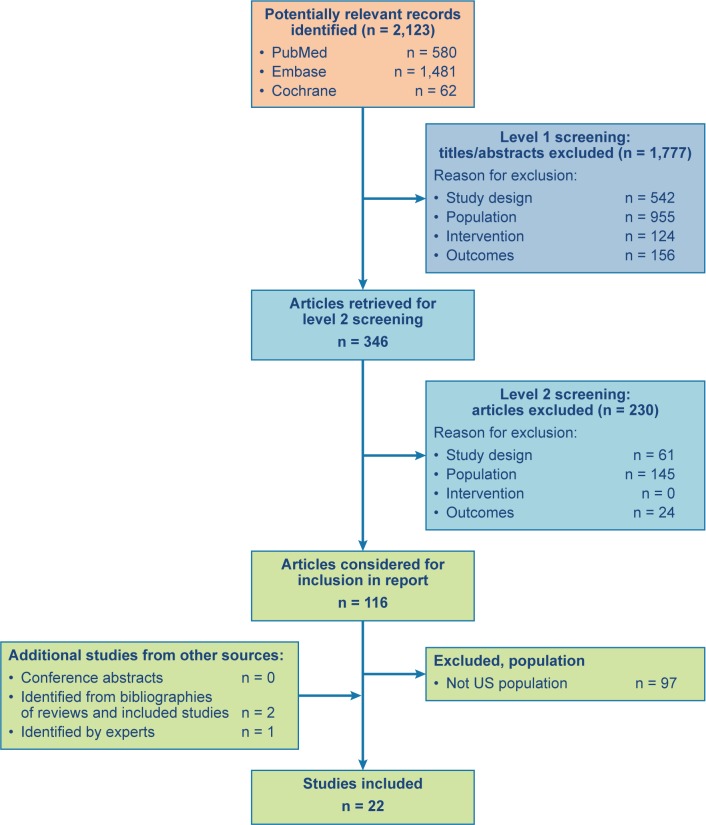
Methods: A literature search of PubMed, Embase, and the Cochrane Library was conducted for studies of medically attended RSV in older adults (≥ 50 years) published in the last 15 years. Two independent reviewers screened titles and abstracts based on predefined inclusion and exclusion criteria.
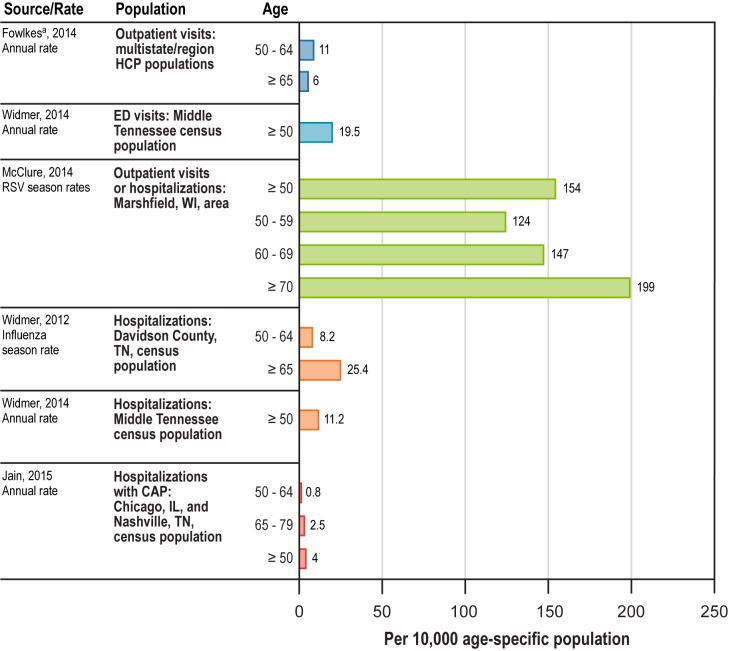
Results: From 10 studies reporting incidence proportions, RSV may be the causative agent in up to 12% of medically attended acute respiratory illness in older adults unselected for comorbidities, with variations in clinical setting and by year. In multiple studies, medically attended-RSV incidence among older adults not selected for having underlying health conditions increased with increasing age. Of prospectively followed lung transplant recipients, 16% tested positive for RSV. In hospitalized adults with chronic cardiopulmonary diseases, 8% to 13% were infected with RSV during winter seasons (8%-13%) or metapneumovirus season (8%). Hospitalizations for RSV in older adults typically lasted 3 to 6 days, with substantial proportions requiring intensive care unit admission and mechanical ventilation. Among older adults hospitalized with RSV, the mortality rate was 6% to 8%.
Conclusions: Protection of older adults against RSV could reduce respiratory-related burden, especially as age increases and the prevalence of comorbidities (especially cardiopulmonary comorbidities) grows.
Conflict of interest statement
Figures

References
-
- Hall CB, Simoes EA, Anderson LJ. Clinical and epidemiologic features of respiratory syncytial virus. Curr Top Microbiol Immunol. 2013; 372: 39–57. doi: 10.1007/978-3-642-38919-1_2 - DOI - PubMed
-
- Nair H, Nokes DJ, Gessner BD, Dherani M, Madhi SA, Singleton RJ, et al. Global burden of acute lower respiratory infections due to respiratory syncytial virus in young children: a systematic review and meta-analysis. Lancet. 2010; 375 (9725): 1545–1555. doi: 10.1016/S0140-6736(10)60206-1 - DOI - PMC - PubMed
-
- Branche AR, Falsey AR. Respiratory syncytial virus infection in older adults: an under-recognized problem. Drugs Aging. 2015; 32 (4): 261–269. doi: 10.1007/s40266-015-0258-9 - DOI - PubMed
Publication types
MeSH terms
LinkOut - more resources
Full Text Sources
Other Literature Sources
Medical
