


Anthelminthic properties of Methylene chloride-methanol (1:1) extracts of two Cameroonians medicinal plants on Heligmosomoides bakeri (Nematoda: Heligmosomatidea)
- PMID: 28800757
- PMCID: PMC5553925
- DOI: 10.1186/s12906-017-1908-8
Anthelminthic properties of Methylene chloride-methanol (1:1) extracts of two Cameroonians medicinal plants on Heligmosomoides bakeri (Nematoda: Heligmosomatidea)
Abstract
Background: The resistance of some medico-veterinary parasite strains as well as the unavailability and toxicity of synthetic anthelminthics on humans, animals and the impacts of their residues in the environment have pushed scientists to turn to plants with anthelminthic properties. Hence, the aim of this work was to contribute to the fight against helminths of medical and veterinary importance in general, and also to clear the environment of their free living stages.
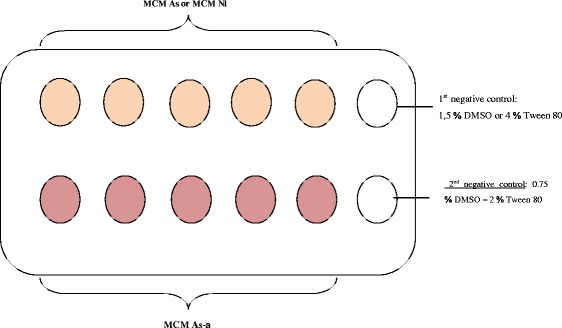
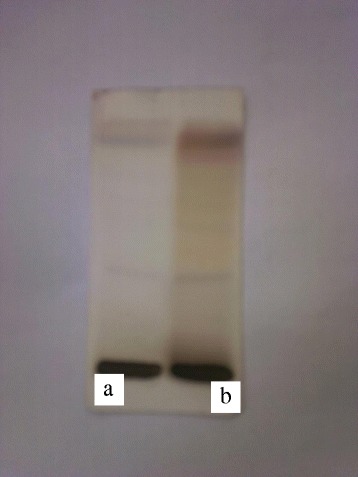
Methods: Fresh eggs of Heligmosomoides bakeri were obtained from the faeces of experimentally infected mice. L1 and L2 larval stages were obtained after 48 and 72 h of coproculture respectively. Methylene Chloride-Methanol (1:1) extracts of Annona senegalensis and Nauclea latifolia were diluted in DMSO or Tween 80 to prepare the following concentrations: 625, 1250, 2500, 3750 and 5000 μg/ml. The effects of extract solutions were evaluated on the embryonation of eggs, egg hatching and on L1 and L2 survival after 48, 10 and 24 h of incubation. Negative controls were 1.5% DMSO, 4% Tween 80 and a mixture of these solvents. The TLC was carried out and the profiles of secondary metabolites were made.
Results: Negative controls had no effect on the embryonation, eggs hatching and on larval mortality. However, it was found that, the extracts affected the free living stages of H. bakeri in a concentration-dependant manner. At the highest concentration (5000 μg/ml), the rate of inhibition of embryonation obtained were 20.80%, 38.15% and 84.83% for Methylene Chloride-Methanol of Annona senegalensis (MCM As), Nauclea latifolia (MCM Nl) extracts and mixture of Annona senegalensis and Nauclea latifolia (MCM As-Nl) extract respectively. For egg hatch, the inhibition rate was 16.10%, 46.24% and 87.07% for the above three extracts respectively at the same concentration of 5000 μg/ml. On L1 and L2 larval stages after 24 h of exposure to extracts, the mortality rates of 100%, 54.76% and 96.77% against 98%, 51.44% and 100% were obtained for MCM As, MCM Nl and MCM As-Nl respectively at the highest concentration. The Methylene Chloride-Methanol of A.senegalensis, N. latifolia extracts showed the presence of alkaloids except in N. latifolia extract, flavonoids, sterols, triterpens, tanins, polyphenols, anthraquinons, saponins and terpenoids.
Conclusion: These findings suggest that, the mixture of the two plant extracts showed an additive (synergetic effect) ovicidal effect and a slight larval mortality on L1 as compared to the effect of MCM As extract alone. These effects were due to the presence ao secondary metabolites identifies in the plant extracts. Thus, they may be used as possible «disinfectants» for soil transmitted nematodes.
Keywords: Additive effect; Annona senegalensis; Heligmosomoides bakeri; Nauclea latifolia.
Conflict of interest statement
Ethics approval
Experimental protocols used in this study were approved by the Research Unit of Biology and Applied Ecology committee, Department of Animal Biology, University of Dschang, Cameroon.
Consent for publication
Not applicable.
Competing interests
The authors declare that they have no competing interests.
Publisher’s Note
Springer Nature remains neutral with regard to jurisdictional claims in published maps and institutional affiliations.
Figures
References
-
- Etung kollins N, Wabo Pone J, Payne VK, Yondo J, Komtangi MC, Mpoame Mbida, Bilong Bilong, C. In vitro Comparative effect of aqueous (cold and hot water) and ethanolic extracts of the seeds of aframomum danielli (zingiberaceae) on three life cycle stages of the parasitic nematode Heligmosomoides Bakeri (Nematoda; Heligmosomatidae), parasite of the laboratory mice (Mus Musculus). Med Aromat Plants. 2012;1:111. doi: 10.4172/2167-0412.1000111.
-
- Nandhini A, Sumathi C. An overview of herbals used in helminthosis. World J Pharm Res. 2014;3(10):350–362.
-
- WHO. Link between water and rehabilitation, health and hygiene: figure and accomplished facts. Geneva. 2004. http://www.who.int/water_sanitation_health/publications/facts2004/en/.
MeSH terms
Substances
LinkOut - more resources
Full Text Sources
Other Literature Sources
Research Materials
