


Molecular signatures of longevity: Insights from cross-species comparative studies
- PMID: 28800931
- PMCID: PMC5807068
- DOI: 10.1016/j.semcdb.2017.08.007
Molecular signatures of longevity: Insights from cross-species comparative studies
Abstract
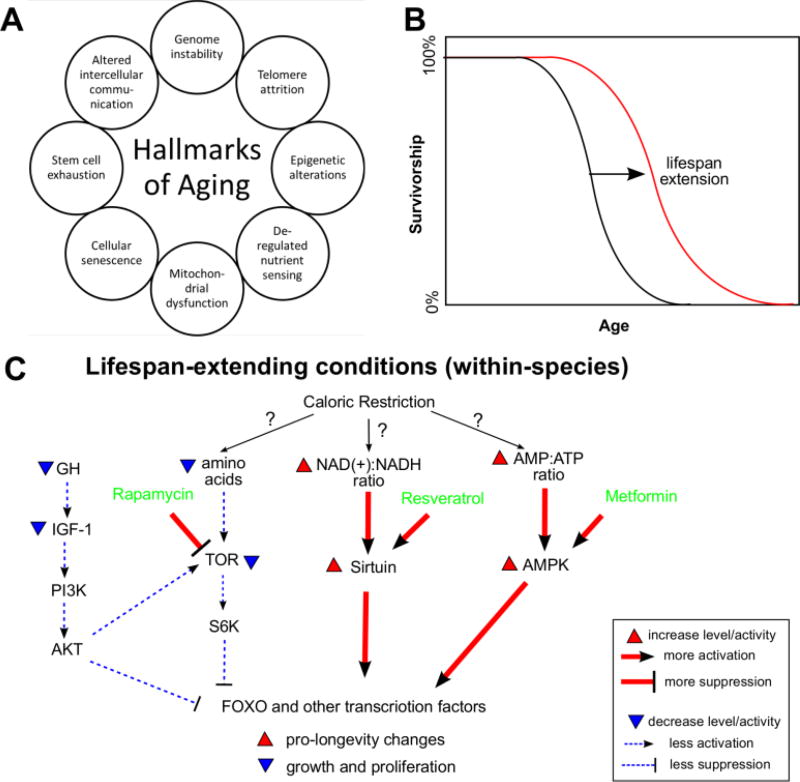
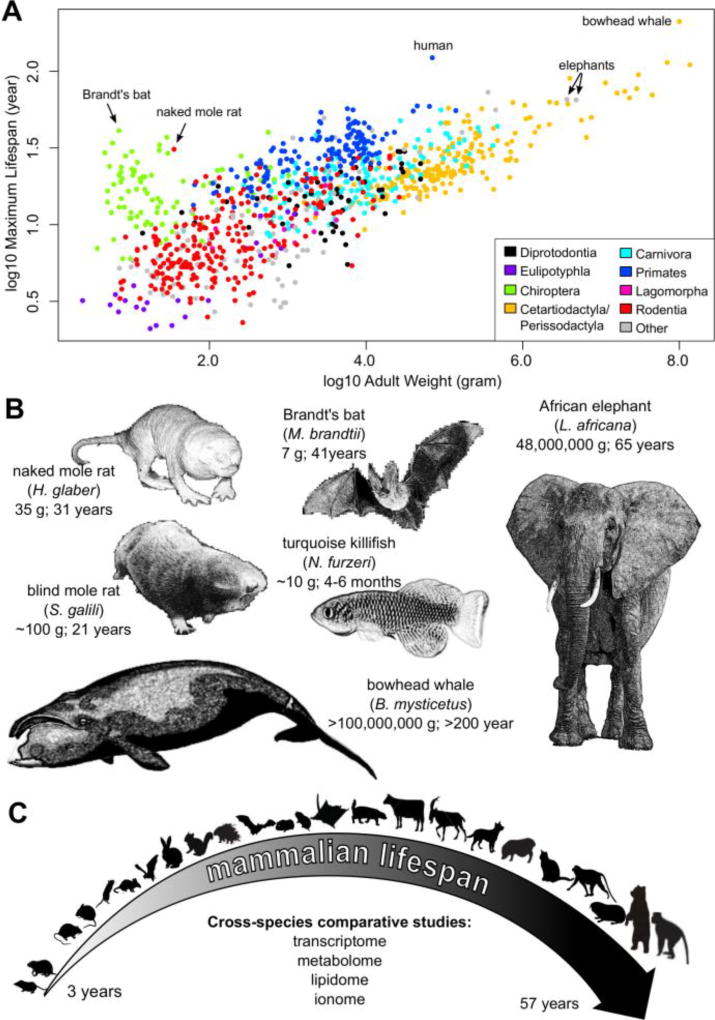
Much of the current research on longevity focuses on the aging process within a single species. Several molecular players (e.g. IGF1 and MTOR), pharmacological compounds (e.g. rapamycin and metformin), and dietary approaches (e.g. calorie restriction and methionine restriction) have been shown to be important in regulating and modestly extending lifespan in model organisms. On the other hand, natural lifespan varies much more significantly across species. Within mammals alone, maximum lifespan differs more than 100 fold, but the underlying regulatory mechanisms remain poorly understood. Recent comparative studies are beginning to shed light on the molecular signatures associated with exceptional longevity. These include genome sequencing of microbats, naked mole rat, blind mole rat, bowhead whale and African turquoise killifish, and comparative analyses of gene expression, metabolites, lipids and ions across multiple mammalian species. Together, they point towards several putative strategies for lifespan regulation and cancer resistance, as well as the pathways and metabolites associated with longevity variation. In particular, longevity may be achieved by both lineage-specific adaptations and common mechanisms that apply across the species. Comparing the resulting cross-species molecular signatures with the within-species lifespan extension strategies will improve our understanding of mechanisms of longevity control and provide a starting point for novel and effective interventions.
Copyright © 2017 Elsevier Ltd. All rights reserved.
Figures
References
-
- Achison M, Hupp TR. Hypoxia attenuates the p53 response to cellular damage. Oncogene. 2003;22:3431–3440. - PubMed
-
- Arieli R, Heth G, Nevo E, Hoch D. Hematocrit and hemoglobin concentration in four chromosomal species and some isolated populations of actively speciating subterranean mole rats in Israel. Experientia. 1986a;42:441–443. - PubMed
-
- Arieli R, Heth G, Nevo E, Zamir Y, Neutra O. Adaptive heart and breathing frequencies in 4 ecologically differentiating chromosomal species of mole rats in Israel. Experientia. 1986b;42:131–133.
Publication types
MeSH terms
Substances
Grants and funding
LinkOut - more resources
Full Text Sources
Other Literature Sources
Miscellaneous
