


Genomic analysis of hairy cell leukemia identifies novel recurrent genetic alterations
- PMID: 28801450
- PMCID: PMC5630011
- DOI: 10.1182/blood-2017-01-765107
Genomic analysis of hairy cell leukemia identifies novel recurrent genetic alterations
Abstract
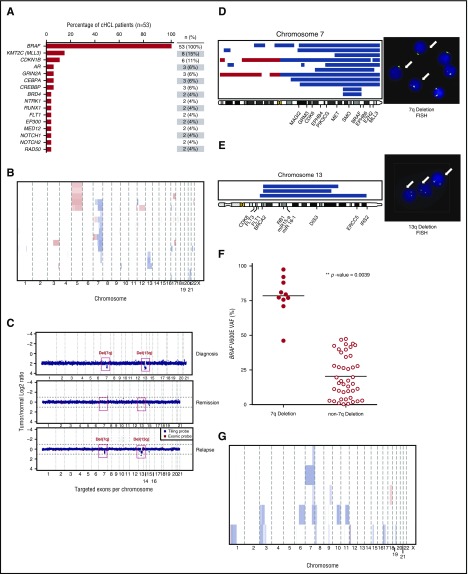
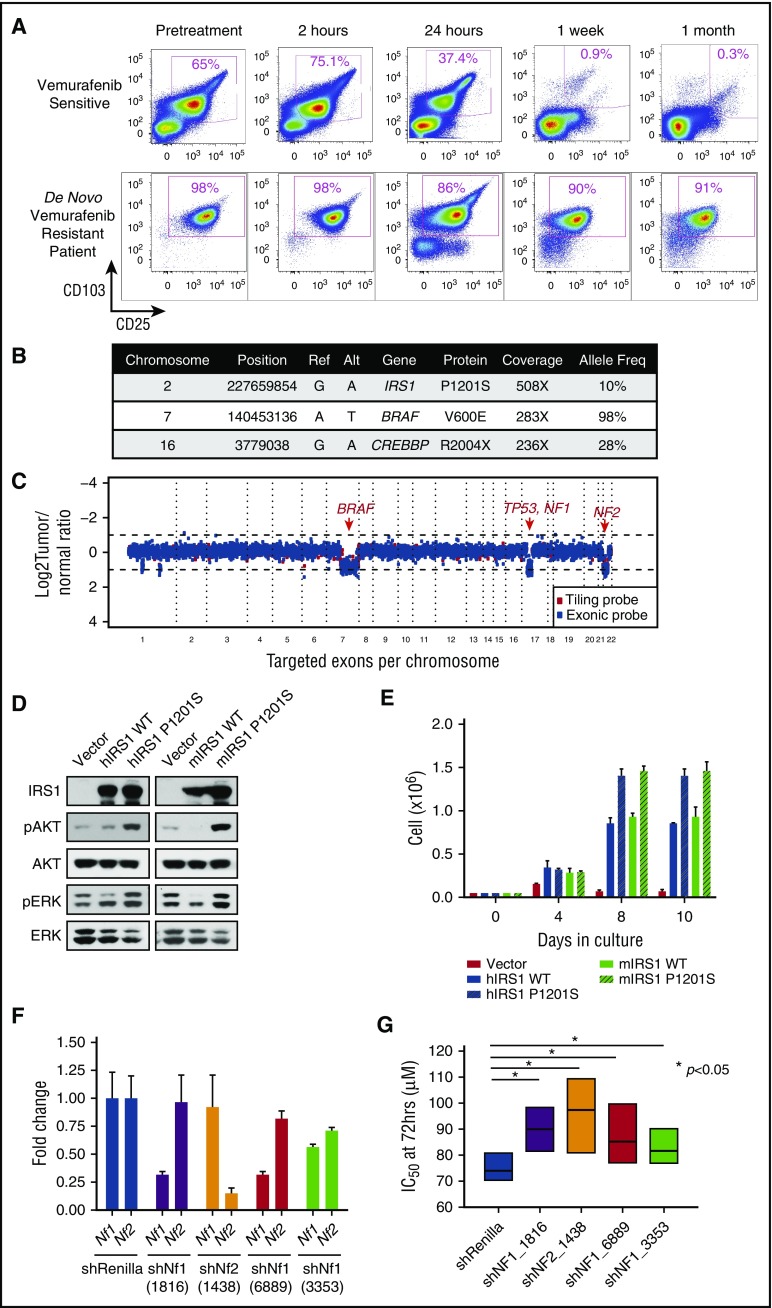
Classical hairy cell leukemia (cHCL) is characterized by a near 100% frequency of the BRAFV600E mutation, whereas ∼30% of variant HCLs (vHCLs) have MAP2K1 mutations. However, recurrent genetic alterations cooperating with BRAFV600E or MAP2K1 mutations in HCL, as well as those in MAP2K1 wild-type vHCL, are not well defined. We therefore performed deep targeted mutational and copy number analysis of cHCL (n = 53) and vHCL (n = 8). The most common genetic alteration in cHCL apart from BRAFV600E was heterozygous loss of chromosome 7q, the minimally deleted region of which targeted wild-type BRAF, subdividing cHCL into those hemizygous versus heterozygous for the BRAFV600E mutation. In addition to CDKN1B mutations in cHCL, recurrent inactivating mutations in KMT2C (MLL3) were identified in 15% and 25% of cHCLs and vHCLs, respectively. Moreover, 13% of vHCLs harbored predicted activating mutations in CCND3 A change-of-function mutation in the splicing factor U2AF1 was also present in 13% of vHCLs. Genomic analysis of de novo vemurafenib-resistant cHCL identified a novel gain-of-function mutation in IRS1 and losses of NF1 and NF2, each of which contributed to resistance. These data provide further insight into the genetic bases of cHCL and vHCL and mechanisms of RAF inhibitor resistance encountered clinically.
© 2017 by The American Society of Hematology.
Conflict of interest statement
Conflict-of-interest disclosure: The authors declare no competing financial interests.
Figures
References
-
- Falini B, Martelli MP, Tiacci E. BRAF V600E mutation in hairy cell leukemia: from bench to bedside. Blood. 2016;128(15):1918-1927. - PubMed
-
- Matutes E, Martínez-Trillos A, Campo E. Hairy cell leukaemia-variant: disease features and treatment. Best Pract Res Clin Haematol. 2015;28(4):253-263. - PubMed
-
- Hockley SL, Morgan GJ, Leone PE, et al. High-resolution genomic profiling in hairy cell leukemia-variant compared with typical hairy cell leukemia. Leukemia. 2011;25(7):1189-1192. - PubMed
-
- Swerdlow SH, Campo E, Harris NL, et al. WHO Classification of Tumours of Haematopoietic and Lymphoid Tissues. Vol 2 4th ed Geneva, Switzerland: WHO Press; 2008.
MeSH terms
Substances
Grants and funding
LinkOut - more resources
Full Text Sources
Other Literature Sources
Molecular Biology Databases
Research Materials
Miscellaneous
