


Investigation of the diversity of effector genes in the banana pathogen, Fusarium oxysporum f. sp. cubense, reveals evidence of horizontal gene transfer
- PMID: 28802020
- PMCID: PMC6638072
- DOI: 10.1111/mpp.12594
Investigation of the diversity of effector genes in the banana pathogen, Fusarium oxysporum f. sp. cubense, reveals evidence of horizontal gene transfer
Abstract
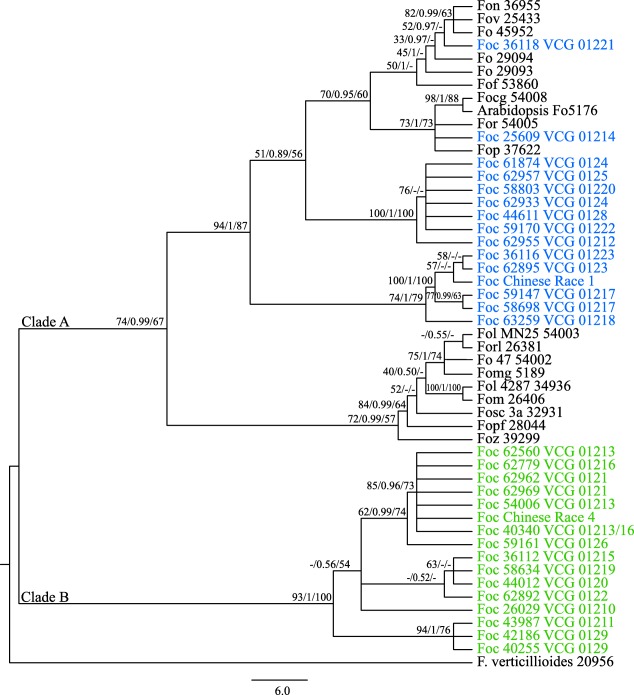
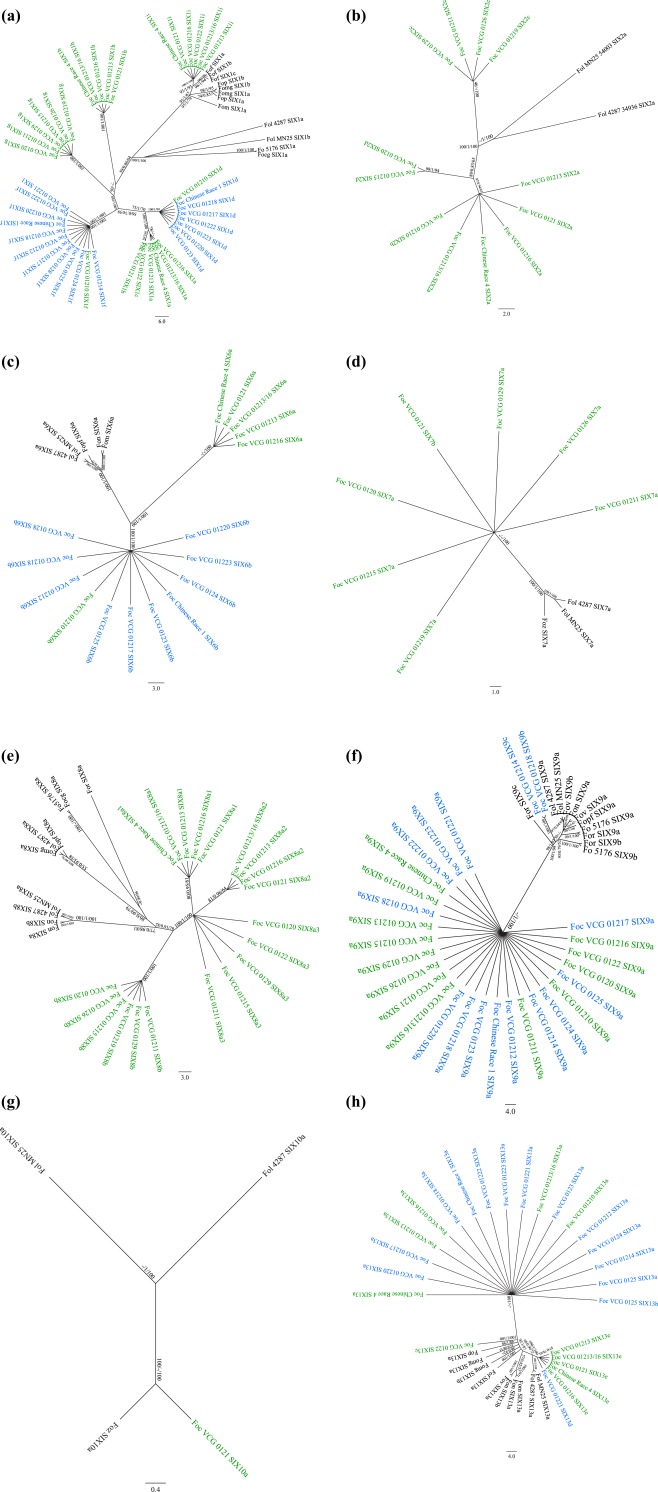
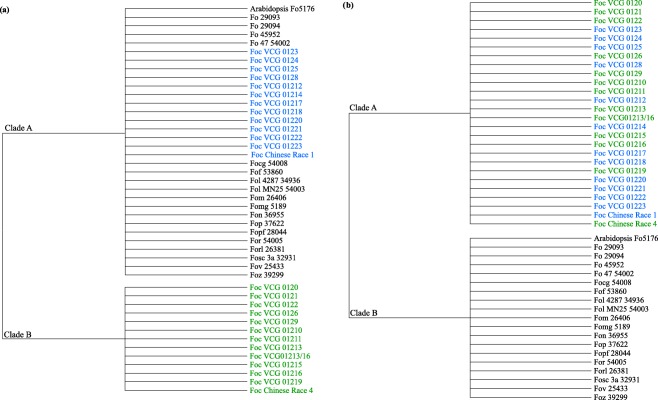
It is hypothesized that the virulence of phytopathogenic fungi is mediated through the secretion of small effector proteins that interfere with the defence responses of the host plant. In Fusarium oxysporum, one family of effectors, the Secreted In Xylem (SIX) genes, has been identified. We sought to characterize the diversity and evolution of the SIX genes in the banana-infecting lineages of F. oxysporum f. sp. cubense (Foc). Whole-genome sequencing data were generated for the 23 genetic lineages of Foc, which were subsequently queried for the 14 known SIX genes (SIX1-SIX14). The sequences of the identified SIX genes were confirmed in a larger collection of Foc isolates. Genealogies were generated for each of the SIX genes identified in Foc to further investigate the evolution of the SIX genes in Foc. Within Foc, variation of the SIX gene profile, including the presence of specific SIX homologues, correlated with the pathogenic race structure of Foc. Furthermore, the topologies of the SIX gene trees were discordant with the topology of an infraspecies phylogeny inferred from EF-1α/RPB1/RPB2 (translation elongation factor-1α/RNA polymerase II subunit I/RNA polymerase II subunit II). A series of topological constraint models provided strong evidence for the horizontal transmission of SIX genes in Foc. The horizontal inheritance of pathogenicity genes in Foc counters previous assumptions that convergent evolution has driven the polyphyletic phylogeny of Foc. This work has significant implications for the management of Foc, including the improvement of diagnostics and breeding programmes.
Keywords: Fusarium oxysporum f. sp. cubense; effectors; horizontal gene transfer.
© 2017 BSPP AND JOHN WILEY & SONS LTD.
Figures
References
-
- ABGC (Australian Banana Growers Council) (2015). Banana industry on alert after suspected case of TR4 in Tully. Available at: http://abgc.org.au/abgc-release-on-suspected-panama-tr4-case/ [accessed 4 March, 2015].
-
- Baayen, R.P. , O'Donnell, K. , Bonants, P.J.M. , Cigelnik, E. , Kroon, L.P.N.M. , Roebroeck, J.A. and Waalwijk, C. (2000) Gene genealogies and AFLP analyses in the Fusarium oxysporum complex identify monophyletic and nonmonophyletic formae speciales causing wilt and rot disease. Phytopathology, 90, 891–900. - PubMed
-
- Bentley, S. , Pegg, K.G. and Dale, J.L. (1995) Genetic variation among a world‐wide collection of isolates of Fusarium oxysporum f. sp. cubense analysed by RAPD‐PCR fingerprinting. Mycol. Res. 99, 1378–1384.
-
- Bentley, S. , Pegg, K.G. , Moore, N.Y. , Davis, R.D. and Buddenhagen, I.W. (1998) Genetic variation among vegetative compatibility groups of Fusarium oxysporum f. sp. cubense analyzed by DNA fingerprinting. Phytopathology, 88, 1283–1293. - PubMed
-
- Boehm, E.W.A. , Ploetz, R.C. and Kistler, H.C. (1994) Statistical analysis of electrophoretic karyotype variation among vegetative compatibility groups of Fusarium oxysporum f.sp cubense . Mol. Plant–Microbe Interact. 7, 1378–1384.
Publication types
MeSH terms
LinkOut - more resources
Full Text Sources
Other Literature Sources
