


Perceptuo-motor planning during functional reaching after stroke
- PMID: 28803362
- PMCID: PMC5649389
- DOI: 10.1007/s00221-017-5058-5
Perceptuo-motor planning during functional reaching after stroke
Abstract
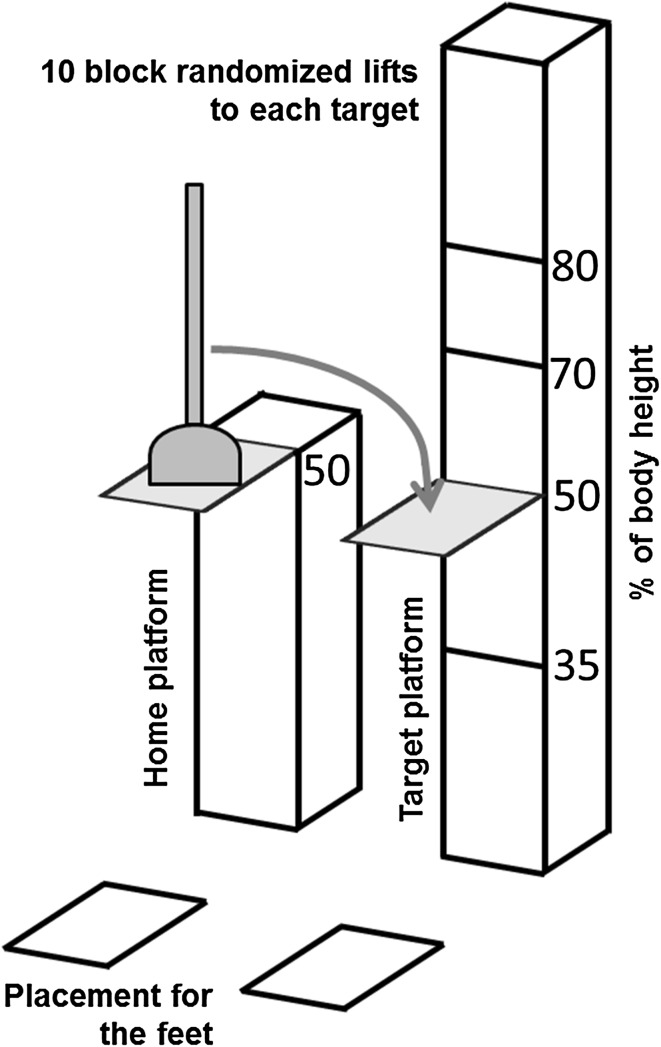
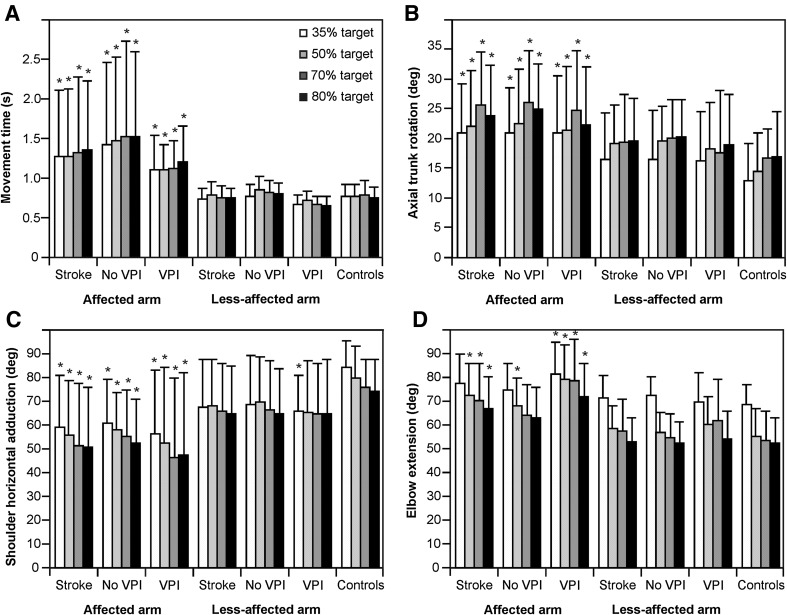
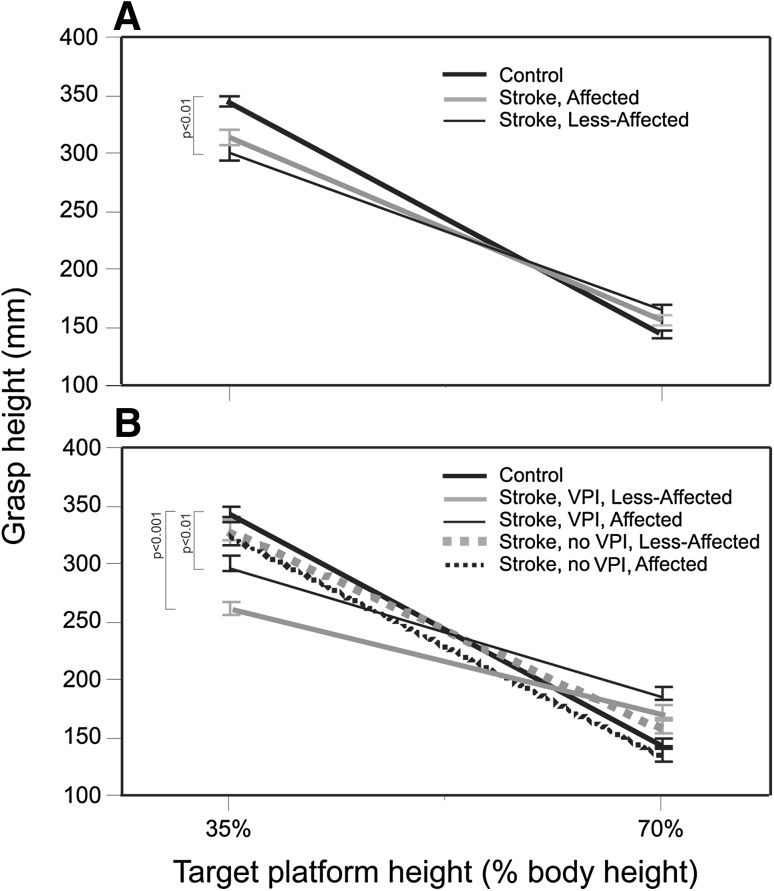
In healthy young adults, reaching movements are planned such that the initial grasp position on the object is modulated based on the final task goal. This perceptuo-motor coupling has been described as the end-state comfort effect. This study aimed to determine the extent to which visuo-perceptual and motor deficits, but not neglect, due to stroke impact end-state comfort measured as the grasp-height effect. Thirty-four older adults (17 controls, 17 chronic stroke) performed a functional goal-directed two-sequence task with each arm, consisting of reaching and moving a cylindrical object (drain plunger) from an initial to four target platform heights, standardized to body height, in a block randomized sequence. Arm motor impairment (Fugl-Meyer Assessment) and visual-perceptual deficits (Motor-Free Visual Perception Test) were assessed in stroke subjects, and arm and trunk kinematics were assessed in all subjects. The primary outcome measure of the grasp-height effect was the relationship between the grasp heights used at the home position and the final target platform heights. Mixed model analysis was used for data analysis. The grasp-height effect was present in all participants, but decreased in stroke subjects with visuo-perceptual impairments compared to controls. In stroke subjects with sensorimotor impairments alone, indicated by altered kinematics, the grasp-height effect was comparable to controls. This first study examining the grasp-height effect in individuals with stroke provides new knowledge of the impact of visuo-perceptual deficits on movement planning and execution, which may assist clinicians in selecting more effective treatment strategies to improve perceptuo-motor skills and enhance motor recovery.
Keywords: Anticipatory motor planning; Arm; End-state comfort effect; Kinematics; Stroke; Visual perception.
Conflict of interest statement
Funding
MAM was supported by Swedish Brain Foundation, Konrad and Helfrid Johanssons Research Foundation at Gothenburg University and Reneé Eanders Foundation. MFL holds a Canada Research Chair in Motor Recovery and Rehabilitation.
Conflict of interest
The authors declare that they have no conflict of interest.
Figures
References
MeSH terms
LinkOut - more resources
Full Text Sources
Other Literature Sources
Medical
