


The longitudinal effects of early developmental cadmium exposure on conditioned place preference and cardiovascular physiology in zebrafish
- PMID: 28804037
- PMCID: PMC5764186
- DOI: 10.1016/j.aquatox.2017.07.017
The longitudinal effects of early developmental cadmium exposure on conditioned place preference and cardiovascular physiology in zebrafish
Abstract
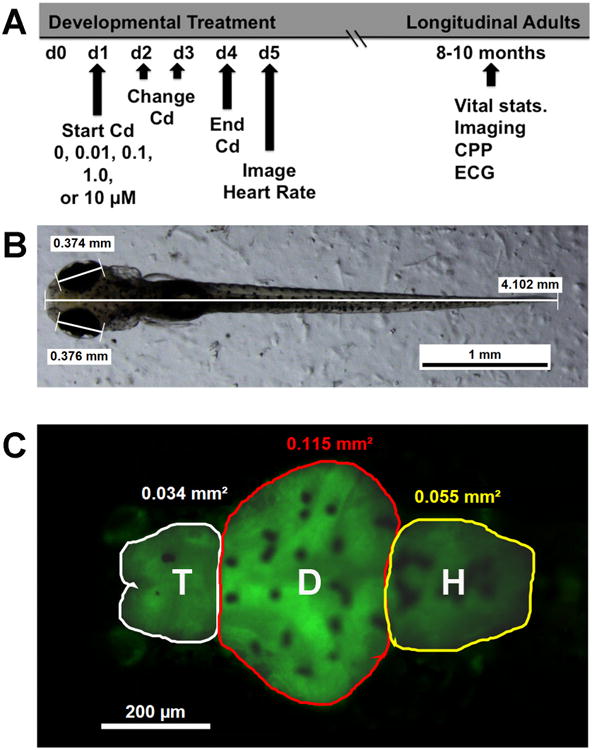
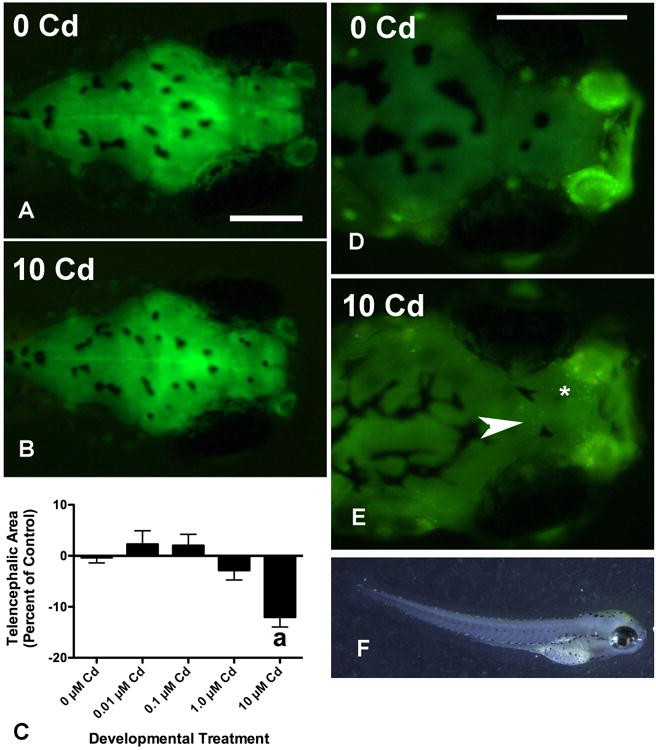
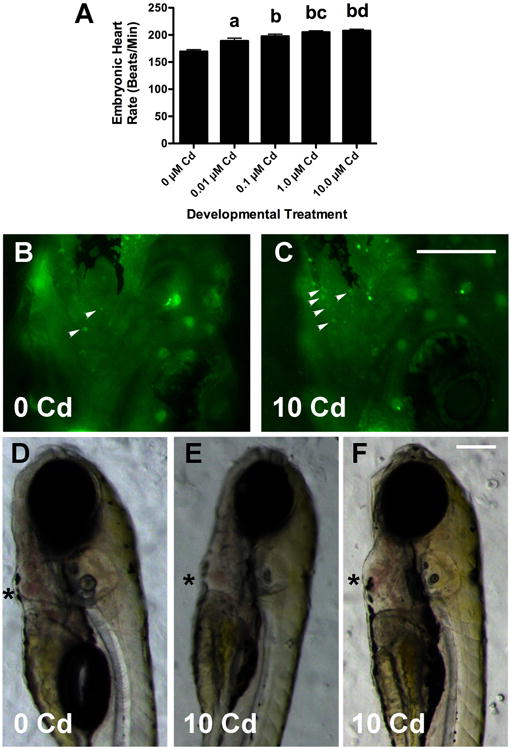
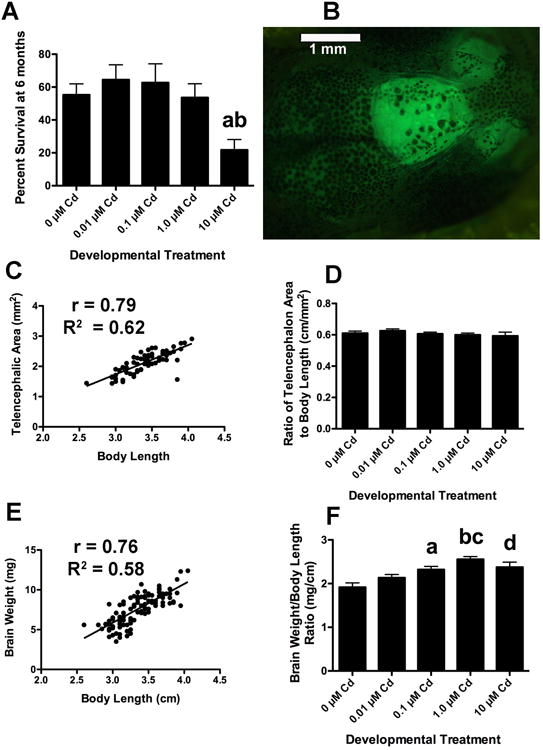
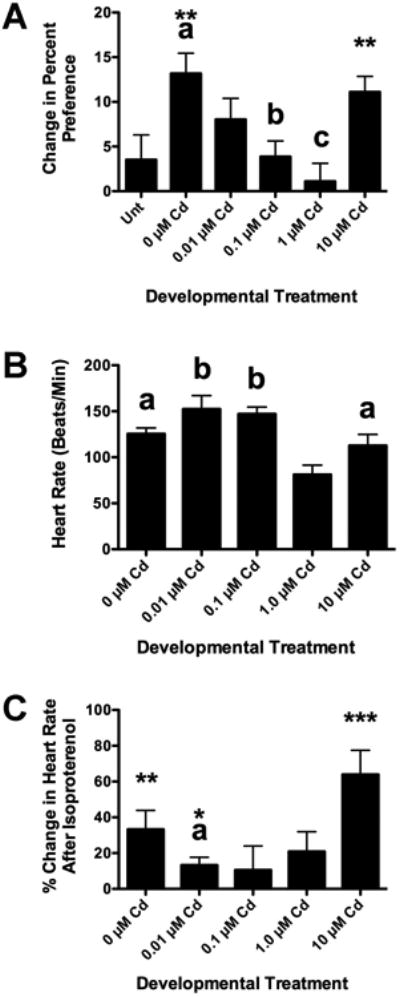
Cadmium (Cd) is a naturally occurring trace metal that is widely considered to be highly toxic to aquatic organisms and a significant health hazard to humans (Amzal et al., 2009; Bernhoft 2013; Burger, 2008; Satarug et al., 2009). The zebrafish (Danio rerio) has been used as a model organism for toxicological studies with Cd (Banni et al., 2011; Blechinger et al., 2007; Chow et al., 2009; Chow et al., 2008; Favorito et al., 2011; Kusch et al., 2007; Matz et al., 2007; Wang and Gallagher, 2013). We asked what the lasting longitudinal effects would be from short early developmental Cd exposure (between 24 and 96h post-fertilization) in a range that larvae might experience living atop typical Cd-containing surface sediments (0, 0.01, 0.1, 1.0 and 10μM CdCl2: 1.124, 11.24, 112.4 and 1124μg Cd/L). The goal of this exposure window was to specifically target secondary neurogenesis, monoaminergic differentiation and cardiovascular development, without affecting earlier patterning processes. Developmental abnormalities in body size and CNS morphology increased with concentration, but were statistically significant only at the highest concentration used (10μM). Heart rate for Cd-treated larvae increased with concentration, and was significant even at the lowest concentration used (0.01μM). Longitudinal survival was significantly lower for fish developmentally exposed to the highest concentration. Except for brain weight, overall morphology was not affected by developmental Cd exposure. However, developmental exposure to lower concentrations of Cd (0.01, 0.1, and 1.0μM) progressively lowered cocaine-induced conditioned place preference (CPP), used to measure function of the reward pathways in the brain. Baseline heart rate was significantly lower in longitudinal fish developmentally exposed to 1.0μM Cd. Cardiovascular response to isoproterenol, a potent ß-adrenergic agonist, in longitudinal adults was also significantly affected by developmental exposure to Cd at low doses (0.01, 0.1 and 1.0μM). Surviving longitudinal adult fish exposed to the highest concentration of Cd showed normal CPP and cardiovascular physiology. The data imply that even lower exposure concentrations can potentially result in fitness-affecting parameters without affecting survival in a laboratory setting.
Keywords: Behavior; Cadmium; Cardiovascular; Morphology; Zebrafish.
Copyright © 2017 Elsevier B.V. All rights reserved.
Figures
References
-
- Andres S, Ribeyre F, Tourencq JN, Boudou A. Interspecific comparison of cadmium and zinc contamination in the organs of four fish species along a polymetallic pollution gradient (Lot River, France) Science of the Total Environment. 2000;248:11–25. - PubMed
-
- Audry S, Schafer J, Blanc G, Jouanneau L. Fifty-year sedimentary record of heavy metal pollution (Cd, Zn, Cu, Pb) in the Lot River reservoirs (France) Environ Pollution. 2004;132:413–26. - PubMed
-
- Banni M, Chouchene L, Said K, Kerkeni A, Messaoudi I. Mechanisms underlying the protective effect of zinc and selenium against cadmium-induced oxidative stress in zebrafish. Biometals. 2011;24:981–92. - PubMed
-
- Barjhoux I, Gonzalez P, Baudrimont M, Cachot J. Molecular and phenotypic responses of Japanese medaka (Oryzias latipes) early life stages to environmental concentrations of cadmium in sediment. Environ Sci Pollut Res. 2016;23:17969–81. - PubMed
MeSH terms
Substances
Grants and funding
LinkOut - more resources
Full Text Sources
Other Literature Sources
Molecular Biology Databases
