


Care work in changing welfare states: Nordic care workers' experiences
- PMID: 28804413
- PMCID: PMC5547402
- DOI: 10.1007/s10433-012-0219-7
Care work in changing welfare states: Nordic care workers' experiences
Abstract
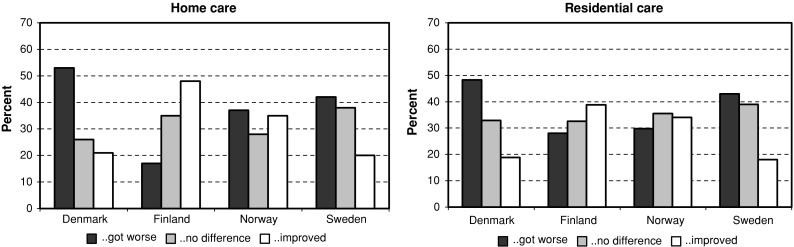
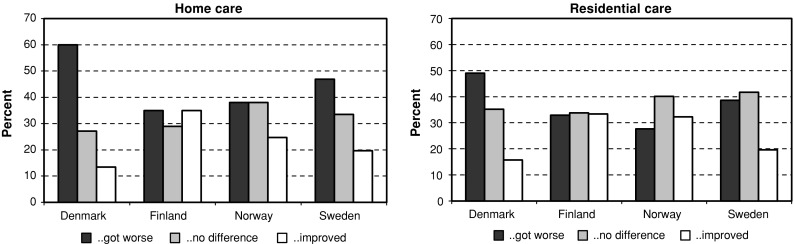
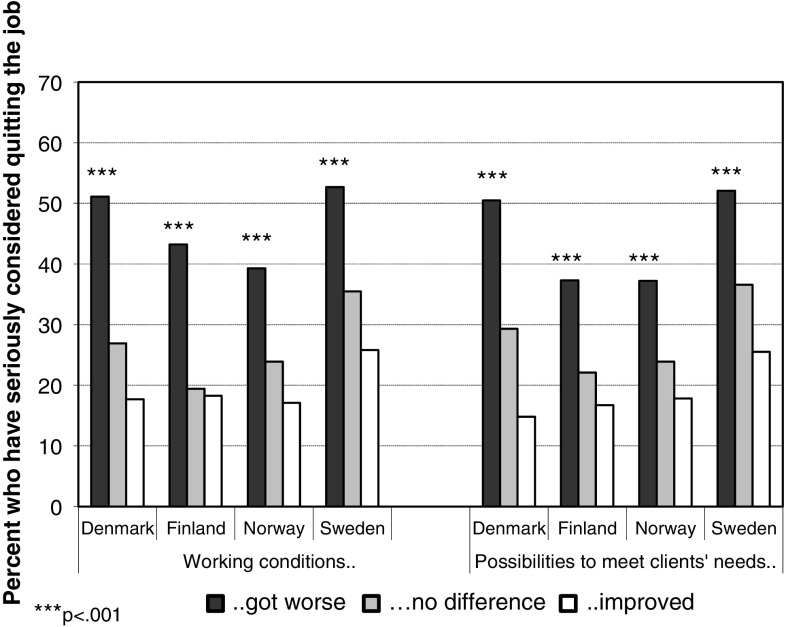
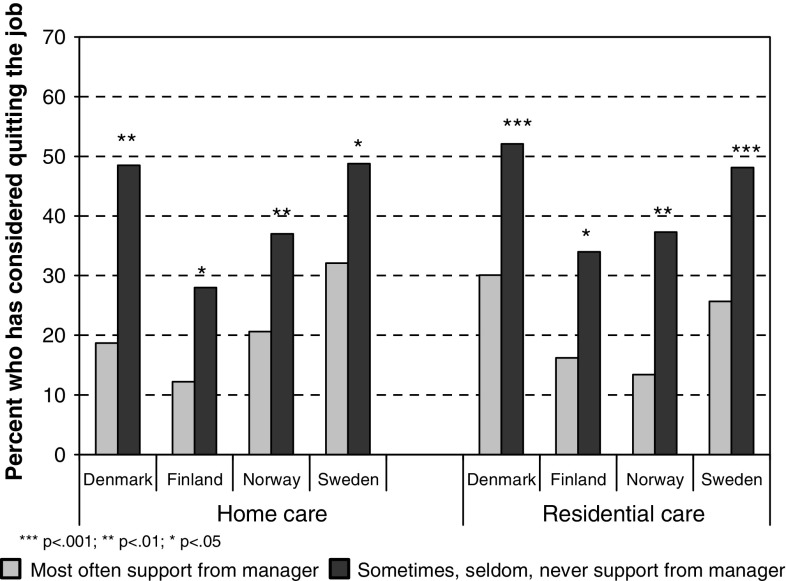
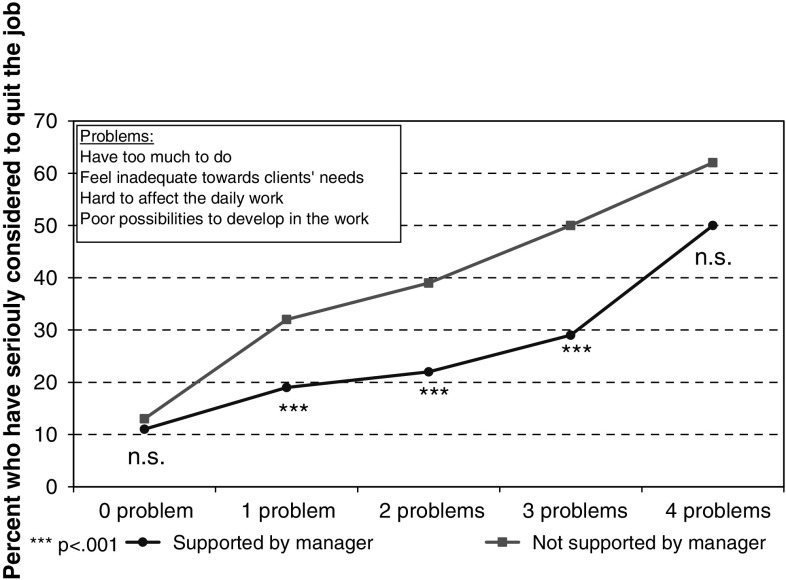
This article focuses on Nordic eldercare workers and their experiences of working conditions in times of change and reorganisation. In recent years New Public Management-inspired ideas have been introduced to increase efficiency and productivity in welfare services. These reforms have also had an impact on day-to-day care work, which has become increasingly standardized and set out in detailed contracts, leading to time-pressure and an undermining of care workers' professional discretion and autonomy. The empirical data comes from a survey of unionised eldercare workers in home care and residential care in Denmark, Finland, Norway and Sweden (N = 2583) and was analysed by bi- and multi-variate methods. The care workers reported that they found their working conditions physically and mentally arduous. They had to a great extent experienced changes for the worse in terms of working conditions and in their opportunity to provide good quality care. In addition, the majority felt they did not receive support from their managers. An alarming finding was that one out of three care workers declared that they had seriously considered quitting their jobs. Care workers with multiple problems at work were much more likely to consider quitting, and the likelihood was increasing with the number of problems reported. Furthermore, care workers lacking support from their managers had double odds of wanting to quit. The Nordic welfare states with growing older populations are facing challenges in retaining care staff in the eldercare services and ensuring they have good working conditions and support in their demanding work.
Keywords: Care worker; Eldercare; Manager support; New public management; Nordic welfare state; Work environment.
Figures
References
-
- Anttonen A, Häikiö L (2011) Care ‘going market’: Finnish elderly-care policy in transition. Nordic journal of social research. Special issue: Welfare-state change, the strengthening of economic principles, and new tensions in relation to care in Europe
-
- Anttonen A, Sipilä J. European social care services: Is it possible to identify models? J Eur Soc Policy. 1996;6(2):87–100. doi: 10.1177/095892879600600201. - DOI
-
- Aronsson G, Lindh T (2004) Långtidsfriskas arbetsvillkor. En populationsstudie (Long-term healthy people’s working conditions. A population study). No 2004:10. Arbetslivsinstitutet, Stockholm
-
- Astvik W (2003) Relationer som arbete. Förutsättningar för omsorgsfulla möten i hemtjänsten (Relating as a primary task. Prerequisits for sustainable caring relations in home-care services). Dissertation, Stockholm University. Arbetslivsinstitutet, Stockholm
-
- Bowers BJ, Esmond S, Jacobson N. Turnover reinterpreted: CNAs talk about why they leave. J Gerontol Nurs. 2003;29:36–43. - PubMed
LinkOut - more resources
Full Text Sources
