


Phylloremediation of Air Pollutants: Exploiting the Potential of Plant Leaves and Leaf-Associated Microbes
- PMID: 28804491
- PMCID: PMC5532450
- DOI: 10.3389/fpls.2017.01318
Phylloremediation of Air Pollutants: Exploiting the Potential of Plant Leaves and Leaf-Associated Microbes
Abstract
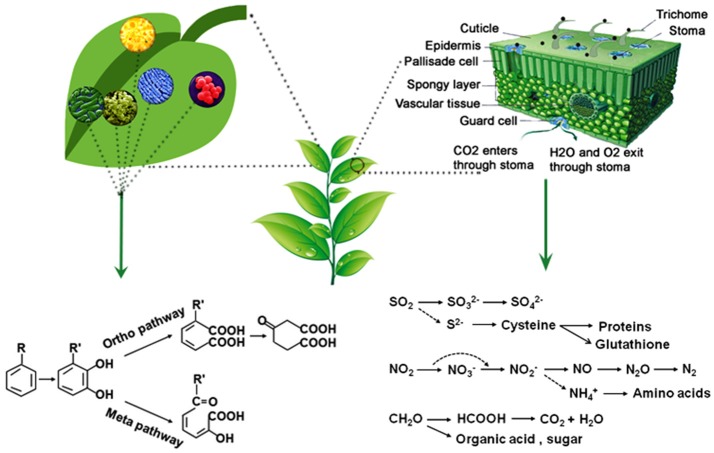
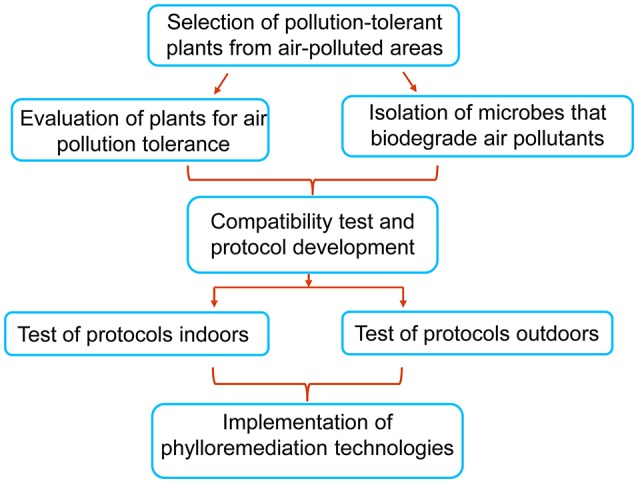
Air pollution is air contaminated by anthropogenic or naturally occurring substances in high concentrations for a prolonged time, resulting in adverse effects on human comfort and health as well as on ecosystems. Major air pollutants include particulate matters (PMs), ground-level ozone (O3), sulfur dioxide (SO2), nitrogen dioxides (NO2), and volatile organic compounds (VOCs). During the last three decades, air has become increasingly polluted in countries like China and India due to rapid economic growth accompanied by increased energy consumption. Various policies, regulations, and technologies have been brought together for remediation of air pollution, but the air still remains polluted. In this review, we direct attention to bioremediation of air pollutants by exploiting the potentials of plant leaves and leaf-associated microbes. The aerial surfaces of plants, particularly leaves, are estimated to sum up to 4 × 10⁸ km2 on the earth and are also home for up to 1026 bacterial cells. Plant leaves are able to adsorb or absorb air pollutants, and habituated microbes on leaf surface and in leaves (endophytes) are reported to be able to biodegrade or transform pollutants into less or nontoxic molecules, but their potentials for air remediation has been largely unexplored. With advances in omics technologies, molecular mechanisms underlying plant leaves and leaf associated microbes in reduction of air pollutants will be deeply examined, which will provide theoretical bases for developing leaf-based remediation technologies or phylloremediation for mitigating pollutants in the air.
Keywords: air pollution; nitrogen dioxides; ozone; particulate matter; phylloremediation; phyllosphere; sulfur dioxide; volatile organic compounds.
Figures
References
-
- Al-Awadhi H., Al-Mailem D., Dashti N., Hakam L., Eliyas M., Radwan S. (2012). The abundant occurrence of hydrocarbon-utilizing bacteria in the phyllospheres of cultivated and wild plants in Kuwait. Int. Biodeter. Biodegr. 73, 73–79. 10.1016/j.ibiod.2012.05.016 - DOI
Publication types
LinkOut - more resources
Full Text Sources
Other Literature Sources
