


Pre- and Post-Transfusion Alloimmunization in Dogs Characterized by 2 Antiglobulin-Enhanced Cross-match Tests
- PMID: 28804957
- PMCID: PMC5598901
- DOI: 10.1111/jvim.14801
Pre- and Post-Transfusion Alloimmunization in Dogs Characterized by 2 Antiglobulin-Enhanced Cross-match Tests
Abstract
Background: When dogs are transfused, blood compatibility testing varies widely but may include dog erythrocyte antigen (DEA) 1 typing and rarely cross-matching.
Objectives: Prospective study to examine naturally occurring alloantibodies against red blood cells (RBCs) and alloimmunization by transfusion using 2 antiglobulin-enhanced cross-match tests.
Animals: Eighty client-owned anemic, 72 donor, and 7 control dogs.
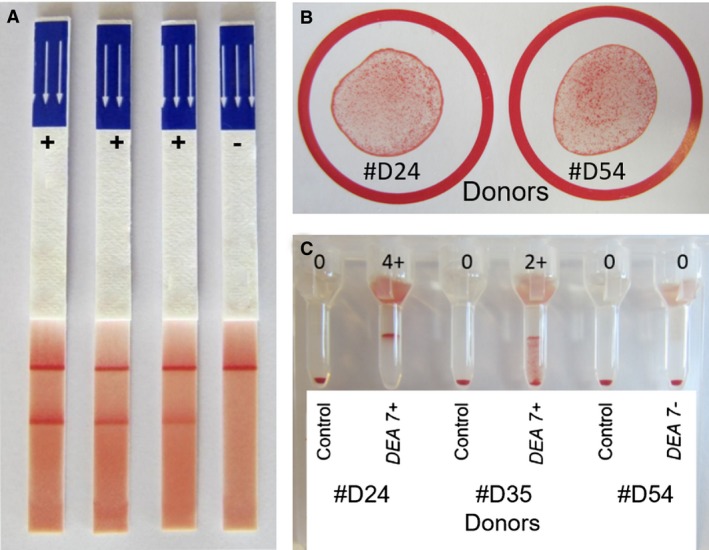
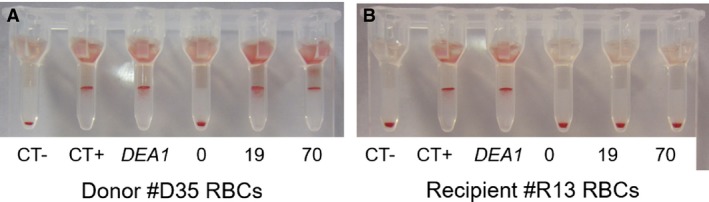
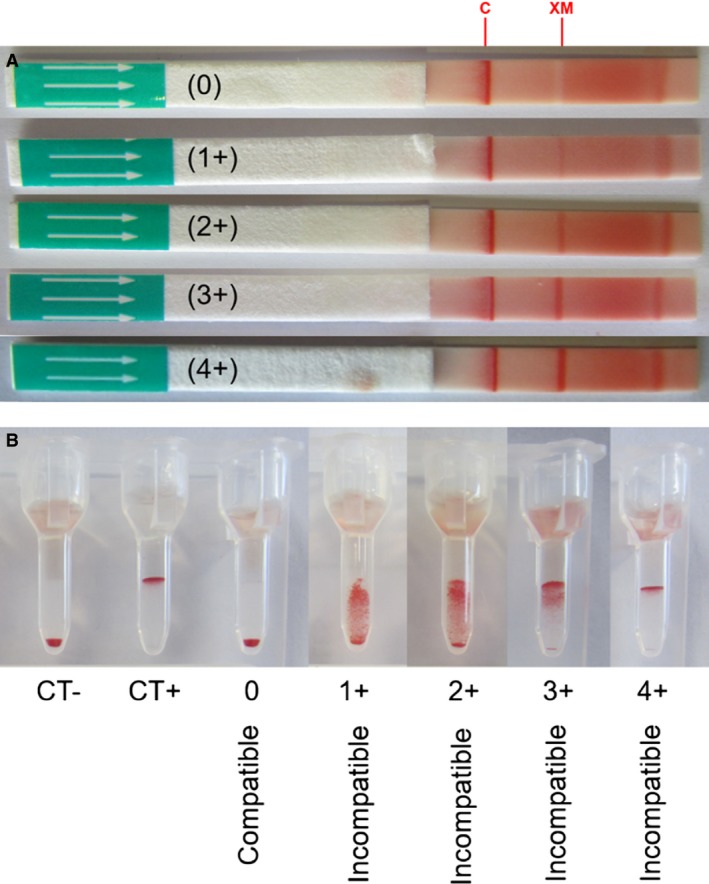
Methods: All dogs were typed for DEA 1 and some also for DEA 4 and DEA 7. Major cross-match tests with canine antiglobulin-enhanced immunochromatographic strip and gel columns were performed 26-129 days post-transfusion (median, 39 days); some dogs had an additional early evaluation 11-22 days post-transfusion (median, 16 days). Plasma from alloimmunized recipients was cross-matched against RBCs from 34 donor and control dogs.
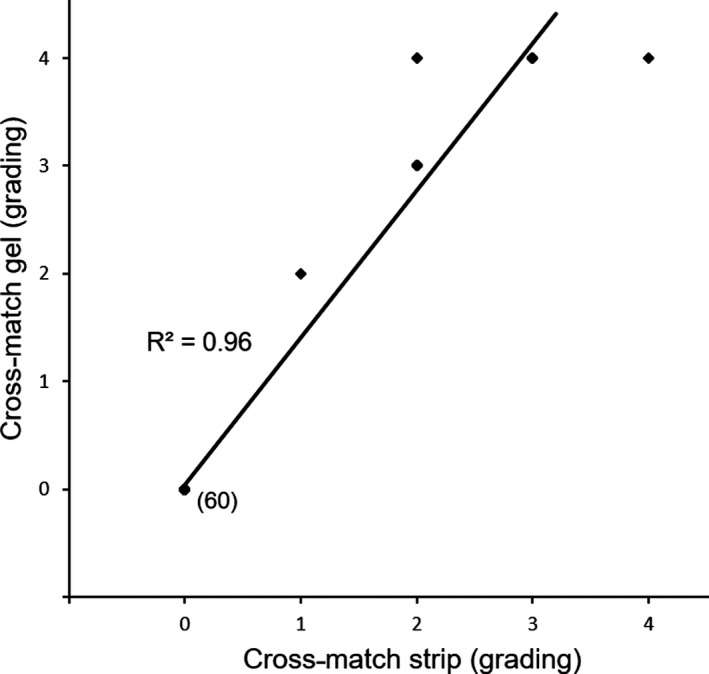
Results: The 2 cross-match methods gave entirely concordant results. All 126 pretransfusion cross-match results for the 80 anemic recipients were compatible, but 54 dogs died or were lost to follow up. Among the 26 recipients with follow-up, 1 dog accidently received DEA 1-mismatched blood and became cross-match-incompatible post-transfusion. Eleven of the 25 DEA 1-matched recipients (44%) became incompatible against other RBC antigens. No naturally occurring anti-DEA 7 alloantibodies were detected in DEA 7- dogs.
Conclusions and clinical importance: The antiglobulin-enhanced immunochromatographic strip cross-match and laboratory gel column techniques identified no naturally occurring alloantibodies against RBC antigens, but a high degree of post-transfusion alloimmunization in dogs. Cross-matching is warranted in any dog that has been previously transfused independent of initial DEA 1 typing and cross-matching results before the first transfusion event.
Keywords: Alloantibodies; Blood compatibility; Canine; Dog erythrocyte antigen; Hemolytic transfusion reaction.
Copyright © 2017 The Authors. Journal of Veterinary Internal Medicine published by Wiley Periodicals, Inc. on behalf of the American College of Veterinary Internal Medicine.
Figures
References
-
- Giger U. Blood typing and crossmatching to ensure compatible transfusions In: Bonagura JD, Twedt DC, eds. Kirk's Current Veterinary Therapy, 15th ed St. Louis, MO: Elsevier Saunders; 2014:e143.
-
- Holowaychuk MK, Leader JL, Monteith G. Risk factors for transfusion‐associated complications and nonsurvival in dogs receiving packed red blood cell transfusions: 211 cases (2008‐2011). J Am Vet Med Assoc 2014;244:431–437. - PubMed
-
- Giger U, Gelens CJ, Callan MB, et al. An acute hemolytic transfusion reaction caused by dog erythrocyte antigen 1.1 incompatibility in a previously sensitized dog. J Am Vet Med Assoc 1995;206:1358–1362. - PubMed
MeSH terms
Substances
LinkOut - more resources
Full Text Sources
Other Literature Sources
Medical