


The atypical antipsychotic olanzapine causes weight gain by targeting serotonin receptor 2C
- PMID: 28805659
- PMCID: PMC5669575
- DOI: 10.1172/JCI93362
The atypical antipsychotic olanzapine causes weight gain by targeting serotonin receptor 2C
Abstract
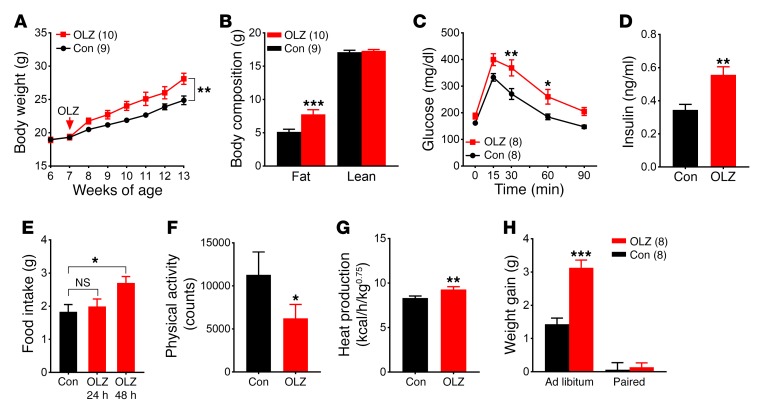
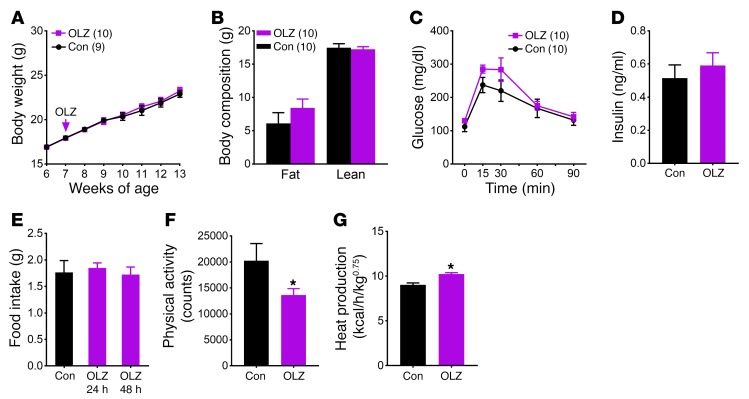
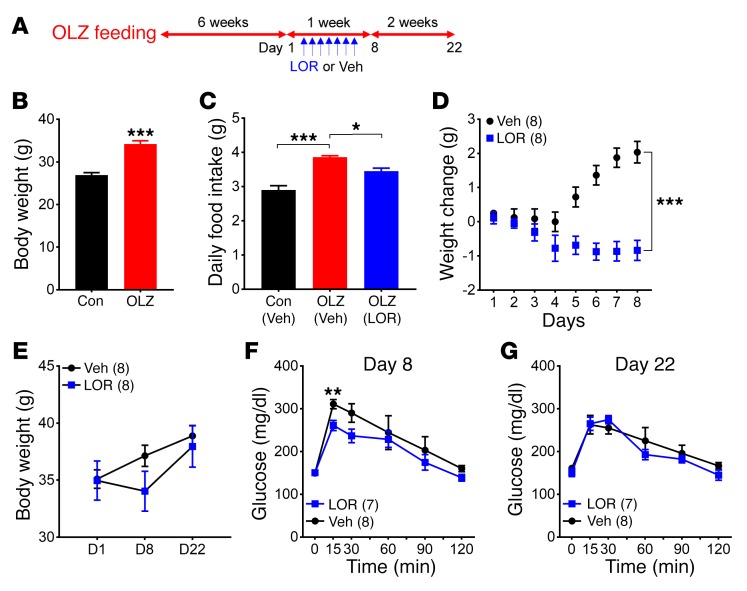
Atypical antipsychotics such as olanzapine often induce excessive weight gain and type 2 diabetes. However, the mechanisms underlying these drug-induced metabolic perturbations remain poorly understood. Here, we used an experimental model that reproduces olanzapine-induced hyperphagia and obesity in female C57BL/6 mice. We found that olanzapine treatment acutely increased food intake, impaired glucose tolerance, and altered physical activity and energy expenditure in mice. Furthermore, olanzapine-induced hyperphagia and weight gain were blunted in mice lacking the serotonin 2C receptor (HTR2C). Finally, we showed that treatment with the HTR2C-specific agonist lorcaserin suppressed olanzapine-induced hyperphagia and weight gain. Lorcaserin treatment also improved glucose tolerance in olanzapine-fed mice. Collectively, our studies suggest that olanzapine exerts some of its untoward metabolic effects via antagonism of HTR2C.
Conflict of interest statement
Figures
References
-
- Keck PE, McElroy SL, Strakowski SM, Soutullo CA. Antipsychotics in the treatment of mood disorders and risk of tardive dyskinesia. J Clin Psychiatry. 2000;61(Suppl 4):33–38. - PubMed
-
- Newcomer JW. Antipsychotic medications: metabolic and cardiovascular risk. J Clin Psychiatry. 2007;68(Suppl 4):8–13. - PubMed
MeSH terms
Substances
Grants and funding
LinkOut - more resources
Full Text Sources
Other Literature Sources
Medical
Molecular Biology Databases
