


Design and fabrication of a realistic anthropomorphic heterogeneous head phantom for MR purposes
- PMID: 28806768
- PMCID: PMC5555696
- DOI: 10.1371/journal.pone.0183168
Design and fabrication of a realistic anthropomorphic heterogeneous head phantom for MR purposes
Erratum in
-
Correction: Design and fabrication of a realistic anthropomorphic heterogeneous head phantom for MR purposes.PLoS One. 2018 Feb 7;13(2):e0192794. doi: 10.1371/journal.pone.0192794. eCollection 2018. PLoS One. 2018. PMID: 29415085 Free PMC article.
Abstract
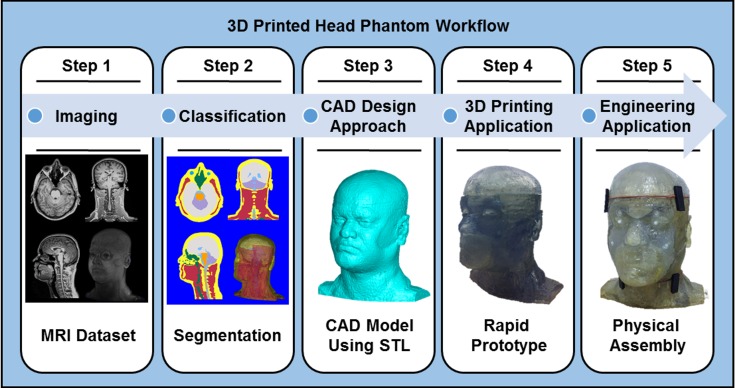
Objective: The purpose of this study is to design an anthropomorphic heterogeneous head phantom that can be used for MRI and other electromagnetic applications.
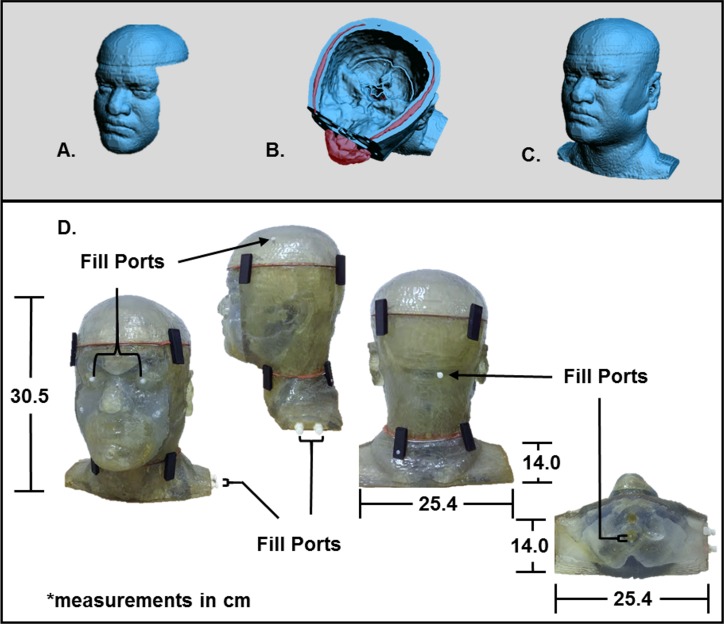
Materials and methods: An eight compartment, physical anthropomorphic head phantom was developed from a 3T MRI dataset of a healthy male. The designed phantom was successfully built and preliminarily evaluated through an application that involves electromagnetic-tissue interactions: MRI (due to it being an available resource). The developed phantom was filled with media possessing electromagnetic constitutive parameters that correspond to biological tissues at ~297 MHz. A preliminary comparison between an in-vivo human volunteer (based on whom the anthropomorphic head phantom was created) and various phantoms types, one being the anthropomorphic heterogeneous head phantom, were performed using a 7 Tesla human MRI scanner.
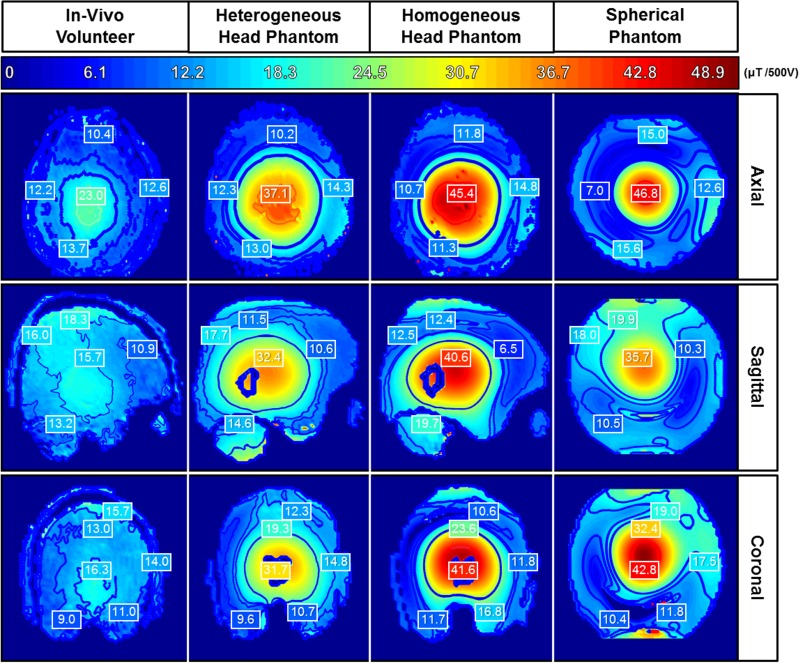
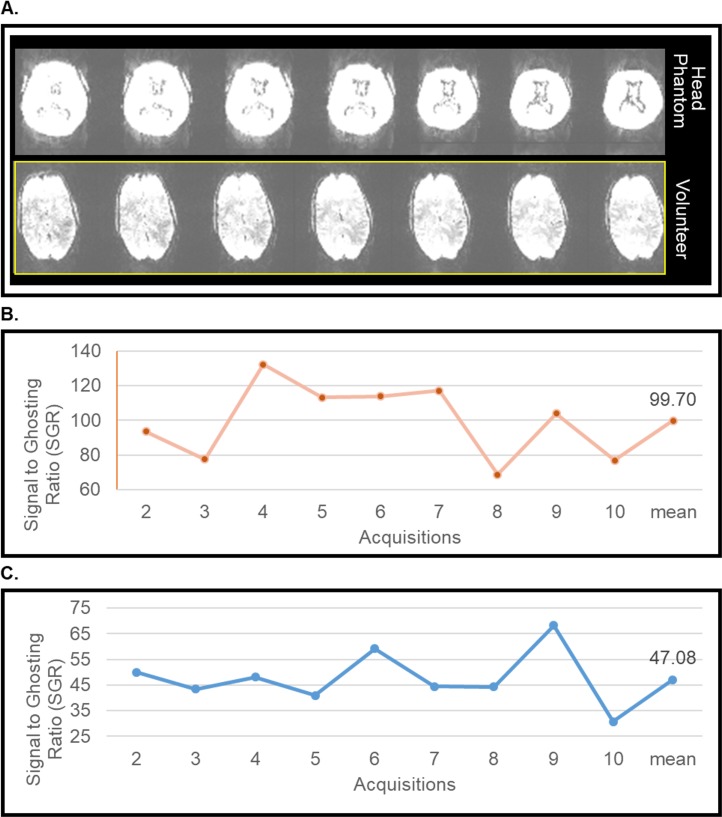
Results: Echo planar imaging was performed and minimal ghosting and fluctuations were observed using the proposed anthropomorphic phantom. The magnetic field distributions (during MRI experiments at 7 Tesla) and the scattering parameter (measured using a network analyzer) were most comparable between the anthropomorphic heterogeneous head phantom and an in-vivo human volunteer.
Conclusion: The developed anthropomorphic heterogeneous head phantom can be used as a resource to various researchers in applications that involve electromagnetic-biological tissue interactions such as MRI.
Conflict of interest statement
Figures


References
-
- Caon M. Voxel-based computational models of real human anatomy: a review. Radiat Environ Biophys. 2004;42(4):229–35. doi: 10.1007/s00411-003-0221-8 . - DOI - PubMed
-
- Chen CC, Wan YL, Wai YY, Liu HL. Quality assurance of clinical MRI scanners using ACR MRI phantom: preliminary results. J Digit Imaging. 2004;17(4):279–84. doi: 10.1007/s10278-004-1023-5 ; PubMed Central PMCID: PMCPMC3047180. - DOI - PMC - PubMed
-
- Tofts PS. QA: Quality Assurance, Accuracy, Precision and Phantoms. Quantitative MRI of the Brain. 2003:55–81. doi: 10.1002/0470869526.ch3 - DOI
-
- Radiology ACo. ACR White Paper on Magnetic Resonance (MR) Safety. Radiology. 2004:1–24.
-
- Christ A, Chavannes N, Nikoloski N, Gerber HU, Pokovic K, Kuster N. A numerical and experimental comparison of human head phantoms for compliance testing of mobile telephone equipment. Bioelectromagnetics. 2005;26(2):125–37. doi: 10.1002/bem.20088 . - DOI - PubMed
MeSH terms
Grants and funding
LinkOut - more resources
Full Text Sources
Other Literature Sources
Medical
