


Conessine as a novel inhibitor of multidrug efflux pump systems in Pseudomonas aeruginosa
- PMID: 28806947
- PMCID: PMC5557310
- DOI: 10.1186/s12906-017-1913-y
Conessine as a novel inhibitor of multidrug efflux pump systems in Pseudomonas aeruginosa
Abstract
Background: Holarrhena antidysenterica has been employed as an ethnobotanical plant for the treatment of dysentery, diarrhoea, fever, and bacterial infections. Biological activities of the principle compound, conessine including anti-diarrhoea and anti-plasmodial effects were documented. Our previous study reported potency of Holarrhena antidysenterica extract and conessine as resistance modifying agents against extensively drug-resistant Acinetobacter baumannii. This study aimed to investigate (i) whether conessine, a steroidal alkaloid compound, could act as a resistance modifying agent against multidrug-resistant Pseudomonas aeruginosa, and (ii) whether MexAB-OprM efflux pump involved in the mechanism.
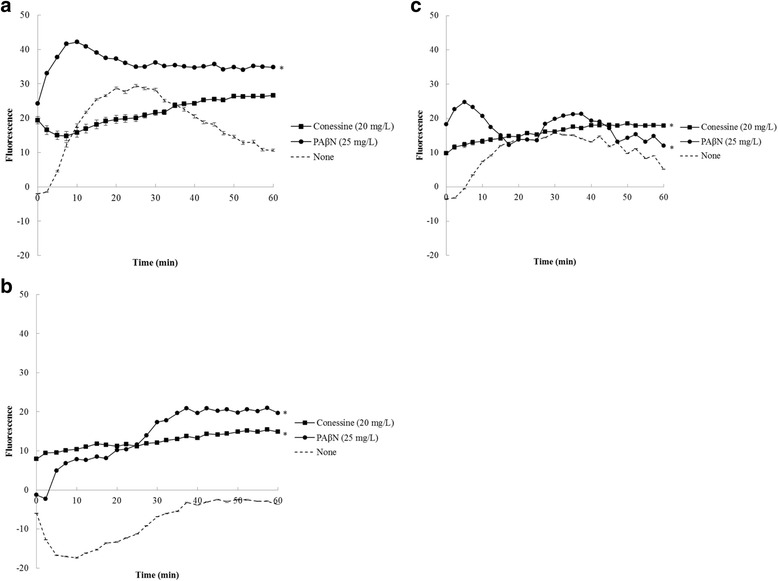
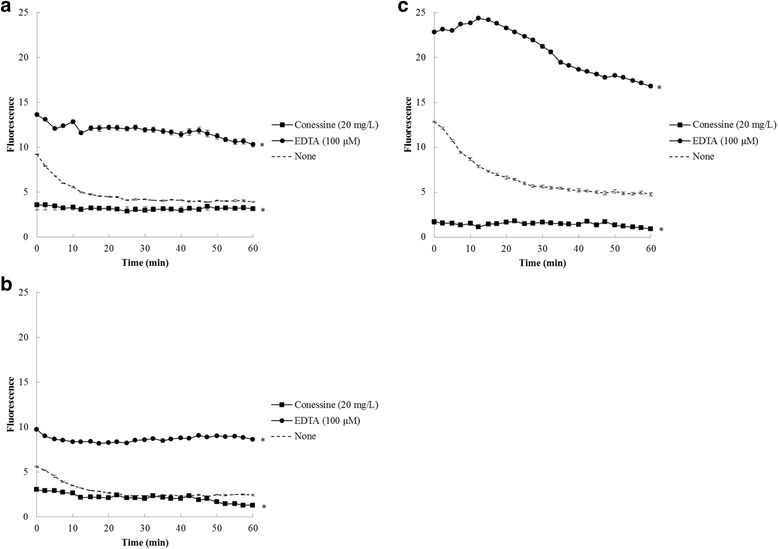
Methods: Conessine combined with various antibiotics were determined for synergistic activity against P. aeruginosa PAO1 strain K767 (wild-type), K1455 (MexAB-OprM overexpressed), and K1523 (MexB deletion). H33342 accumulation assay was used to evaluate efflux pump inhibition while NPN uptake assay was assessed membrane permeabilization.
Results: Conessine significantly reduced MICs of all antibiotics by at least 8-fold in MexAB-OprM overexpressed strain. The levels were comparable to those obtained in wild-type strain for cefotaxime, levofloxacin, and tetracycline. With erythromycin, novobiocin, and rifampicin, MICs were 4- to 8-fold less than MICs of the wild-type strain. Loss of MexAB-OprM due to deletion of mexB affected susceptibility to almost all antibiotics, except novobiocin. Synergistic activities between other antibiotics (except novobiocin) and conessine observed in MexB deletion strain suggested that conessine might inhibit other efflux systems present in P. aeruginosa. Inhibition of H33342 efflux in the tested strains clearly demonstrated that conessine inhibited MexAB-OprM pump. In contrast, the mode of action as a membrane permeabilizer was not observed after treatment with conessine as evidenced by no accumulation of 1-N-phenylnaphthylamine.
Conclusions: The results suggested that conessine could be applied as a novel efflux pump inhibitor to restore antibiotic activity by inhibiting efflux pump systems in P. aeruginosa. The findings speculated that conessine may also have a potential to be active against homologous resistance-nodulation-division (RND) family in other Gram-negative pathogens.
Keywords: Conessine; Efflux pump inhibitor; MexAB-OprM efflux system; Pseudomonas aeruginosa.
Conflict of interest statement
Ethics approval and consent to participate
Not applicable.
Consent for publication
Not applicable.
Competing interests
The authors declare that they have no competing interests.
Publisher’s Note
Springer Nature remains neutral with regard to jurisdictional claims in published maps and institutional affiliations.
Figures
References
-
- Poole K. Multidrug efflux pumps and antimicrobial resistance in Pseudomonas aeruginosa and related organisms. J Mol Microbiol Biotechnol. 2001;3:255–264. - PubMed
-
- Lomovskaya O, Warren MS, Lee A, Galazzo J, Fronko R, Lee M, et al. Identification and characterization of inhibitors of multidrug resistance efflux pumps in Pseudomonas aeruginosa: novel agents for combination therapy. Antimicrob Agents Chemother. 2001;45:105–116. doi: 10.1128/AAC.45.1.105-116.2001. - DOI - PMC - PubMed
MeSH terms
Substances
LinkOut - more resources
Full Text Sources
Other Literature Sources
Medical
