


Fatigue in the general population- associations to age, sex, socioeconomic status, physical activity, sitting time and self-rated health: the northern Sweden MONICA study 2014
- PMID: 28806984
- PMCID: PMC5557471
- DOI: 10.1186/s12889-017-4623-y
Fatigue in the general population- associations to age, sex, socioeconomic status, physical activity, sitting time and self-rated health: the northern Sweden MONICA study 2014
Abstract
Background: Fatigue is widespread in the population and a common complaint in primary care. Little is known about prevalence of fatigue in the population and its predictors. We aimed to describe the pattern of fatigue in the general population and to explore the associations with age, sex, socioeconomic status, self-reported physical activity, sitting time and self-rated health.
Methods: One thousand, five hundred and fifty-seven out of 2500 invited subjects in the Northern Sweden MONICA Study 2014, aged 25-74 years, filled out the Multidimensional Fatigue Inventory (MFI-20), consisting of four subscales: General fatigue (GF), Physical fatigue (PF), Reduced activity (RA) and Mental fatigue (MF). Questions regarding age, sex, socioeconomic status, physical activity, sitting time and self-rated health were also included.
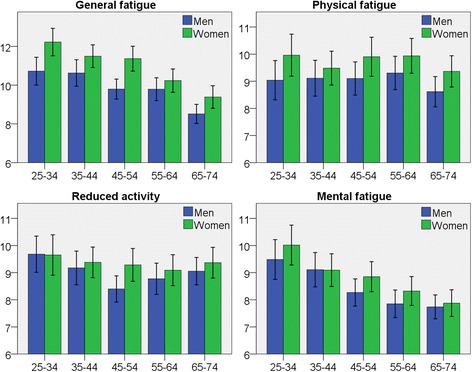
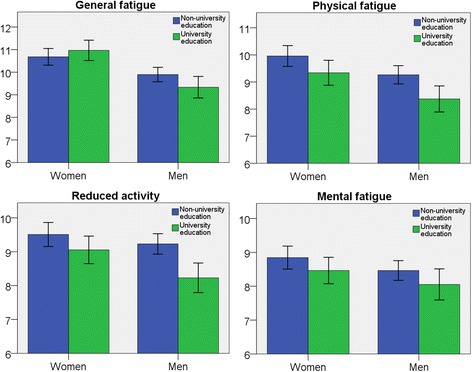
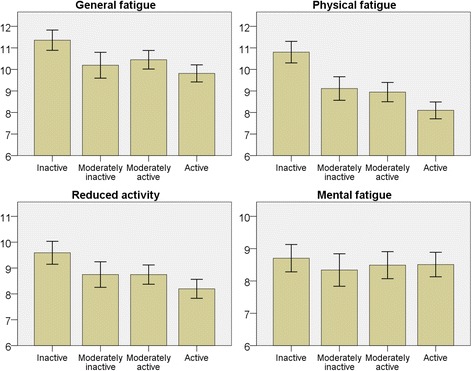
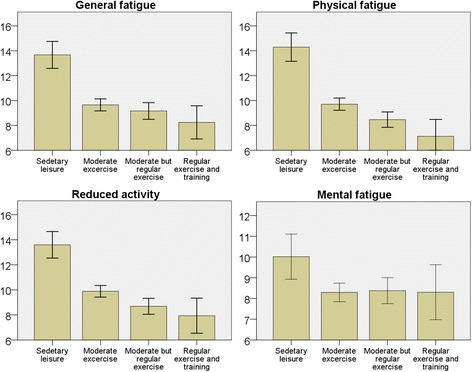
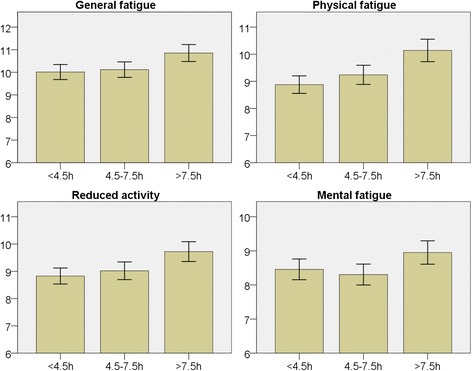
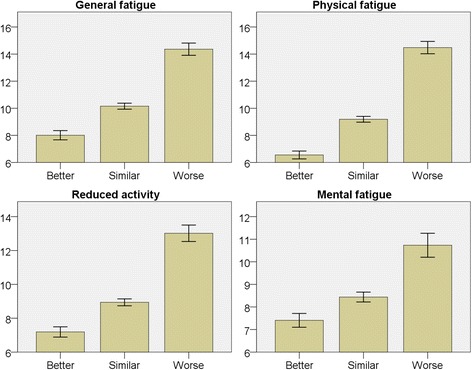
Results: Higher age correlated significantly with lower fatigue scores for the GF and MF subscales. Women had higher fatigue scores than men on all subscales (p < 0.05). Among men, higher socioeconomic status was related to lower fatigue for the GF, PF and RA subscales (age adjusted p < 0.05). Among women, higher socioeconomic status was related to lower fatigue for the PF and MF subscales (age adjusted p < 0.05). Higher physical activity was connected to lower levels of fatigue for all subscales (age and sex adjusted p < 0.001) except for MF. Longer time spent sitting was also related to more fatigue on all subscales (age and sex adjusted p < 0.005) except for MF. Better self-rated health was strongly associated with lower fatigue for all subscales (age and sex adjusted p < 0.001).
Conclusion: Older, highly educated, physically active men, with little sedentary behavior are generally the least fatigued. Self-rated health is strongly related to fatigue. Interventions increasing physical exercise and reducing sedentary behavior may be important to help patients with fatigue and should be investigated in prospective studies.
Conflict of interest statement
Ethics approval and consent to participate
This study complies with the Declaration of Helsinki. All participants gave written consent. MONICA is covered by ethical permission from the Regional Ethics Committee in Umeå in 2013 (2013/97-31).
Consent for publication
Not applicable.
Competing interests
The authors declare that they have no competing interests.
Publisher’s Note
Springer Nature remains neutral with regard to jurisdictional claims in published maps and institutional affiliations.
Figures
References
-
- Schwarz R, Krauss O, Hinz A. Fatigue in the general population. Onkologie. 2003;26(2):140–144. - PubMed
Publication types
MeSH terms
LinkOut - more resources
Full Text Sources
Other Literature Sources
Medical
