


BDNF-TrkB controls cocaine-induced dendritic spines in rodent nucleus accumbens dissociated from increases in addictive behaviors
- PMID: 28808012
- PMCID: PMC5584417
- DOI: 10.1073/pnas.1702441114
BDNF-TrkB controls cocaine-induced dendritic spines in rodent nucleus accumbens dissociated from increases in addictive behaviors
Abstract
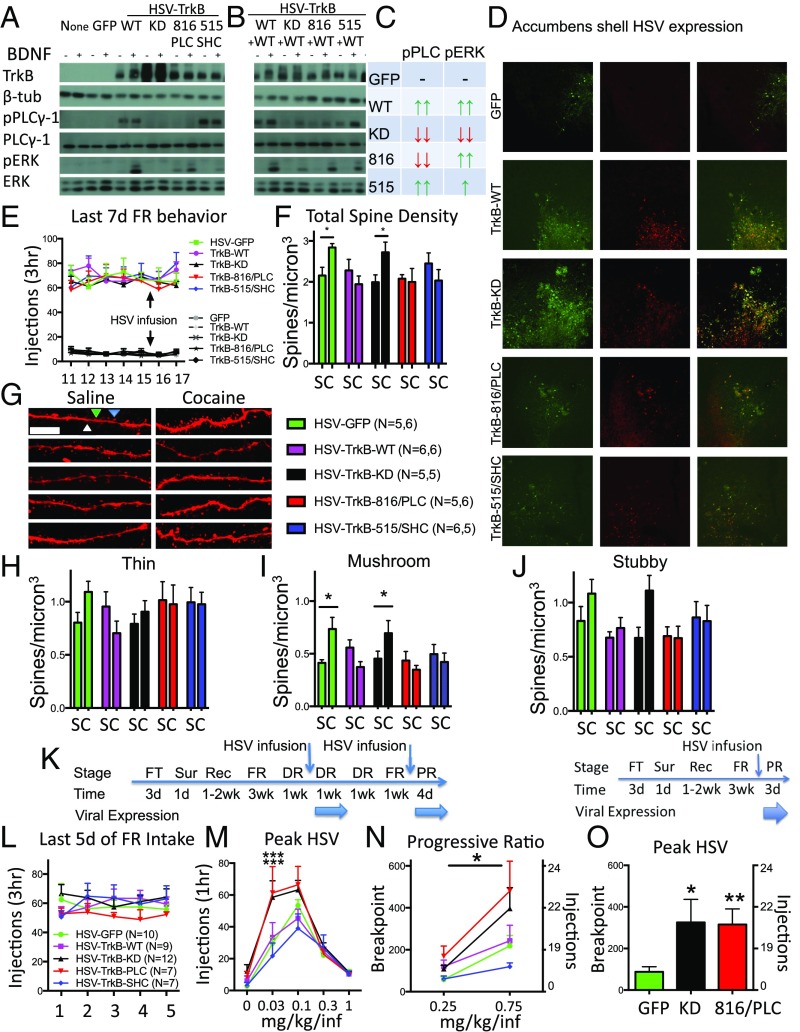
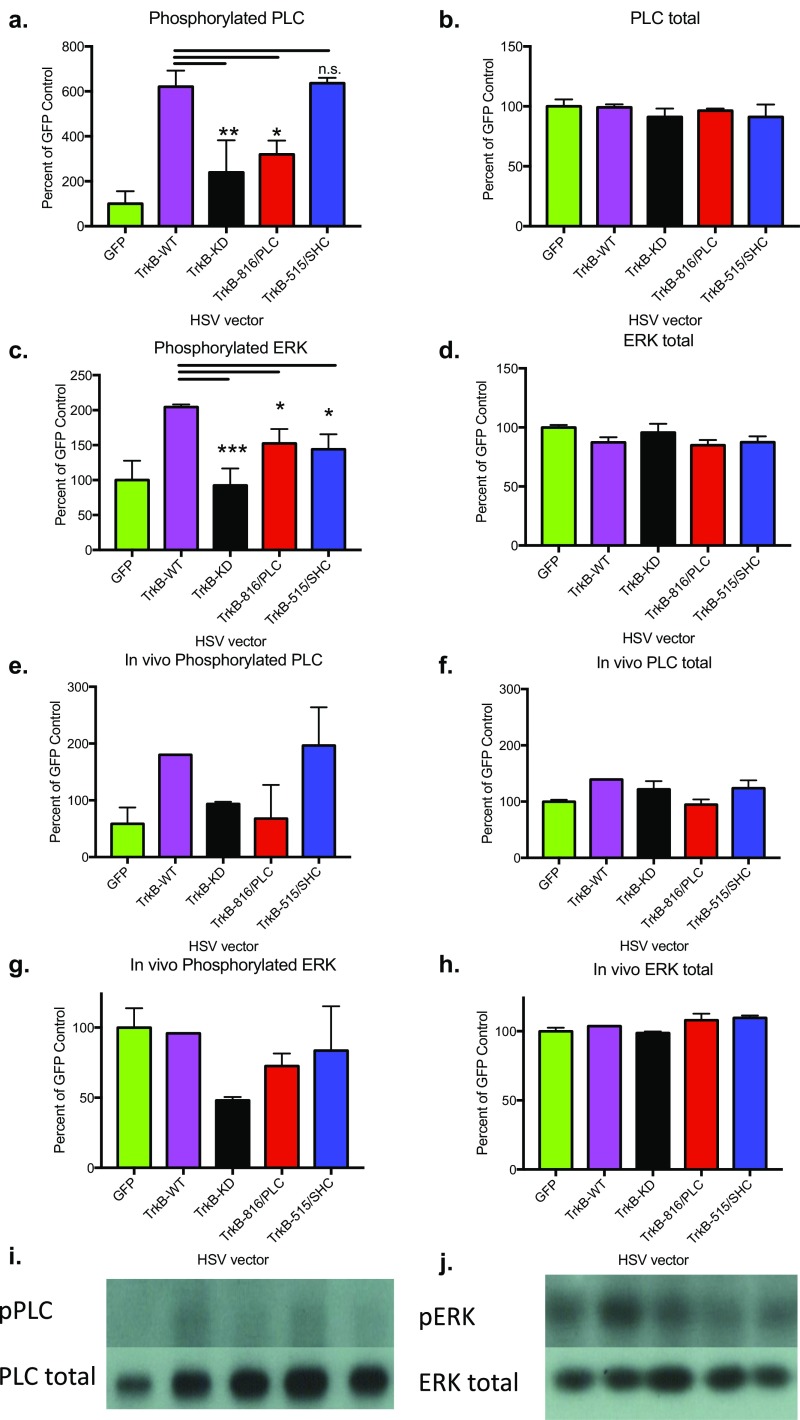
Chronic cocaine use is associated with prominent morphological changes in nucleus accumbens shell (NACsh) neurons, including increases in dendritic spine density along with enhanced motivation for cocaine, but a functional relationship between these morphological and behavioral phenomena has not been shown. Here we show that brain-derived neurotrophic factor (BDNF) signaling through tyrosine kinase B (TrkB) receptors in NACsh neurons is necessary for cocaine-induced dendritic spine formation by using either localized TrkB knockout or viral-mediated expression of a dominant negative, kinase-dead TrkB mutant. Interestingly, augmenting wild-type TrkB expression after chronic cocaine self-administration reverses the sustained increase in dendritic spine density, an effect mediated by TrkB signaling pathways that converge on extracellular regulated kinase. Loss of TrkB function after cocaine self-administration, however, leaves spine density intact but markedly enhances the motivation for cocaine, an effect mediated by specific loss of TrkB signaling through phospholipase Cgamma1 (PLCγ1). Conversely, overexpression of PLCγ1 both reduces the motivation for cocaine and reverses dendritic spine density, suggesting a potential target for the treatment of addiction in chronic users. Together, these findings indicate that BDNF-TrkB signaling both mediates and reverses cocaine-induced increases in dendritic spine density in NACsh neurons, and these morphological changes are entirely dissociable from changes in addictive behavior.
Keywords: BDNF-TrkB; PLC; accumbens shell; cocaine addiction; dendritic spines.
Conflict of interest statement
The authors declare no conflict of interest.
Figures




References
-
- Dennis ML, Foss MA, Scott CK. An eight-year perspective on the relationship between the duration of abstinence and other aspects of recovery. Eval Rev. 2007;31:585–612. - PubMed
-
- Graham DL, et al. Dynamic BDNF activity in nucleus accumbens with cocaine use increases self-administration and relapse. Nat Neurosci. 2007;10:1029–1037. - PubMed
-
- Bahi A, Boyer F, Chandrasekar V, Dreyer JL. Role of accumbens BDNF and TrkB in cocaine-induced psychomotor sensitization, conditioned-place preference, and reinstatement in rats. Psychopharmacology (Berl) 2008;199:169–182. - PubMed
Publication types
MeSH terms
Substances
Grants and funding
LinkOut - more resources
Full Text Sources
Other Literature Sources
Medical
Molecular Biology Databases
