


The influence of affective state on exogenous attention to emotional distractors: behavioral and electrophysiological correlates
- PMID: 28808233
- PMCID: PMC5556118
- DOI: 10.1038/s41598-017-07249-x
The influence of affective state on exogenous attention to emotional distractors: behavioral and electrophysiological correlates
Abstract
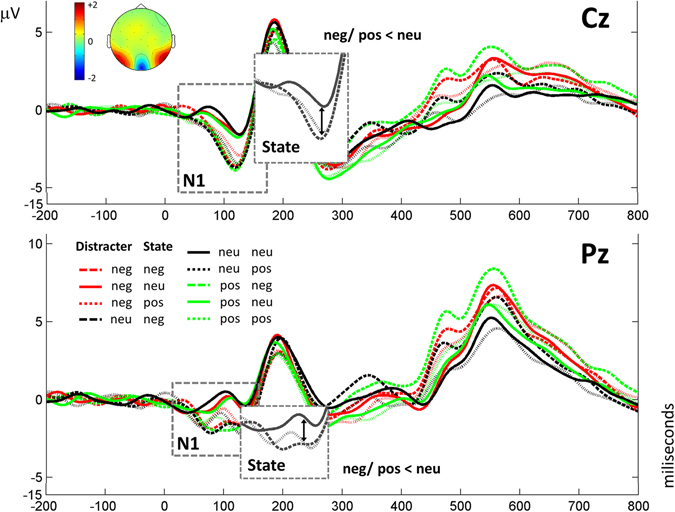
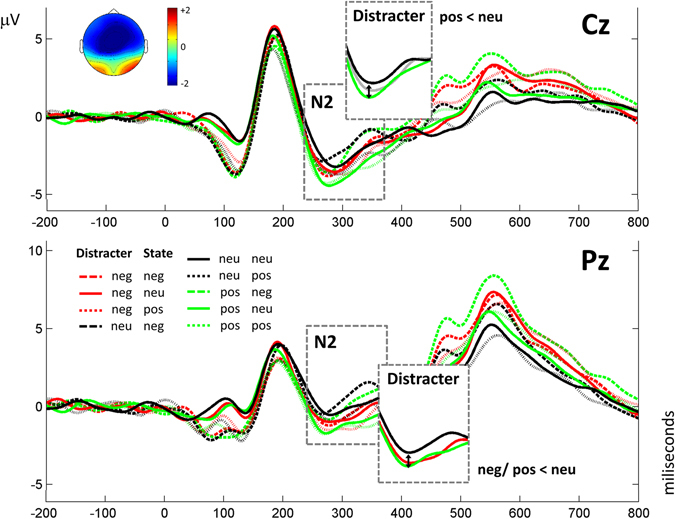
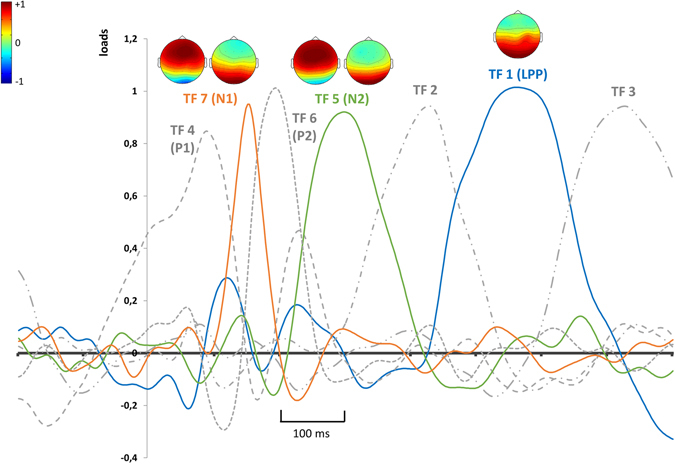
The interplay between exogenous attention to emotional distractors and the baseline affective state has not been well established yet. The present study aimed to explore this issue through behavioral measures and event-related potentials (ERPs). Participants (N = 30) completed a digit categorization task depicted over negative, positive or neutral distractor background pictures, while they experienced negative, positive and neutral affective states elicited by movie scenes. Behavioral results showed higher error rates and longer reaction times for negative distractors than for neutral and positive ones, irrespective of the current emotional state. Neural indices showed that the participants' affective state modulated N1 amplitudes, irrespective of distractor type, while the emotional charge of distractors modulated N2, irrespective of the emotional state. Importantly, an interaction of state and distractor type was observed in LPP. These results demonstrate that exogenous attention to emotional distractors is independent from modulating effects of the emotional baseline state at early, automatic stages of processing. However, attention to emotional distractors and affective state interact at later latencies.
Conflict of interest statement
The authors declare that they have no competing interests.
Figures


References
-
- MacNamara, A., Kappenman, E. S., Black, S. R., Bress, J. N., & Hajcak, G. Integrating behavioral and electrocortical measures of attentional bias toward threat in Handbook of self‐regulatory processes in development: New directions and international perspectives (ed. Caplovitz‐Barrett, K., Fox, N. A., Morgan, G. A., Fidler, D. J., & Daunhauer, L. A.) 215–242 (Psychology Press, 2012).
Publication types
MeSH terms
LinkOut - more resources
Full Text Sources
Other Literature Sources
