


How context alters value: The brain's valuation and affective regulation system link price cues to experienced taste pleasantness
- PMID: 28808246
- PMCID: PMC5556089
- DOI: 10.1038/s41598-017-08080-0
How context alters value: The brain's valuation and affective regulation system link price cues to experienced taste pleasantness
Abstract
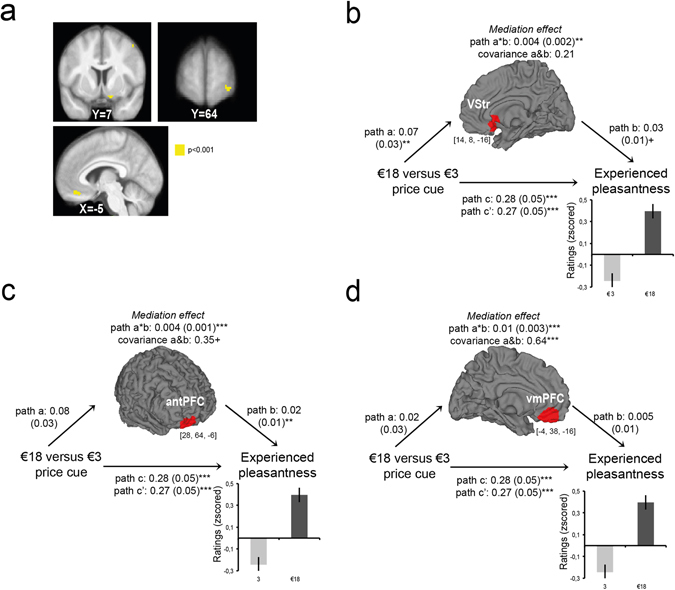
Informational cues such as the price of a wine can trigger expectations about its taste quality and thereby modulate the sensory experience on a reported and neural level. Yet it is unclear how the brain translates such expectations into sensory pleasantness. We used a whole-brain multilevel mediation approach with healthy participants who tasted identical wines cued with different prices while their brains were scanned using fMRI. We found that the brain's valuation system (BVS) in concert with the anterior prefrontal cortex played a key role in implementing the effect of price cues on taste pleasantness ratings. The sensitivity of the BVS to monetary rewards outside the taste domain moderated the strength of these effects. These findings provide novel evidence for the fundamental role that neural pathways linked to motivation and affective regulation play for the effect of informational cues on sensory experiences.
Conflict of interest statement
The authors declare that they have no competing interests.
Figures



References
-
- Kirk, K. I., French, B., Choi, S. In Clinical management of children with cochlear implants. (ed. L. S. Eisenberg) 215–250 (Plural Publishers, 2009).
Publication types
MeSH terms
LinkOut - more resources
Full Text Sources
Other Literature Sources
Medical
Molecular Biology Databases
