


Functional, Cellular, and Molecular Remodeling of the Heart under Influence of Oxidative Cigarette Tobacco Smoke
- PMID: 28808498
- PMCID: PMC5541812
- DOI: 10.1155/2017/3759186
Functional, Cellular, and Molecular Remodeling of the Heart under Influence of Oxidative Cigarette Tobacco Smoke
Abstract
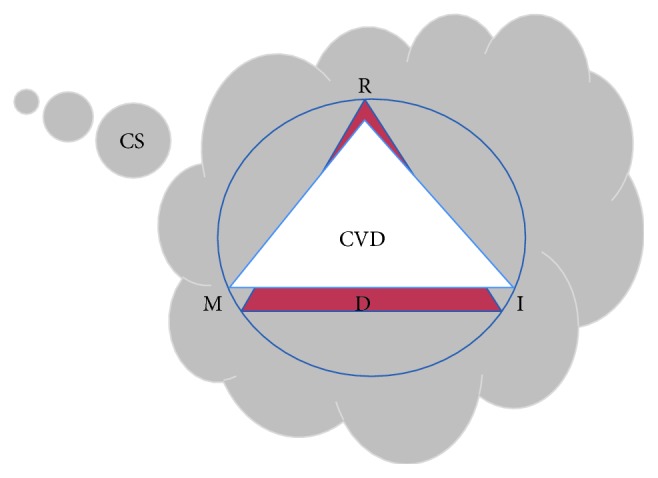
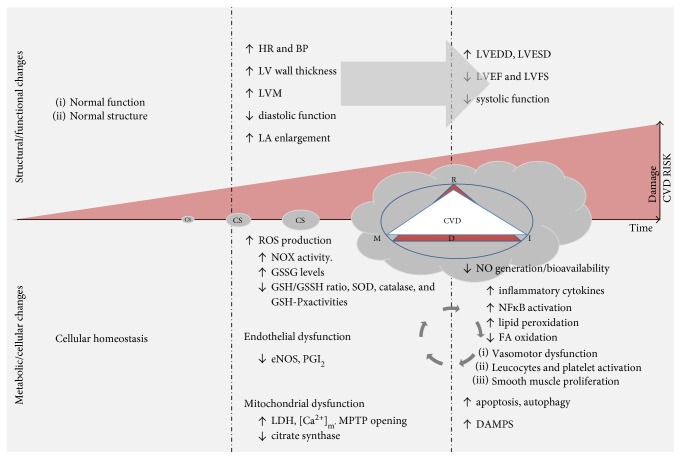
Passive and active chronic cigarette smoking (CS) remains an international epidemic and a key risk factor for cardiovascular disease (CVD) development. CS-induced cardiac damage is divided into two major and interchangeable mechanisms: (1) direct adverse effects on the myocardium causing smoking cardiomyopathy and (2) indirect effects on the myocardium by fueling comorbidities such as atherosclerotic syndromes and hypertension that eventually damage and remodel the heart. To date, our understanding of cardiac remodeling following acute and chronic smoking exposure is not well elucidated. This manuscript presents for the first time the RIMD (oxidative stress (R), inflammation (I), metabolic impairment (M), and cell death (D)) detrimental cycle concept as a major player in CS-induced CVD risks and direct cardiac injury. Breakthroughs and latest findings in the field with respect to structural, functional, cellular, and molecular cardiac remodeling following chronic smoking exposure are summarized. This review also touches the genetics/epigenetics of smoking as well as the smoker's paradox and highlights the most currently prominent pharmacological venues to mitigate CS-induced adverse cardiac remodeling.
Figures
Similar articles
-
Estrogen administration enhances the adverse effects of cigarette smoking on the heart in cycling female mice.Biol Sex Differ. 2024 Dec 4;15(1):100. doi: 10.1186/s13293-024-00667-3. Biol Sex Differ. 2024. PMID: 39633480 Free PMC article.
-
Chronic cigarette smoking causes hypertension, increased oxidative stress, impaired NO bioavailability, endothelial dysfunction, and cardiac remodeling in mice.Am J Physiol Heart Circ Physiol. 2011 Jan;300(1):H388-96. doi: 10.1152/ajpheart.00868.2010. Epub 2010 Nov 5. Am J Physiol Heart Circ Physiol. 2011. PMID: 21057039 Free PMC article.
-
A 6-month systems toxicology inhalation study in ApoE-/- mice demonstrates reduced cardiovascular effects of E-vapor aerosols compared with cigarette smoke.Am J Physiol Heart Circ Physiol. 2020 Mar 1;318(3):H604-H631. doi: 10.1152/ajpheart.00613.2019. Epub 2020 Jan 24. Am J Physiol Heart Circ Physiol. 2020. PMID: 31975625
-
The pathophysiology of cigarette smoking and cardiovascular disease: an update.J Am Coll Cardiol. 2004 May 19;43(10):1731-7. doi: 10.1016/j.jacc.2003.12.047. J Am Coll Cardiol. 2004. PMID: 15145091 Review.
-
Telomere length is a biomarker of cumulative oxidative stress, biologic age, and an independent predictor of survival and therapeutic treatment requirement associated with smoking behavior.Am J Ther. 2011 Nov;18(6):e209-26. doi: 10.1097/MJT.0b013e3181cf8ebb. Am J Ther. 2011. PMID: 20228673 Review.
Cited by
-
Tissue-specific mitochondrial toxicity of cigarette smoke concentrate: consequence to oxidative phosphorylation.Am J Physiol Heart Circ Physiol. 2023 Nov 1;325(5):H1088-H1098. doi: 10.1152/ajpheart.00199.2023. Epub 2023 Sep 15. Am J Physiol Heart Circ Physiol. 2023. PMID: 37712922 Free PMC article.
-
Exercise Training Attenuates Cirrhotic Cardiomyopathy.J Cardiovasc Transl Res. 2021 Aug;14(4):674-684. doi: 10.1007/s12265-020-09997-0. Epub 2020 Apr 3. J Cardiovasc Transl Res. 2021. PMID: 32246321
-
Immune-regulating effects of exercise on cigarette smoke-induced inflammation.J Inflamm Res. 2018 Apr 24;11:155-167. doi: 10.2147/JIR.S141149. eCollection 2018. J Inflamm Res. 2018. PMID: 29731655 Free PMC article. Review.
-
Sex-based differences in myocardial infarction-induced kidney damage following cigarette smoking exposure: more renal protection in premenopausal female mice.Biosci Rep. 2020 Jun 26;40(6):BSR20193229. doi: 10.1042/BSR20193229. Biosci Rep. 2020. PMID: 32519752 Free PMC article.
-
Lipid damage is the best marker of oxidative injury during the cardiac remodeling process induced by tobacco smoke.BMC Pharmacol Toxicol. 2018 Nov 16;19(1):74. doi: 10.1186/s40360-018-0268-4. BMC Pharmacol Toxicol. 2018. PMID: 30446004 Free PMC article.
References
-
- The Health Consequences of Smoking-50 Years of Progress: A Report of the Surgeon General. Atlanta, GA: 2014.
-
- Centers for Disease, C. The surgeon general’s 1989 report on reducing the health consequences of smoking: 25 years of progress. MMWR Supplements. 1989;38(2):1–32. - PubMed
-
- Ambrose J. A., Barua R. S. The pathophysiology of cigarette smoking and cardiovascular disease: an update. Journal of the American College of Cardiology. 2004;43(10):1731–1737. - PubMed
Publication types
MeSH terms
Substances
LinkOut - more resources
Full Text Sources
Other Literature Sources
