Deep neck infections: A single-center analysis of 63 cases
- PMID: 28809368
- PMCID: PMC5694174
- DOI: 10.4317/medoral.21799
Deep neck infections: A single-center analysis of 63 cases
Abstract
Background and purpose: With the use of antibiotic therapy, the incidence of deep neck infections has decreased in recent decades. The aim of this investigation was to review the clinical course and the management of deep neck infections in our department, compare them to the experiences of the common literature and identify predisposing factors for lethal complications.
Material and methods: In this single-center analysis, 63 patients with deep neck infections were treated surgically. The following clinical data were analyzed and compared: age, gender, laboratory data, spatial manifestation, therapeutic modalities, comorbidities, length of hospitalization and complications.
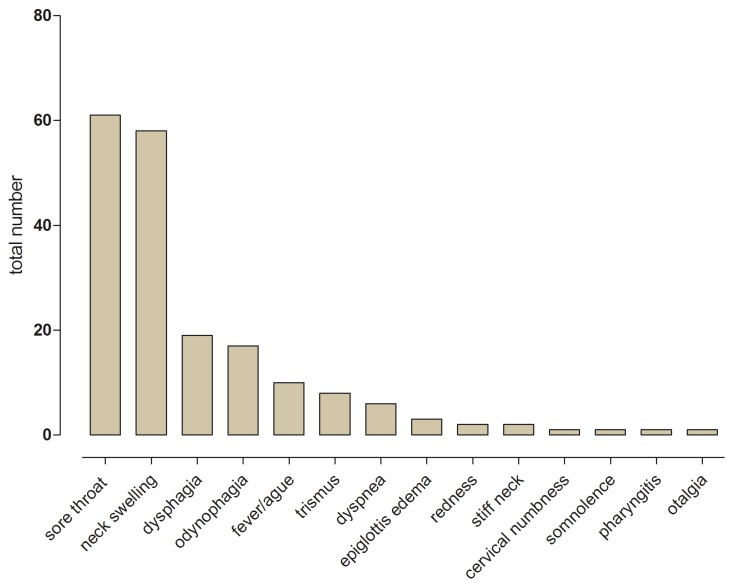
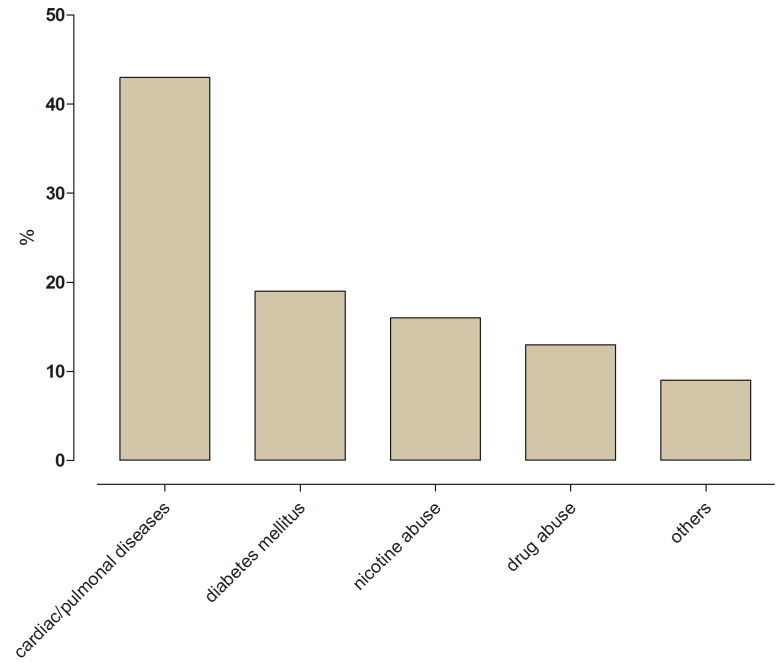
Results: There was a predominance of male patients (58.7%) and a mean age of 57.9 years. The most common symptoms at diagnosis were sore throat (96.8%) and neck swelling (92.0%). Cardio/pulmonary diseases and diabetes mellitus were the most common comorbidities. There was a significantly longer hospital stay for patients with diabetes mellitus. The most common manifestation was a parapharyngeal abscess in 24 patients (38.1%), followed by peri-/retrotonsillar infections in 19 patients (30.2%). In 29 patients, a multiple space infection was observed, with a significantly longer duration of hospitalization and a higher rate of complications. The main life-threatening complication was the development of airway obstruction in 20 patients (31.7%), who all received a tracheostomy. The duration of hospitalization for patients with complications was significantly longer.
Conclusion: Close attention must be paid to the management of patients with deep neck infections, especially patients with diabetes mellitus and cardio/pulmonary diseases or patients with multiple space infections.
Conflict of interest statement
Figures
References
-
- Kirov G, Benchev R, Stoianov S. [Complications of the deep infections of the neck] Khirurgiia (Sofiia) 2006;3:28–31. - PubMed
-
- Ungkanont K, Yellon RF, Weissman JL, Casselbrant ML, Gonzalez-Valdepena H, Bluestone CD. Head and neck space infections in infants and children. Otolaryngol Head Neck Surg. 1995;112:375–82. - PubMed
-
- Celakovsky P, Kalfert D, Tucek L, Mejzlik J, Kotulek M, Vrbacky A. Deep neck infections: risk factors for mediastinal extension. Eur Arch Otorhinolaryngol. 2014;271:1679–83. - PubMed
-
- Gu Q, Li J, Fan J, He G. [Clinical analysis of deep neck infection and its relative factors] Lin Chung Er Bi Yan Hou Tou Jing Wai Ke Za Zhi. 2013;27:150–2. - PubMed
MeSH terms
LinkOut - more resources
Full Text Sources
Other Literature Sources