


Structure-function analyses of metal-binding sites of HypA reveal residues important for hydrogenase maturation in Helicobacter pylori
- PMID: 28809946
- PMCID: PMC5557546
- DOI: 10.1371/journal.pone.0183260
Structure-function analyses of metal-binding sites of HypA reveal residues important for hydrogenase maturation in Helicobacter pylori
Abstract
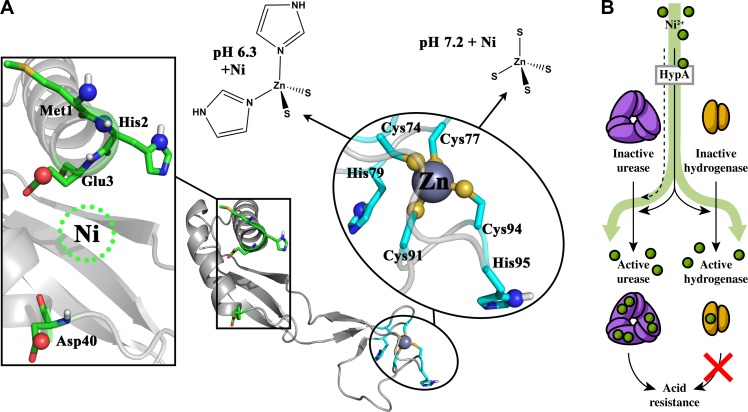
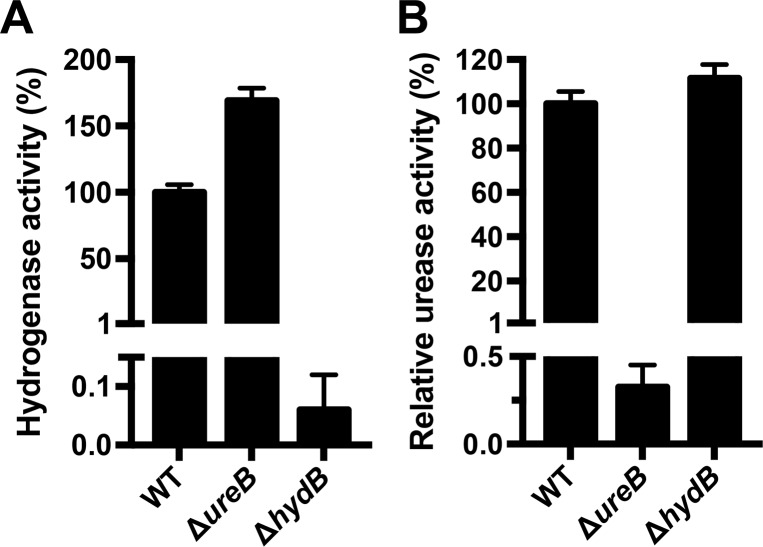
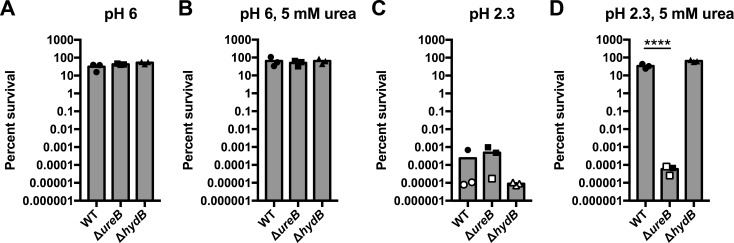
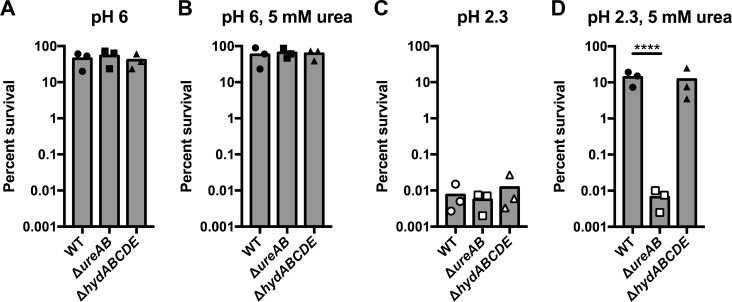
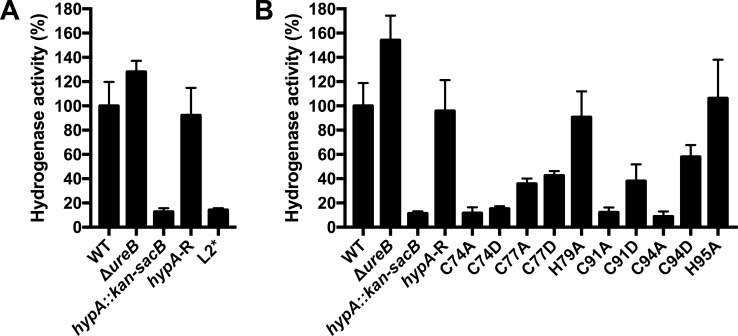
The nickel-containing enzymes of Helicobacter pylori, urease and hydrogenase, are essential for efficient colonization in the human stomach. The insertion of nickel into urease and hydrogenase is mediated by the accessory protein HypA. HypA contains an N-terminal nickel-binding site and a dynamic structural zinc-binding site. The coordination of nickel and zinc within HypA is known to be critical for urease maturation and activity. Herein, we test the hydrogenase activity of a panel of H. pylori mutant strains containing point mutations within the nickel- and zinc-binding sites. We found that the residues that are important for hydrogenase activity are those that were similarly vital for urease activity. Thus, the zinc and metal coordination sites of HypA play similar roles in urease and hydrogenase maturation. In other pathogenic bacteria, deletion of hydrogenase leads to a loss in acid resistance. Thus, the acid resistance of two strains of H. pylori containing a hydrogenase deletion was also tested. These mutant strains demonstrated wild-type levels of acid resistance, suggesting that in H. pylori, hydrogenase does not play a role in acid resistance.
Conflict of interest statement
Figures
References
-
- Covacci A, Telford JL, Del Giudice G, Parsonnet J, Rappuoli R. Helicobacter pylori virulence and genetic geography. Science. 1999;284(5418):1328–33. . - PubMed
-
- International Agency for Research on Cancer. A review of human carcinogens. Part B: Biological agents. Lyons, France: International Agency for Research on Cancer; 2012.
MeSH terms
Substances
Grants and funding
LinkOut - more resources
Full Text Sources
Other Literature Sources
